Bedrock for better lives
More inclusive and equitable education and health are the foundation for common prosperity










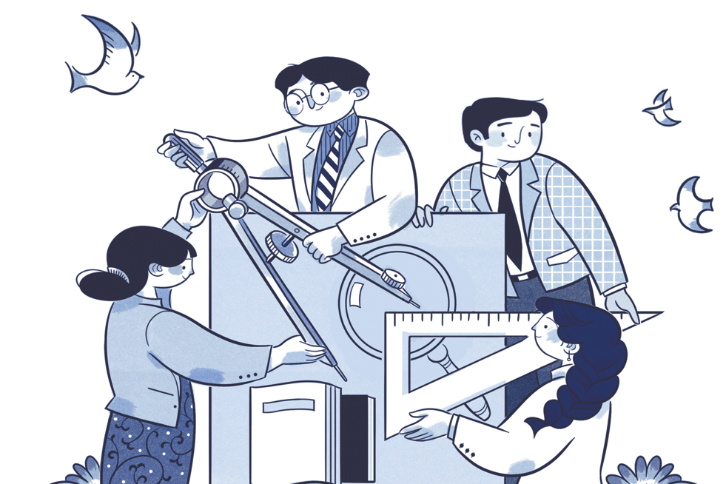
Human capital is essential for creating wealth and achieving prosperity, while education is the fundamental driving force for a country's sustainable development. Pursing common prosperity means narrowing the income gaps among different social groups. In the short run, the incomes of vulnerable populations can be increased through multiple reform measures, but in the long run, it is education that constitutes the foundation for common prosperity.
Despite the full coverage of compulsory education in China, there are still great education disparities between rural and urban areas, among different regions and within specific areas. The top priority in bridging the rural-urban education divide is to make it easier for migrant workers' children to receive education.
The flow of the labor force is the key to reducing income gaps among different regions. While the institutional barriers impeding the free flow of migrant workers have been largely removed, children of migrant workers still face huge difficulties in attending schools in the cities or towns where their parents work. As a result, many rural children are left behind while their parents find jobs in cities. These children cannot enjoy the education resources of more developed areas, and the lack of parental care at a young age leads to higher dropout rates at the primary education stage.
In addition, more policies are needed to facilitate the transfer of high-quality education resources to less developed areas. Efforts should be made to improve the infrastructure of compulsory education in rural areas, and to boost education in those areas through pairing-up assistance from developed regions. Voluntary teaching and distance learning can also be used to reduce the gaps between urban and rural areas, and among different regions. The government can enhance inclusive investment in human capital to reduce the burden of education costs on low-income families. To remedy the uneven distribution of compulsory education resources in a region, policymakers can explore mechanisms for the rotation of teachers and other education resources among different schools in order to ensure fair access to high-quality education.
More efforts should be made to promote equity in compulsory education and strengthen public education. Schools need to strike a balance between reducing the academic burden on students and ensuring equal access to basic subjects education for students from different family backgrounds. In addition, the country should reduce education gaps by exploring the extension of compulsory education, using public education resources, and improving the curriculum design, the cultivation of teachers and the salary system.
At present, vocational education remains a weak link in China's education system. Vocational education can bring higher incomes to vulnerable populations, and thus reduce the income gap between "white collars" and "blue collars". Moreover, it is expected to forge the backbone of China's labor force in the new stage of development. Currently, schools of vocational education are not attractive to students due to many reasons, including the uneven quality of institutions, low-income jobs and low social status of graduates.
A multipronged approach should be taken to solve the problem. On the one hand, it is imperative to further facilitate the flow of the labor force and improve the efficiency in matching job seekers with employers, thus maximizing the value of vocational education. On the other hand, efforts should be made to raise the quality of vocational education and cultivate workers that are capable of catering to market demand. Vocational training should be strengthened to increase the value of blue-collar workers in the job market. The goal is to make skilled workers a key component in China's middle-income group and attract more high-caliber talent to join the ranks of skilled workers.
Attention should also be paid to striking a balance between equity and efficiency in education. While promoting education equity, the role of the market in allocating resources should be fully respected. The government should focus on breaking the institutional barriers in the education system on the supply side rather than simply restricting private investment in education. It is impossible for the government alone to realize education equity, which requires the massive input of resources. Policymakers need to motivate the initiative of all stakeholders-the public education system, the market and the private sector resources-to promote fairness and efficiency in education.
Besides education, health is also an integral part of human capital, a prerequisite for the overall development of people and the foundation for the sustainable development of society. The Chinese government launched the Healthy China 2030 blueprint in 2016, with a view to significantly improve people's health and make access to health services more equal.
The goal of providing more equal access to health services is in line with the nation's pursuit for common prosperity. Policymakers need to give priority to rural and grassroots areas in promoting equal access to basic public services, and ensure basic public health services are not-for-profit so as to bridge the divides in health services between rural and urban areas, among different regions and social groups, thus promoting social fairness.
To conclude, the overall and inclusive development of human capital with education and health as the foundation is essential to achieve the goal of common prosperity. With the joint efforts of households, the market and the government, the human capital value of individuals and families can be further explored and help reduce the gaps among different social groups and enable people to enjoy more opportunities to move up the social ladder. Everyone, regardless of their occupation and work posts, will be able to give full play to their talent and enjoy the fruits of common development.
The author is vice-president of Renmin University of China. The author contributed this article to China Watch, a think tank powered by China Daily. The views do not necessarily reflect those of China Daily.
Contact the editor at editor@chinawatch.cn