Stimulative measures needed to help achieve HK's growth targets










The Hong Kong Special Administrative Region government just released its latest forecast for the economy. This year’s growth rate was revised from 2 to 3.5 percent, to 1 to 2 percent.
I had suggested that the earlier forecast was too optimistic soon after it was released. This time around, I believe the positive growth is achievable, but only with the necessary stimulative measures.
The SAR government has already introduced various countercyclical measures that cost a total of HK$170 billion ($21.7 billion). In addition to this, HK$54 billion has been allocated to bolstering anti-pandemic work for fiscal year 2022-23. According to the financial secretary’s estimate in February, a deficit of HK$56.3 billion is expected for the current fiscal year. That estimate is based on the earlier economic growth projection, and also includes any revenue raised from new green-bond sales.
Because of population aging, rising expectations from the public and a relatively mild growth path in the medium term, we really cannot afford persistent increases in government spending. So the “stimulative measures” that I propose consist mainly of policies that are favorable to the business environment and the economy in general. It should be noted that the fiscal “surplus” of HK$18.9 billion for the 2021-22 fiscal year would have been a deficit of HK$16.3 billion if it had not been for the issuance of green bonds. Normally, money raised through borrowing may not be counted as fiscal revenue. Now that the growth projection has been revised downward, the expected fiscal deficit for fiscal year 2022-23 will almost certainly increase. The fact that the SAR government had to withdraw the tender for a residential development site in Tuen Mun in April because all bids fell short of what the government had expected augurs badly for revenue projections for the current fiscal year. Recent weakening of housing prices and declining stock transactions clearly do not help.
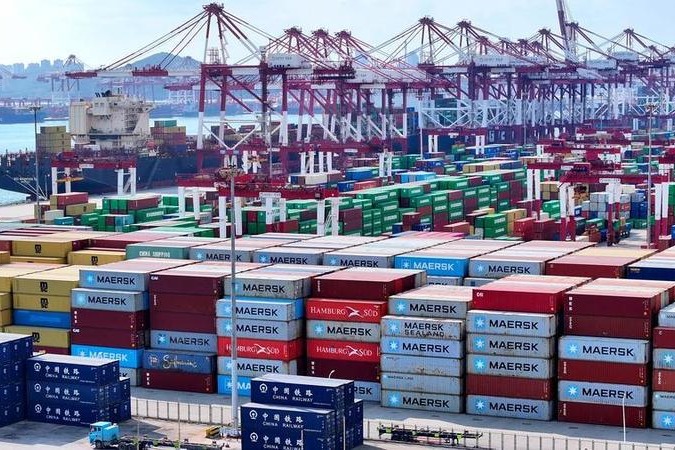
There is not much we can do to increase our exports, since this depends mainly on foreign demand, which is entirely out of our control. As far as we can see, the world economy is not doing well this year, and even the United States recorded negative growth in the first quarter. With the Fed vowing to contain near-double-digit inflation, an impending recession in the US economy cannot be ruled out. While the Chinese mainland’s economy enjoyed vigorous foreign direct investment inflows in the first quarter, both exports and domestic consumption are facing headwinds.
For this reason, I suggest that there are two things we can do. First of all, while the world out there is struggling, we should do what we can to minimize the damage. The recent decision to allow non-Hong Kong residents to enter Hong Kong is an important decision in the right direction, but we can do more. Currently, we define “fully vaccinated” as having at least two doses of most recognized vaccines, and all incoming travelers have to be quarantined. It is proposed that those with three doses of the recognized vaccines and who test COVID-19-negative upon arrival can be exempted from quarantine. They can be required to use a special version of the LeaveHomeSafe app that will not allow them to get into all “scheduled premises” within 14 days of arrival. This would greatly reduce the chances of their bringing infections into the community should they turn out to be infected. At the same time, the SAR government and mainland authorities should explore ways to minimize risks if we reopen up our mutual borders and to reopen up as soon as possible.
Another thing we can do is abolish the Special Stamp Duty (SSD), which was introduced in Nov 20, 2010, to fight speculation in our property markets. The SSD has mostly failed miserably to achieve the intended objectives, and may have produced various unintended perverse consequences. I and my joint authors have published a series of refereed empirical papers that have shown that the SSD actually has made homes increasingly unaffordable for first-time homebuyers. The reason is that with the SSD, existing homeowners will face the possibility of having to pay extra stamp duties if they need to resell their homes within two to three years (three years since Oct 27, 2012). This translates to a sharp drop in the availability of previously owned, entry-level flats. The evidence is really quite compelling. Prices of bigger flats had always risen faster than those of smaller ones before Nov 20, 2010; but they suddenly fell behind those of smaller homes after this date. Meanwhile, turnover in the secondhand market fell most noticeably.
One may recall that in 1997, even when home prices reached their previous peaks, one could still find homes that were quite affordable, if one was willing to buy an older flat or a flat in a less-accessible location. Today, even the public-rental-housing flats that were privatized under the Tenants Purchase Scheme could sell for over HK$5 million. The shortage in secondhand supply was the reason.
With home prices softening already, and an economy greatly weakened by various circumstances, it is time to lift the SSD. That would help restart trading-up activities, which will benefit various sectors through spillover effects, greatly helping the domestic economy. I very much hope that the new administration will consider this proposal.
The author is director of the Pan Sutong Shanghai-Hong Kong Economic Policy Research Institute, Lingnan University.
The views do not necessarily reflect those of China Daily.