SAR needs diverse governing team to facilitate multidisciplinary policymaking









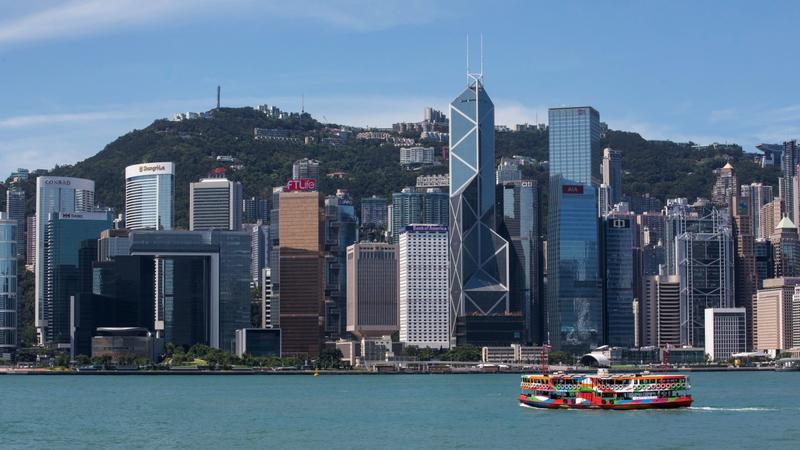
Hong Kong, once the most dynamic and vibrant city in Asia, is losing its competitive edge. People may argue this is because of the unfavorable external factors such as geopolitical conflicts and the pandemic. However, internal factors also play an important role in weakening Hong Kong’s competitiveness.
The development of Hong Kong in the 1960s and 1970s was not all smooth sailing. Geopolitical tensions from the Cold War presented many difficulties too. Local circumstances were grim in housing, public health, law and order, education, and water and energy supplies.
It was said that Hong Kong overcame many challenges to become one of “Asia’s Four Little Dragons” by the 1980s because the people worked hard in a “free market” that practiced laissez-faire governance with much-improved rule of law in the common law tradition.
The challenge today is that both local and global conditions have changed, and there are aspects of Hong Kong’s governance that have not yet adapted sufficiently.
In the past, Hong Kong was once a light industrial producer and an efficient entrepot that provided all sorts of financial and support services. Over time, production relocated to the Chinese mainland from the 1980s, and Hong Kong focused on supplying the mainland and other parts of Asia with many professional services, while the city’s population lost the direct capacity in production innovation and source of growth.
This problem was recognized by the local leadership. In 1999, the then-chief executive, Tung Chee-hwa, proposed a plan to transform Hong Kong into a cyber economy. In 2015, the then-chief executive, Leung Chun-ying, established the Innovation and Technology Bureau to promote science and technology industries in Hong Kong. Recently, the Hong Kong Special Administrative Region government pledged to develop the city into an innovation hub and a sustainable smart city.
Despite these efforts to catch up in innovation and technology development, Hong Kong continues to lag behind other growing cities in Asia. This was largely due to the stasis of the city’s human capital development in the area of science and technology.
In 2019, the numbers of students graduating from science or technology bachelor programs per 1,000 people were 1.73 in the Chinese mainland, 1.74 in Singapore, and 3.08 in South Korea. In the same year, the number of students graduating from University Grants Committee-funded science or technology bachelor programs per 1,000 population in Hong Kong was only 1.26.
To reverse this trend, the Hong Kong SAR government could play a leading role to revamp the city’s human capital structure, starting with the civil service, since its decisions have far-reaching impacts. Except for a few positions, the top ranks of the bureaucracy have been occupied by generalist administrative officers who were trained as administrators for British colonial rule in Hong Kong.
While a group of them have retired over the course of time, it is unclear if civil service training over the past two decades has substantially reformed as circumstances changed since the reunification, particularly over recent years.
For example, the bureaucracy has to facilitate Hong Kong’s integration into the Guangdong-Hong Kong-Macao Greater Bay Area while maintaining its uniqueness under the framework of “one country, two systems”. Officers not only need knowledge about the Chinese mainland and national policies but also on how to enhance development of the region, as well as dealing with regional planning, sustainable development that includes expanding the economy and social services, decarbonization, climate adaptation, biodiversity, as well as enhancing the innovation and technology sector.
The civil service has plenty of professional officers, but they are led by the AOs. The challenge is to establish a system in which experts from different disciplines can collaborate proactively.
Another major gap in the SAR government is the lack of strategic planning at the highest level.
Strategic planning was supposedly undertaken by the advisory Commission on Strategic Development (CSD) under the Central Policy Unit, which morphed into the Policy Innovation and Co-ordination Office in 2018.
The CSD considered many important issues more than a decade ago, such as Hong Kong’s competitiveness, social mobility, high-tech industries, housing, and promoting mutual trust between Hong Kong and the mainland. Yet, improvements were slowed or stalled.
Compared with the Economic Strategies Committee and the Committee on the Future Economy of Singapore and the Development and Reform Commission of Shenzhen, the strategic planning of Hong Kong lacks a core interdisciplinary team to organize comprehensive research and consolidate ideas from different professions into coherent policy proposals.
There is also no platform at the heart of the Hong Kong SAR government to gather and disseminate ideas and opinions regarding emerging issues across different bureaus and departments, as the Centre for Strategic Futures in Singapore does.
The chief secretary for administration and the financial secretary supposedly assist the chief executive to coordinate and supervise the policy planning and implementation of various bureaus and departments. It seems they have played a coordination function, rather than a strategic function, which is a legacy of the past that has not adapted to cope with unforeseen challenges, such as geopolitics, pandemics, and technology advancement.
In contrast, when Singapore evolved into a technology-based economy during the 1990s, the Cabinet was composed of political leaders from different backgrounds and with a much higher sensitivity to strategy beyond administration.
When the new chief executive, John Lee Ka-chiu, considers appointments for his governing team, and whether and how to restructure the civil service bureaucracy, he should reflect on the adequacy and talents needed to strengthen the capabilities of the government, so that it has the talents and the processes for multidisciplinary policymaking, as well as the sensitivity and deliberative structure for complex scenario analysis.
The author is a research associate of the Division of Public Policy at the Hong Kong University of Science and Technology.
The views do not necessarily reflect those of China Daily.