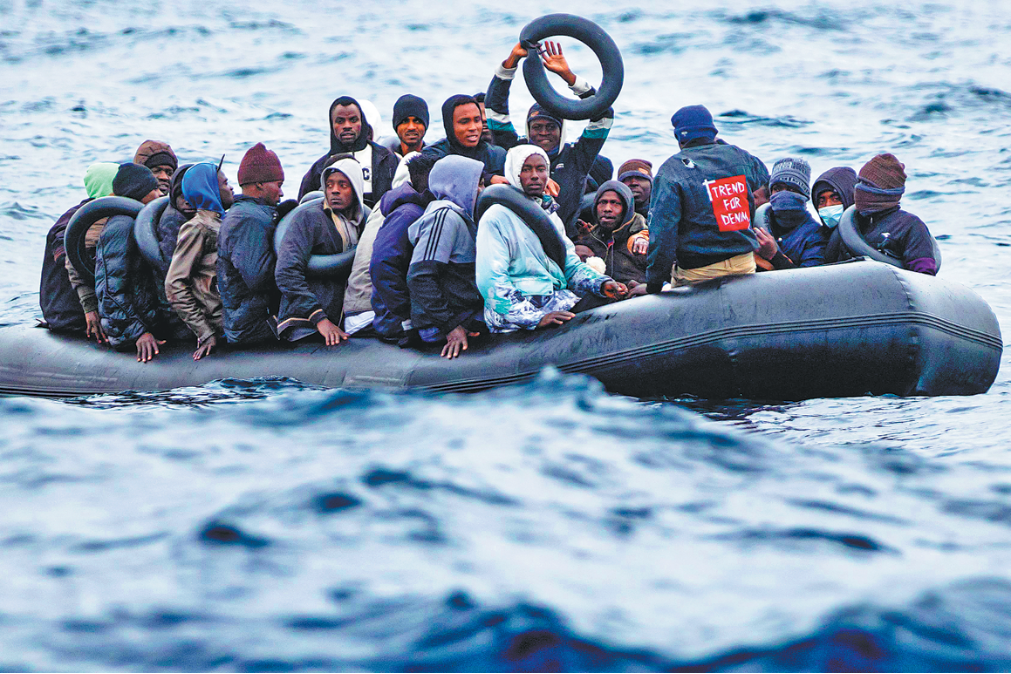
Africa's food crisis set to deepen amid conflict









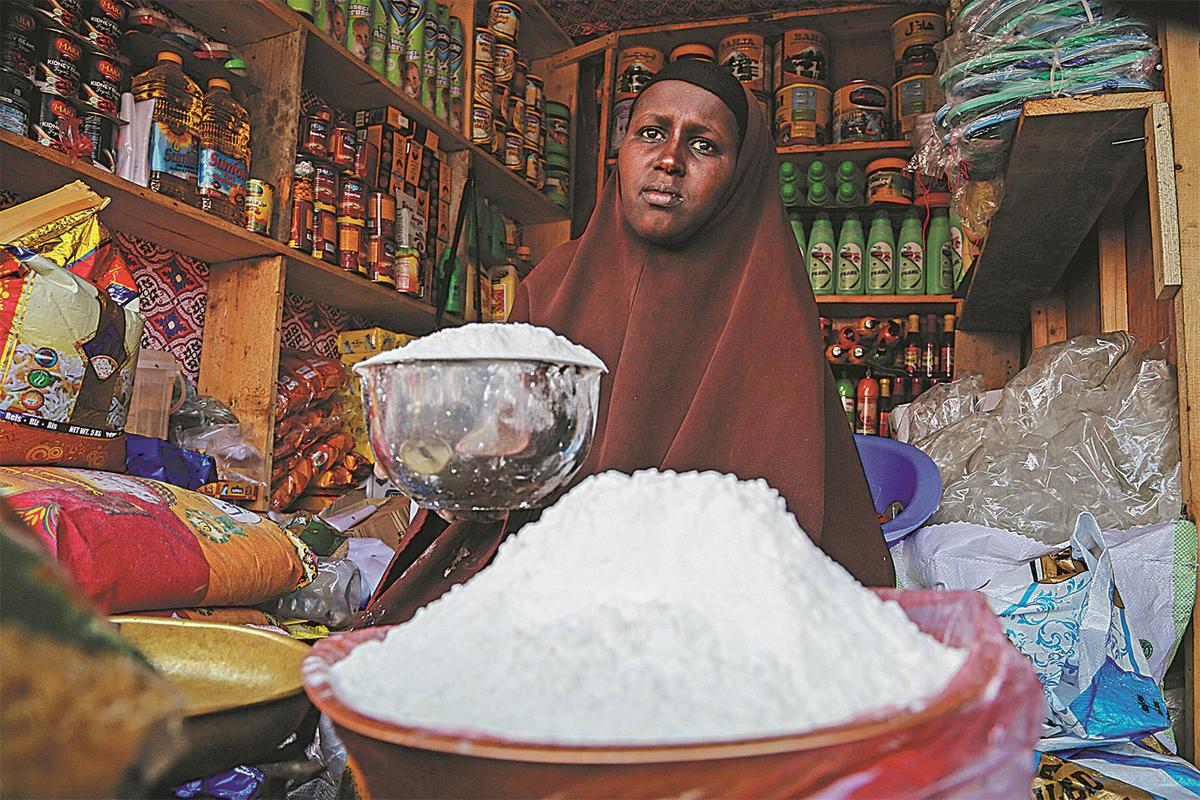
The Ukraine-Russia conflict has worsened a food crisis in many countries in Africa, where droughts in the Horn of Africa and the Sahel region have made people even more vulnerable, leaving millions at risk.
Many African countries rely on Russia and Ukraine for a significant share of their imports of fertilizer, wheat and vegetable oils.
According to the International Committee of the Red Cross, or ICRC, some of the countries worst affected by food shortages in Africa are those that are the most reliant on wheat from Russia and Ukraine.
They include Somalia, which usually gets more than 90 percent of its wheat imports from the two countries, and the Democratic Republic of the Congo, where the import share from the key producers is over 80 percent. Countries that rely on the breadbasket nations for as much as 45 percent of their wheat imports include Burkina Faso, Cameroon, Ethiopia, Nigeria and Sudan.
Recent reports by the Food and Agriculture Organization and the African Union put the number of people affected by the food crisis in Africa at 346 million.
"It is estimated that 10.5 million people are facing malnutrition in Burkina Faso, Mali, Niger and Mauritania. Over 1.2 million people are projected to be in stage four of the food insecurity index during the upcoming lean season," ICRC said.
Collateral damage
In a meeting on Friday between Macky Sall, the African Union chairman and Senegal's president, and Russian President Vladimir Putin, Sall said that Africa has suffered collateral damage from a distant conflict in Europe.
"Anti-Russia sanctions have made this situation worse and now we do not have access to grain from Russia especially wheat," Sall said during the meeting in Sochi, Russia. "Most importantly, we do not have access to fertilizer. The situation was bad and now it has become worse, creating a threat to food security in Africa."
AU Commission Chairman Moussa Faki Mahamat has called for a political solution to the conflict.
"We appeal for the suspension of sanctions against cereals and other key commodities, the need for their safe sea passage to mitigate the devastating economic and socioeconomic effects of a growing food and energy crisis which is further hampering the global recovery from the COVID-19 pandemic," Mahamat said.
Trade disruptions due to the conflict have contributed to soaring prices for a range of commodities.
In May, a consortium of Kenyan millers, manufacturers and agro-processors warned of a food crisis if the shortages of wheat, as well as maize, persist.
They said the shortages are not only pushing up the prices for wheat and maize flour but are worsening broader inflation.
According to Kenya's National Bureau of Statistics, the year-on-year inflation increased from 5.76 percent in April last year to 6.47 percent in April this year.
During the same period, the price of a 90-kilogram bag of maize jumped 47 percent from $24.40 to $36. The price for the same amount of wheat rose from $32.60 to $51.40.
The millers said Kenya produces about 100,000 metric tons of wheat, but the annual demand is 2.4 million tons.
"Kenya imports 60 percent of the deficit mainly from Ukraine and Russia. The current situation in the two countries has disrupted the importation supply chain," they said in a statement.
The consortium called on the government to form a committee to look into solutions to the crisis.
They also called on the government to negotiate with the governments of Zambia and Tanzania for imports of maize.
"It is also critical that the government supports transport and logistics for the importation of maize from these countries. This is because of the high cost of transporting produce from neighboring countries, which ultimately drives up the price of finished products," the group said.
"Sea freight costs have also gone up since the outbreak of the COVID-19 pandemic and have been worsened by the Russia-Ukraine conflict."
The United Nations Development Programme said last month that the conflict in Ukraine could have devastating economic consequences on Africa, including increased hunger and poverty.