Seal the deal
RCEP can help consolidate stable and sound China-Japan economic and trade ties









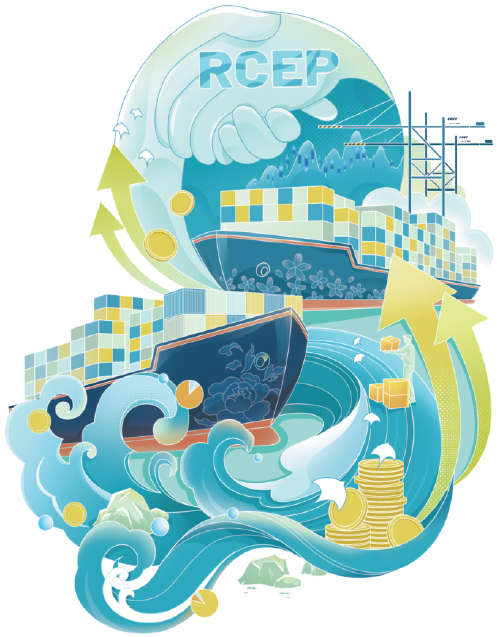
RCEP can help consolidate stable and sound China-Japan economic and trade ties
China and Japan issued the China-Japan Joint Statement announcing the normalization of diplomatic relations in 1972. To improve China-Japan relations and consolidate the foundation for cooperation, the two sides signed and issued the Treaty of Peace and Friendship between China and Japan in 1978, the China-Japan Joint Declaration in 1998, and a joint statement on advancing strategic, mutually beneficial relations in 2008. These documents lay the foundation for China-Japan cooperation and improved economic and trade ties between the two sides. In 1978, China launched its reform and opening-up policy, further driving China-Japan trade. Over the 50 years since the normalization of diplomatic relations, China-Japan economic and trade ties have fluctuated due to changes in the political landscape in Japan and the international environment while registering stable and sound development across the board. However, Japan has joined the "Indo-Pacific Economic Framework" that was recently initiated by the United States, leading to the cooperation between China and Japan to face challenges and uncertainties in the future.
Economic and trade ties between China and Japan have seen great improvement over the past five decades. Their bilateral trade totaled $1.04 billion in 1972 when the two countries normalized diplomatic relations, while it reached $371.4 billion in 2021, up 356.1 times. After China joined the World Trade Organization in 2001, trade between the two countries exceeded $100 billion for the first time. Japanese companies' investment in China has kept growing, playing an active role in China's foreign trade and economic development, as well as in bilateral economic and trade relations.
China and Japan are each other's major trading partners, and bilateral trade has played a key role in promoting their mutual economic development. However, Japan's nationalization of China's Diaoyu Islands in 2012 and its distortion of wartime issues have affected economic and trade cooperation between the two countries, leading mutual trade and investment to decline and fluctuate. In 2017, China-Japan relations were restored, creating a favorable environment for further cooperation and improving the economic and trade ties. Despite the impacts of the COVID-19 pandemic, bilateral trade grew remarkably in 2021 to reach $371.4 billion, a year-on-year increase of 17.1 percent.
While the economic and trade relations between China and Japan have continued to improve, cooperation has been expanded to more fields, especially in regional economic cooperation. After years of negotiations, the Association of Southeast Asian Nations, China, Japan, the Republic of Korea, Australia and New Zealand signed the Regional Comprehensive Economic Partnership in November 2020, which came into effect on Jan 1,2022. The launch of the agreement created the world's largest free trade bloc. As one of the world's most important bilateral relations, China-Japan relations involve a free trade agreement for the first time under the RCEP, which is important for the development of mutual economic and trade relations.
However, China-Japan economic and trade cooperation has not been all smooth sailing. In recent years, the US has regarded China as a strategic competitor and sought to contain it. The Joe Biden administration is seeking allies to participate in this strategy. As an important ally of the US, Japan hopes to use US power to contain China, but it also wants to share the benefits of China's economic development through economic and trade relations. Japan is increasingly following the US strategy and constraining exchanges with China in many fields. Japan's participation in the "Indo-Pacific Economic Framework for Prosperity" shows its strategic intention.
There is still much room for growth in the economic and trade cooperation between China and Japan, but to tap the potential calls for the joint efforts of governments, enterprises and social communities of the two countries.
A healthy political environment is important for China-Japan economic and trade relations, for which external influences should be kept at bay. The past five decades shows that stable and sound political relations between China and Japan can help improve the economic and trade ties. When their relations deteriorate, their economic and trade cooperation is affected.
As an ally of the US, Japan could foresee its economic and trade relations with China affected more as it is involved more in the US' "Indo-Pacific strategy", which is aimed at decoupling from the industry chains in China and excluding China from the regional trade system. Japan should remain sober and work to stabilize the economic and trade relations with China. Economic and trade relations between the two countries have great room for growth. The RCEP can further China-Japan economic and trade cooperation. China has also applied to join the Comprehensive and Progressive Agreement for Trans-Pacific Partnership, of which Japan is a key member. Cooperation under these agreements has great potential.
Since the normalization of diplomatic relations between China and Japan, the two countries have maintained close economic and trade cooperation while not signing a common free trade agreement until the RCEP, which affected economic and trade ties between the two countries. Under the RCEP, China-Japan trade can make leapfrog progress, providing new opportunities and unleashing the potential for economic and trade cooperation between the two countries. China and Japan need to implement the commitments of the RCEP now that it has taken effect, which will promote economic and trade relations between the two countries, drive the success of the world's largest free trade bloc, further economic globalization and counter anti-globalization, unilateralism and trade protectionism.
The author is director of the Institute of Asian Studies at the Chinese Academy of International Trade and Economic Cooperation under the Ministry of Commerce.
The author contributed this article to China Watch, a think tank powered by China Daily. The views do not necessarily reflect those of China Daily.
Contact the editor at editor@chinawatch.cn