Healthcare in Xinjiang gets promising prognosis









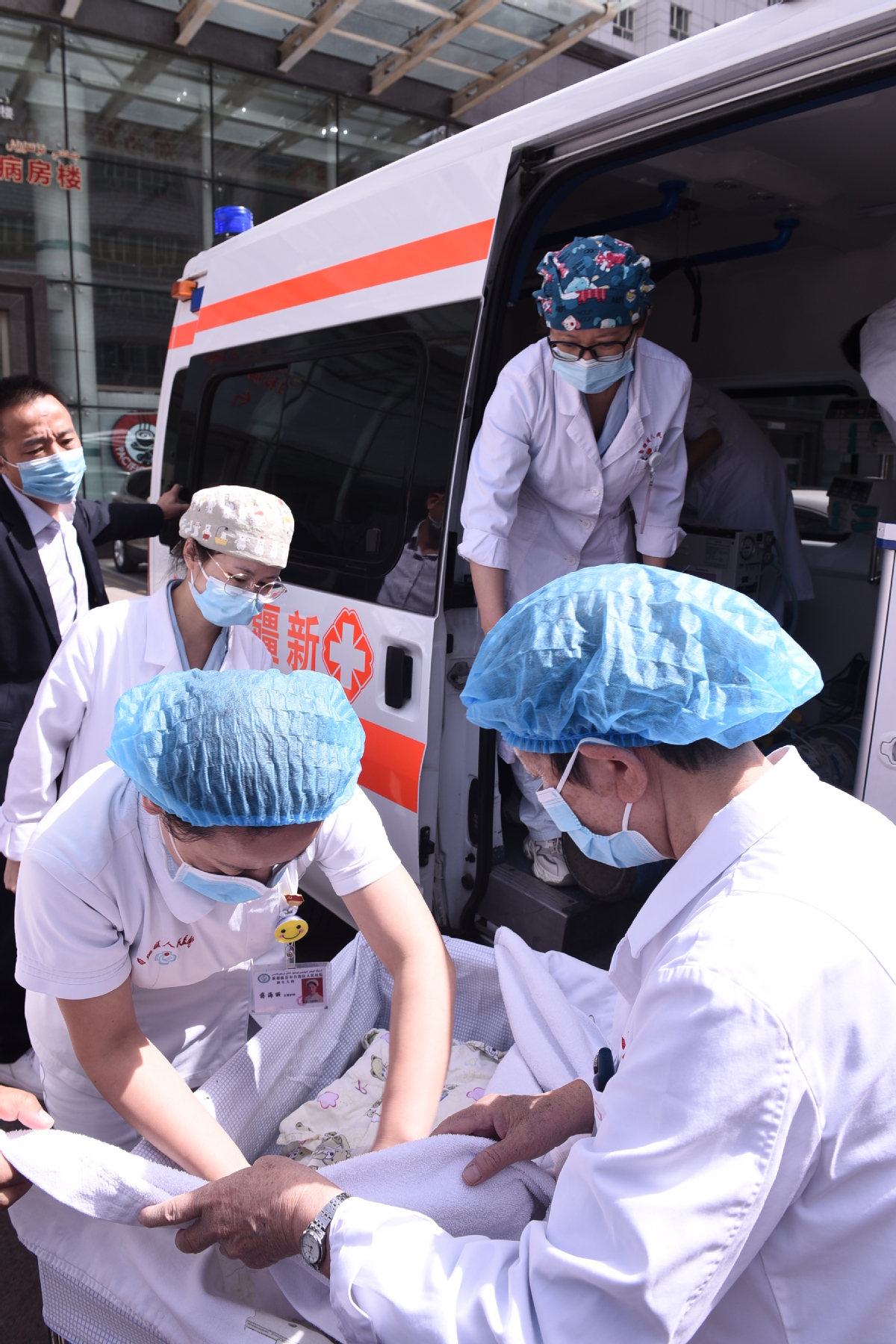
The establishment and development of national and regional medical centers in the Xinjiang Uygur autonomous region have bolstered the medical landscape and enabled patients in Northwest China with critical illnesses and intractable diseases to receive much needed treatment, according to local authorities.
The National Health Commission in 2019 launched a project to establish a group of regional medical centers in eight provinces and regions, including Xinjiang, Hebei and Yunnan, where medical resources are relatively weak and local patients tend to seek medical services far away.
With the support of hospitals in developed cities such as Beijing and Shanghai, regional medical centers have been built, targeting six major critical illnesses such as cancer and neurological diseases to improve local medical care services.
In cooperation with Beijing Children's Hospital, Xinjiang Children's Hospital, founded in Urumqi in 2016, was the first in the region included in the project to become the Regional Pediatric Medical Center.
Since the center opened in December 2020, dozens of medical experts have been dispatched there from Beijing, bringing new techniques and conducting demonstration surgeries to improve the center's treatment ability, according to a senior official with the hospital.
Niu Weiya, Party chief of the hospital, said though most doctors there are from Xinjiang, the paired directors of each department include one from Beijing Children's Hospital.
Experts from Beijing can provide remote consultation on difficult cases or travel to the hospital in Xinjiang to conduct a major operation.
"We also dispatch local doctors to study new techniques and ideas at Beijing Children's Hospital," Niu said.
So far, the center has launched treatment in 26 medical disciplines including pediatric surgery, neonatology and critical care. It has implemented 41 new techniques and programs, among which 14 have filled a technical gap in Xinjiang, Niu said.
Ninety percent of intraluminal diseases in children are treated with minimally invasive surgeries, with a success rate exceeding 90 percent, he added.
With medical resources transferred from the capital, the center has become the biggest first-tier specialized hospital and treatment base for children with critical illness in the region, balancing out the medical resources in different prefectures.
"Patients no longer need to go out of the region for the treatment of severe or intractable diseases," Niu said.
The number of surgeries conducted in the hospital has increased by 44 percent and the volume of outpatient clinics by 40 percent after the establishment of the center.
Neonatal mortality rate is considered to be a useful indicator of a country's or region's medical care capabilities. To reduce the rate in Xinjiang, the hospital has become the transfer and rescue center for critically-ill newborns.
The transfer team can drive the more than 1,650 kilometers to remote villages in southern Xinjiang's Kashgar prefecture to pick up a premature baby weighing as little as 800 grams and return to the hospital in Urumqi within 40 hours, Niu said.
"The transfer vehicle is equipped with life-support devices that can provide essential medical care on the way before the baby arrives at the hospital's intensive care unit for further treatment. We can transfer around 700 such cases each year," Niu said.


- Xi says China's high-quality development to provide more opportunities for cooperation with Brazil
- China Coast Guard rescues 13 Filipino sailors in the South China Sea
- Xi holds phone talks with Lula
- Chinese mainland reaches 5.32m invention patents, trademarks close to 50m
- Chongqing railway attendants undergo training ahead of travel rush
- China's railway gears up for Spring Festival travel rush