Protectionism behind latest round of global inflation










Europe and the United States are experiencing the most serious inflation in 40 years. High inflation lowers people's living standards, weakens corporate vitality, overshadows prospects of economic growth, intensifies social tensions and raises concerns about the possibility of global stagflation. We believe protectionism in some Western countries is largely responsible for this round of global inflation, which is expected to continue for some time to come.
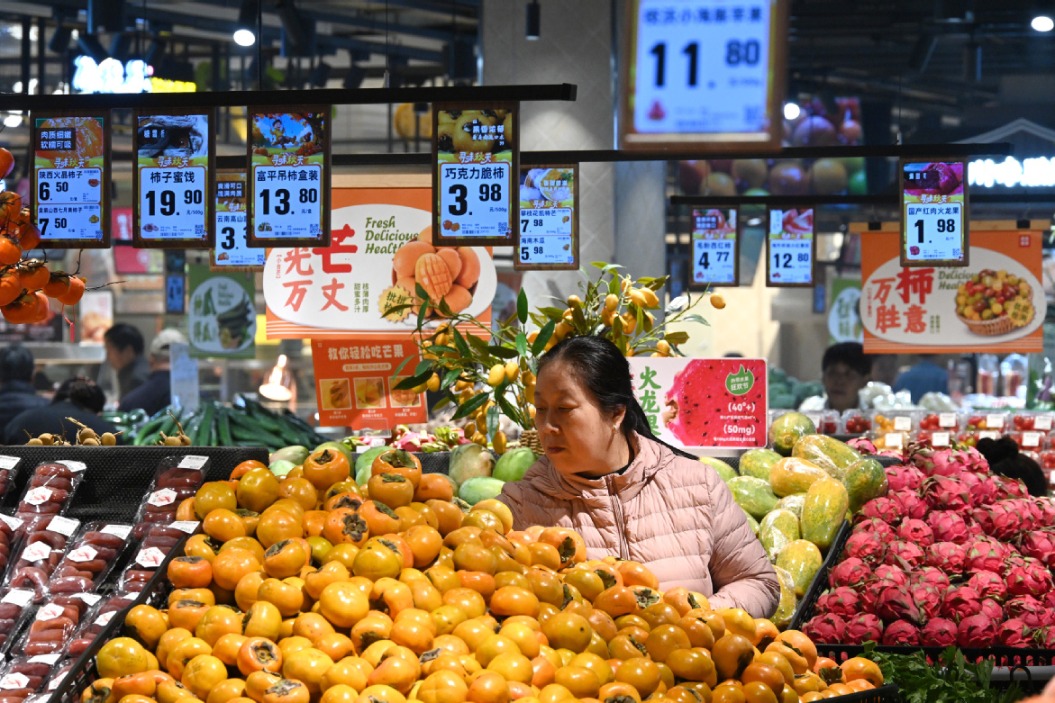
In May, the consumer price index in the US, Germany and France hit levels not seen since the 1980s and that of the eurozone also hit highs for six consecutive months. The influence of the record-high producer price index in the US and the eurozone has spread to developing countries and newly emerging markets. The inflation rate in countries like Brazil, Egypt and Russia rose from 10 percent to 20 percent year-on-year in May while that in Turkey, Argentina and Iran reached 73 percent, 60 percent and 40 percent, respectively, over the same period, a sign of runaway inflation. By contrast, prices remained within a reasonable range in China, with the country's CPI up 2.1 percent year-on-year in May.
Some Western countries' protectionism is the main culprit behind inflation. Protectionism, in various ways, pushes supply costs higher and eventually raises prices. Rising tariffs and nontariff barriers, such as those imposed on China amid Sino-US trade disputes, have led to costlier imports in the US.
Protectionism hinders the free flow of production factors across the globe and results in the loss of comparative advantages. Some Western countries, in order to attract transnationals back home, have begun to encourage localization of production, thus interfering with the optimum allocation of production factors.
The frequent imposition of sanctions by Washington against various enterprises and industrial chains disrupts and distorts these chains, resulting in turbulence in supply and demand and the loss of control over costs. Costs and prices are no longer priorities in decision-making as a result of protectionists' political pressure and propaganda campaigns.
Simply put, protectionism impedes international trade, debilitates the specialization and division of labor, lowers productivity and is the archenemy of unfettered global industrial chains and is therefore a chief culprit behind inflation. The global computer chip crisis is a case in point.
The fight against the COVID-19 pandemic, due to the existence of the vaccine divide, has not become an opportunity for global cooperation and collaboration, but rather, exposed the weaknesses of global governance, strengthened the hand of protectionism and furthered the spread of inflation. The US and Europe are destroying expired vaccines while poverty-stricken countries are still waiting for their first doses. The imbalance between economic recovery and epidemic prevention and control has aggravated the disruption of global supply chains, diverted flows of goods and services and led to higher costs in international trade.
The ongoing Russia-Ukraine conflict has sparked a surge in food and energy prices, an important contributing factor to inflation that cannot be underestimated, because both Russia and Ukraine are key suppliers of bulk commodities such as energy, metals and agricultural products on which some countries are highly dependent. The sanctions imposed by the West and the counter-sanctions implemented by Russia have spread to the abovementioned sectors and have shown signs of intensification. The Russia-Ukraine tensions have begun to affect the global economy, and prices of bulk commodities-surging food prices, in particular-have raised major concerns.
Extremely loose monetary policies have added to inflationary pressure. In order to mitigate the impact of the COVID-19 pandemic, the US Federal Reserve once lowered its federal fund rate to zero and ushered in a period of uncapped quantitative easing. The Fed's total assets rose from $4.21 trillion at the end of February 2020 to $9 trillion at the end of March 2022.
Particularly noteworthy is that Wall Street and the big firms were the major beneficiaries of this inflation. The profits of well-known petroleum corporations, mining conglomerates, big food suppliers, major shipping companies and traders-with the big Wall Street firms behind them-are mounting. For example, the net profit of Goldman Sachs registered a record $21.6 billion in 2021. These huge profits amplified undersupply, revealed the fragility of supply chains and aggravated inflation.
In summary, the chief culprit behind this round of inflation is US protectionism. Washington politicians, taking advantage of public opinion, raised the flag of protectionism and launched a trade war. But the trade war was only the starting point. On top of that, the COVID-19 pandemic and geopolitical conflicts became additional catalysts; loose monetary policies provided enough ammunition; and major enterprises were heavily involved and are reaping huge profits. All these factors revolve around protectionism and drive up prices. In other words, this round of global inflation is man-made and the US is the chief culprit.
Generally, as protectionism spreads in the coming years, prices of bulk commodities surge, disrupted industrial supply chains restructure, and the Russia-Ukraine conflict inflates food and energy prices, economic growth-constrained by so many factors-lacks strong support. And therefore, this round of inflation is expected to continue for a longer period.
The Fed's interest rate hike is in the interests of the US and Wall Street, but is no cure for inflation and therefore is expected to have little effect over the short term. When the Fed announced an interest rate rise in March, the US dollar quickly began to appreciate and rose nearly 5 percent year-on-year in April, the biggest increase since 2012. The US dollar appreciation brings money back to the US, benefits its financial market, leads to cheaper imports, and thus can ease the pressure of long-term inflation.
But as the theory that inflation will peak and then fall falters, the Fed radically hiked its rate by 75 basis points last month, which might cause risks to spill over. The radical move will not produce more positive effects on production and supply. Instead, it will infuse instability into the global financial markets, accelerate the flow of capital and the fluctuations of exchange rates, spill over the risks and thus pose new challenges to unimpeded global industrial supply chains and efforts to lower inflationary expectations.
The escalation of the Russia-Ukraine conflict and the surge in food and energy prices will contribute to long-term inflation. Over the long term, the conflict will cause substantial damage to Russian and Ukrainian exports, intensify the global commodity supply crunch due to the pandemic and push prices even higher.
US election politics has made inflation a partisan tool. Energy prices have been the primary factor for the rising CPI for 13 consecutive months. Obviously, easing the Russia-Ukraine conflict is the most effective way to lower oil prices. Instead, Washington took advantage of the conflict in Ukraine, and shifted the responsibility onto Russia. But the US public doesn't think that way. According to a recent NBC opinion poll, 38 percent of interviewees believe that the US government is responsible for inflation while a mere 6 percent attribute the inflation to the Russia-Ukraine conflict.
We believe that protectionism in some Western countries is the primary reason for this round of global inflation. This is the hidden but primary reason for this-and all other reasons are secondary and less important. Therefore, if we want to contain inflation, we need to, with joint efforts, abandon protectionism and build unimpeded industrial supply chains. All countries, the big powers in particular, should shoulder their due responsibilities.
The world should move together with the trend of globalization, abandon protectionism, and all unreasonable tariffs levied on Chinese goods should be abandoned.
Efforts should be made to end the Russia-Ukraine conflict, settle their differences through peaceful negotiations and allow them, as soon as possible, to export their energy resources and food in an unimpeded manner.
All countries should cooperate and collaborate in our fight against the COVID-19 pandemic and help less-developed countries integrate themselves into the world economy.
The world should also build an unimpeded global marketplace and fix global industrial supply chain problems, especially disruptions in logistics.
The writers are Lu Yanchun, director of the Price Monitoring Center of the National Development and Reform Commission, and Zhao Gongzheng, chief of the International Price Monitoring Division of the Price Monitoring Center at the National Development and Reform Commission.
The views don't necessarily reflect those of China Daily.