



Collaborative transport governance to realize 'dual carbon goals'









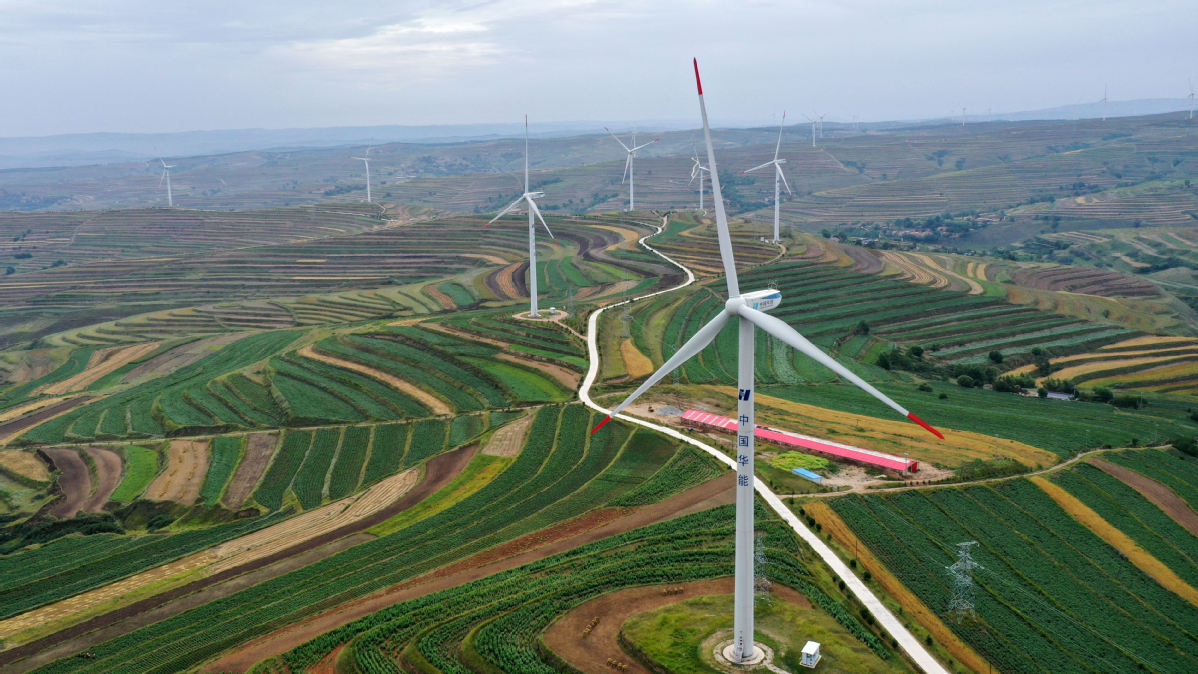
Achieving carbon peak and carbon neutrality is a major strategic decision made by the CPC Central Committee of China. It professes the sustainable development of the Chinese nation and its building of a community with a shared future for mankind. Compared with other developed countries, the time window for China to develop from carbon peak to carbon neutrality is tight, and therefore will bring extensive and profound economic and social changes.
From the perspective of basic national conditions, China faces unprecedented difficulties and challenges in achieving carbon peak and carbon neutrality.
The United Kingdom, France, Germany and the European Union achieved carbon peak in the 1970s, and the United States and Japan achieved carbon peak in 2007 and 2013 respectively. Moreover, all the above-mentioned countries achieved carbon peak naturally, evolving with their respective development stage.
In order to promote peak carbon and carbon neutrality, the following insights for collaborative transport governance in China are proposed.
Firstly, coordinate low-carbon synergistic transport development in various ways, fields and aspects by adhering to systematic concept. From international experience, the low-carbon development of transport requires more attention to policy synergy, reflecting the all-round coverage and full chain extension for various modes of transport (subway, conventional bus, road freight, etc.), various fields of transport (infrastructure, transport equipment, transport organization) and various aspects of transport (planning, construction, operation, maintenance, management).
Key takeaways for China's efforts to promote carbon peak and neutrality include: (1) Coordinate the development of various modes by giving full play to the comparative advantages and combined efficiency of various modes of transport, increasing the proportion of railway and water transport in the comprehensive transport system, breaking through the "blocking points" for the interconnection of various modes of transport and improving the facilitation of hub transfer and multi-modal transport. (2) Coordinate the development of various sectors by quickening the construction of green transport infrastructure and carrying out green upgrades and renovations of needed facilities. Moreover, it is necessary to establish a green and low-carbon transport organization system, vigorously develop a multi-modal transport system with railways and water transport as the backbone as well as introduce the "P+R" mode of travel in the intercity passenger transport system. (3) Coordinate the development of all links; integrate green and low-carbon concepts into the whole process of transport planning, construction, operation, maintenance and management; and reduce energy consumption and carbon emissions throughout the life cycle.
Secondly, improve the efficiency of various factors of input and output by implementing high-quality transport development. From international experience, it is widely advocated to vigorously develop rail transport, give priority to public transport, encourage the development of slow transport, and encourage the public to adopt modes of transport with high input-output efficiency and low negative external impacts, thus realizing the transition to a simple, moderate, green and low-carbon lifestyle.
The key to China's promotion of carbon peak and carbon neutrality in transport is to optimize resource allocation, improve total factor productivity and continuously improve the input-output ratio of transport. (1) Regarding mode structure, it is necessary to improve the efficiency of transport resource allocation, examine technical and economic characteristics of various modes from the perspective of the whole life cycle, accelerate the optimization and adjustment of transport structure and improve the use intensity of large-volume and low-cost modes of transport. (2) Regarding road network resources, it is required to improve network operation efficiency, promote the formation of a comprehensive transport system with a free flow of resource elements and efficient coordination of management services and reduce the cost of economic circulation. (3) Regarding spatial elements, it is suggested to improve the allocation efficiency of land, shorelines and other resources; promote the coordinated development of ports and airports; promote the sharing of channel resources and realize the intensive and economical utilization of resources.
Thirdly, attach great importance to the demand-side management of transport, while carrying out supply-side structural reform. From international experience, developed countries generally attach importance to the application of demand-side management in transport, such as the Transit Oriented Development (TOD) strategy, the congestion charging and low-emission zone charging policies implemented in London, the Vehicle Quota System (VQS) and the Area Licensing Scheme (ALS) implemented in Singapore, etc. Through moderate guidance and control of transport demand, a two-way balance of supply and demand can be achieved. To promote carbon peak and carbon neutrality in transport, it is advised to comprehensively adopt planning, economy, guidance along with other means to promote the demand side management of low-carbon transport development. (1) In terms of planning means, the requirements for carbon peak and carbon neutrality should be fully integrated into the medium and long-term development planning of transport. It is necessary to strengthen the coordination of transport development planning, layout planning and construction planning, as well as actively introduce development models such as TOD and continuously optimize the spatial layout of transport infrastructure. (2) In terms of economic measures, it is required to adopt the principle of "high charges for those with strong negative external impacts" to introduce corresponding economic measures to increase the use cost of energy-intensive and high-emission travel modes and means of transport, guide and regulate people's travel demand from the source and optimize the allocation and supply of transport facilities. (3) In terms of guidance tools, it is suggested to enhance the supply capacity of intensive transport modes and tools, attach great importance to public transit and provide multi-modal information services and dynamic route guidance services to travelers to promote traffic-flow-balance in the transport network.
Finally, put in place a robust policy system based on statistical accounting, regulations and standards, as well as financial, fiscal and taxation policies. Based on international experience, developed countries generally focus on formulating strategic plans, science and technology policies, action plans and financial policies. For example, the European Union released the European Climate Law to ensure the smooth realization of carbon peak and carbon neutrality.
In order to achieve carbon peak and carbon neutralization, China needs to build a guaranteed system that includes accounting and regulations. (1) In terms of a statistical accounting system, it is suggested to strengthen the capacity building of transport carbon emission statistical accounting and accelerate the establishment of a unified and standardized transport carbon emission statistical accounting system. Furthermore, it is necessary to accelerate the application of new technologies such as a remote sensing measurement and big data in the field of transport carbon emission measurement technology and actively participate in the study of international transport carbon emission accounting methods. (2) In terms of regulations and standards, it is advised to speed up the legislative process such as the Regulations on the Prevention and Control of Pollution by Ships in Inland Rivers, study and promote the formulation of laws and standards for circular transport economy, speed up the updating of energy conservation standards in the transport sector and explore the establishment of carbon footprint standards for key projects and vehicles during their whole life cycle. (3) In terms of economic policy system, it is suggested to establish and improve the transport tax and fee policy system to make them conducive to the green and low-carbon development of transport, strive to increase the support of the National Low-carbon Transformation Fund to the transport sector and encourage social capital to set up the green and low-carbon transport industry investment fund in a market-oriented way.
Geng Yanbin and He Jiayuan are with the Transport Planning and Research Institute, Ministry of Transport of China.
The opinions expressed here are those of the writer and do not necessarily represent the views of China Daily and China Daily website.
If you have a specific expertise, or would like to share your thoughts about our stories, then send us your writings at opinion@chinadaily.com.cn, and comment@chinadaily.com.cn.





