Supply-side steps also needed to fight inflation









Central banks' efforts to contain high and rising inflation are fueling growth headwinds and threatening to tip the global economy into recession. But the proximate cause of today's inflationary pressures is a large, broad-based and persistent imbalance between supply and demand.
Higher interest rates will dampen demand, but supply-side measures must also play a large role in strategies to tame inflation.
Over the past year or so, the rollback of containment policies amid the COVID-19 pandemic has spurred a simultaneous surge in demand and contraction in supply. While this was to be expected, supply has proved surprisingly inelastic. In labor markets, for example, shortages have become the norm, leading to canceled flights, disrupted supply chains, restaurant closures and challenges to healthcare delivery.
These shortages appear to be at least partly the result of a pandemic-driven shift in preferences. Many types of workers are seeking greater flexibility-including hybrid or work-from-home options-or otherwise improved working conditions. Healthcare workers, in particular, report feeling burned out by their jobs.
If this is true, the inflation picture must include an adjustment in relative labor costs. To bring markets back into balance, wage and income increases will be needed, even for jobs for which there was previously an ample supply of workers.
This transition will generate some inflationary pressure. Yes, nominal prices and wages have limited downward flexibility. But at a time of excess demand, companies generally try to pass on higher costs via price increases-and they often get away with it, at least for a while.
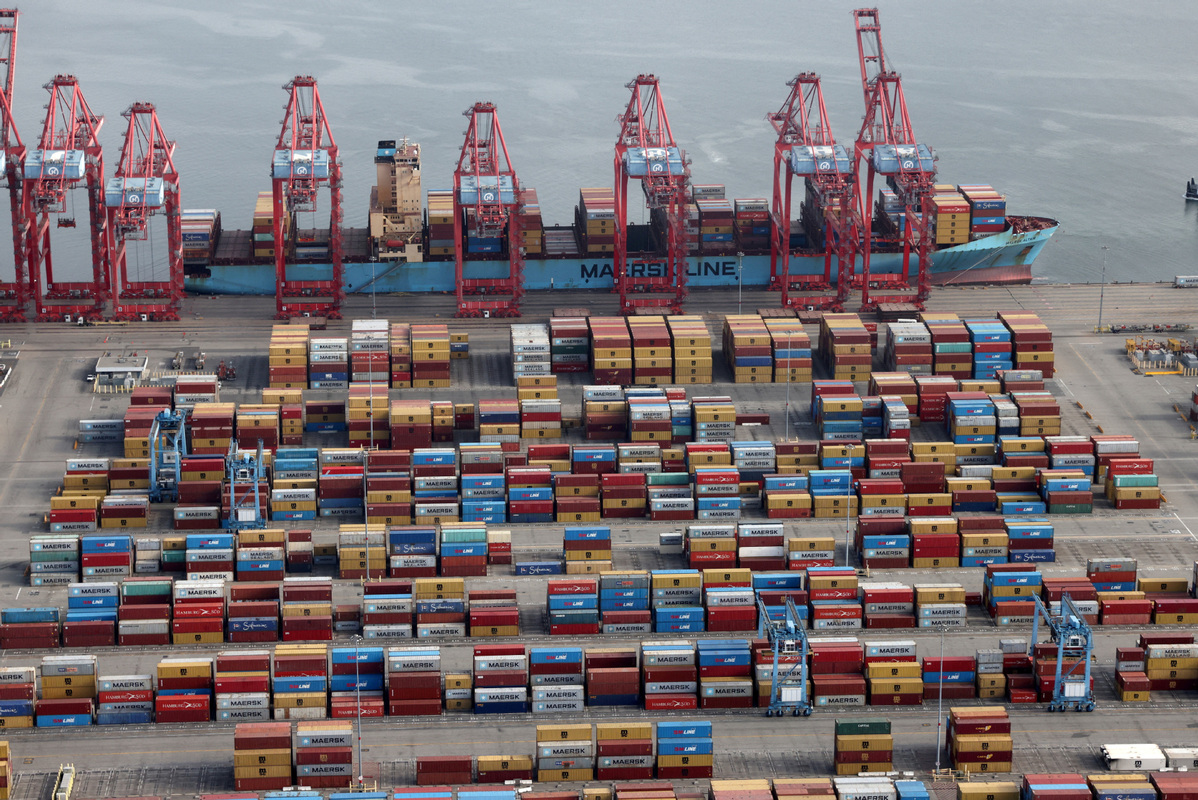
Lingering blockages associated with the pandemic, especially in China, which remains committed to its dynamic zero-COVID policy, are also fueling inflation. But these blockages will eventually subside, as will short- to medium-term capacity constraints caused by shifts in the composition of demand (in terms of both products and geography), though some will persist for a while. Capacity takes time to build.
But today's inflation has deeper roots. Over the past several decades, the activation of massive amounts of underutilized labor and productive capacity in emerging economies has generated deflationary pressures. With those resources having now been significantly depleted, the relative prices of many goods are set to rise.
Moreover, there is a global push to diversify and, in some cases, localize demand and supply chains-a response to the increasing frequency of severe shocks and rising geopolitical tensions. A more resilient global economy is a more expensive one, and prices will reflect that.
The Ukraine conflict has not only accelerated this supply-chain transformation, but also has caused energy and food prices to skyrocket, further exacerbating inflation, especially in lower-income countries.
In the case of fossil fuels, a previous pattern of underinvestment in capacity at multiple points along the supply chain has compounded the problem.
But there is even more to the story. More than 75 percent of the world's GDP is produced in countries with aging populations. Old-age dependency ratios are rising, and in some countries, the workforce is shrinking. Productivity gains could counter the contraction of labor supply relative to demand, but after nearly two decades of falling productivity growth, such gains are not forthcoming.
So inflation is rising fast, and central banks are under pressure to take drastic action. But their only real option is to reduce demand, by raising interest rates and withdrawing liquidity. These measures have already spurred a massive repricing of assets, including currencies, and they threaten to push global growth below potential-with lower-income economies suffering disproportionately-and reduce investment in the energy transition.
However, there is another way: supply-side measures. Trade and investment have long enabled supply to expand rapidly in response to growing global demand. But for nearly two decades-and especially in the last few years-proliferating trade barriers have been adding friction to this process. Creeping protectionism must be reversed, with US President Joe Biden considering the removal of tariffs imposed by his predecessor, Donald Trump, and Europe accelerating the integration of its services markets.
At the same time, efforts must be made to improve productivity. Digital technologies will be crucial. While the pandemic helped to accelerate the digital transformation, many sectors-including the public sector-are lagging, and concerns about the effects of automation on employment persist.
But in a supply-constrained world characterized by persistent labor shortages, productivity-boosting digital technologies, together with higher wages for workers, would go a long way toward improving the balance between supply and demand. For example, artificial intelligence-based tools can perform a wide range of functions, from screening luggage more efficiently at airports to analyzing medical imaging to detect cancer. Beyond digital technologies, regulatory regimes can be streamlined and improved in order to reduce supply-side bottlenecks.
Such an agenda must be applied to the public and private sectors. At the international level, efforts to facilitate trade, address supply-chain rigidities and close data gaps will be essential. Otherwise, central banks will be left to deal with inflation alone, with dire consequences for the entire global economy.
The author is a Nobel laureate in economics and an emeritus professor at Stanford University. The views do not necessarily reflect those of China Daily.