Villages of excellence










The central government's time-tested method to select grassroots officials based on merit and moral conduct has injected fresh vigor into rural economy, Xu Lin reports.
It has been a year since Xu Jinxin became a village official at Jinxiang county, Jining city, Shandong province. He settled there as a xuandiaosheng-a public servant governed by strict selection procedures-soon after graduating from university.
Fresh graduates with a bachelor's degree or above can apply for the position. They are required to clear a tough exam and interview organized by local provincial governments, and become a cadre at the grassroots level for two years.
These young and talented people are the reserve cadres of each province and can apply for higher posts after their tenure. Conditions of application differ in every province. Generally speaking, a full-time or probationary membership of the Communist Party of China, or a title of "excellent student cadre" or "merit student on campus", makes graduates eligible candidates.
"I want to repay my hometown and contribute to rural revitalization. I have honed my skills in various fields for that," says 23-year-old Xu, who is an assistant to Manzhuang village's Party secretary and hails from an urban area of Jining city.
"As a grassroots cadre, you must perform instead of making hollow promises. You must do some research and find ways to boost a village's economy," says Xu, who is a major in management information systems.
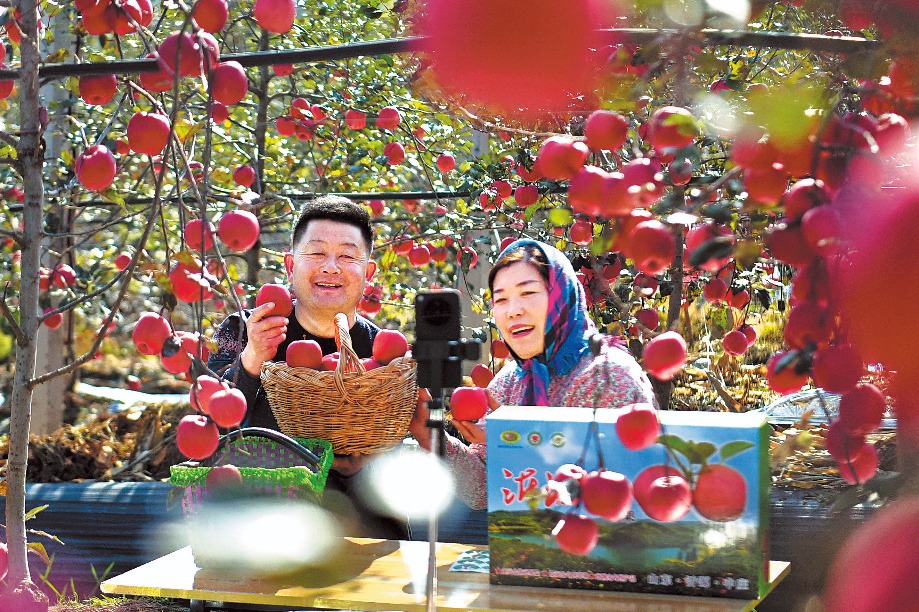
Xu has encouraged villagers of Manzhuang to plant sweet melons and join a newly established cooperative, so that they can reap dividends at the end of every year.
Along with some colleagues, he is also working hard to promote the sweet melons on e-commerce platforms, which will allow the produce of the village to reach every corner of the country.
"Grassroots work is complicated, but the sense of accomplishment is very rewarding. I once heard about a cash-strapped villager's gratitude for the government's policy. I realized what I did was meaningful and my decision (to be a village cadre) was the right one," he says.
Xu says morality and virtuous conduct, in addition to professional competence, are necessary to make the cut in the xuandiaosheng selection procedure.
The behavior of candidates on campus is taken into account during the interview process. The strict conditions for application, he believes, have largely ensured the virtue of candidates.
"The central government's call to build a new socialist countryside and cultivate social etiquette and civility, means that the grassroots cadres must have virtue. Also, since development in rural areas is not uniform, people with professional competence get a better chance to put their talent to use," he says.
Xu emphasizes that a person with both virtue and talent is a role model, and can lead villagers to prosperity.
He says towns have their own policies to draw talent, which rural areas urgently need.
Gao Qi, 34, first Party secretary of Zhangwafang village, agrees.
"If virtue is like the steering wheel, talent is the petrol tank. One must drive in the right direction to serve the people," she says.
Gao worked in the county government before she was dispatched to the village eight months ago. She says the county has set up a talent station to offer online services and consultation, and the recruitment emphasizes both morality and professional competence.
Talent selection policies
Like Xu, a great number of fresh graduates in China have voluntarily joined the growing team of public servants in response to the central government's policies to encourage youth engagement at the grassroots level.
To advance rural revitalization and expand achievements in poverty alleviation, the central government issued guidelines in May last year to continue to dispatch first Party secretaries to key villages. These officials are selected from outstanding personnel in government departments, State-owned enterprises and public institutions.
Since last year, Jining city has dispatched 1,579 first Party secretaries, including Gao.
There is an intrinsic philosophy in these policies. President Xi Jinping always stresses the importance of gathering talented people who are patriotic and dedicated, evaluating them in terms of both political integrity and professional competence, with priority given to integrity, as well as the need to appoint people based on merit.
From the Chinese leadership's perspective, people with talent are a strategic resource for the country as it endeavors to achieve national rejuvenation.
Earlier this year, the Chinese authorities adjusted a provisional regulation related to leadership management at public institutions, with detailed standards set for the improvement of talent selection methods.
The path of righteousness and ethical conduct are part of enduring Chinese wisdom, handed down from generation to generation.
Fu Linpeng, a professor at the School of Chinese Language and Literature, Central China Normal University, in Wuhan, Hubei province, says: "From ancient classics, we know our ancestors were guided by the valuable principles of Confucius. People with high morals and intellectual capabilities were revered."
In Confucianism, an administrator is considered the right person for the job if his conduct is ethical and virtuous. A true leader is expected to cultivate his moral character and ensure those in his charge are happy and live in peace.
The Great Learning, one of the Four Books of Confucianism, believed to be written during the Spring and Autumn Period (770-476 BC), states that, through self-cultivation, a person can bring order and harmony to their mind, life, family and feudal estate, thereby bringing peace to the nation.
During the Song Dynasty (960-1279), Chinese historian, politician and author Sima Guang wrote Comprehensive Mirror to Aid in Government, a general chronicle of Chinese history from 403 BC to AD 959.
Sima wrote that a saint is someone with both talent and virtue, a gentleman is someone whose virtue outweighs talent and a fool has neither talent, nor virtue.
Fu gives a broad overview of the talent selection system in Chinese feudalistic society, and says that the current standard remains the same in terms of ability and integrity. Ancient Chinese philosophers, such as Confucius, Mencius and Xunzi, all share the same view.
"Confucius was the first to focus on 'individual virtue', the implications of which have expanded over time. Many good qualities, including filial piety and being incorruptible, were defined as 'individual virtue' in ancient China," Fu says.
"Today, the concept of 'individual morality' is an inheritance and development of its ancient meaning. It implies tuning one's behavior with high moral standards and norms of social conduct."
Ability and integrity
In 2014, President Xi proposed a set of guidelines for officials-Three Guidelines for Ethical Behavior and Three Basic Rules of Conduct. It calls on officials at all levels to be strict with themselves in self-cultivation, in the exercise of power and in self-discipline, and act in good faith when performing official duties, undertaking initiatives and interacting with others.
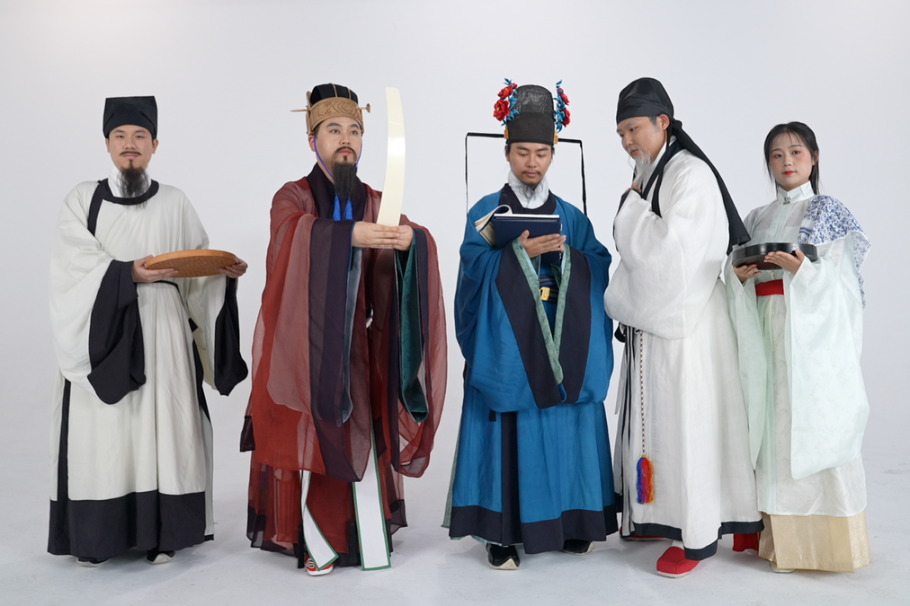
In the Western Zhou Dynasty (c.11th century-771 BC), officials were selected from noble families and the system was largely hereditary. After that, the ancient Chinese selected officials through recommendation, which was based on a candidate's moral conduct.
It is widely believed that the imperial civil examination, which stopped in 1905 at the end of Qing (1644-1911) rule, was founded during the Sui (581-618) and Tang (618-907) dynasties.
The examination was held regularly at county, provincial and central levels to select officials of "outstanding ability" for the imperial bureaucracy. It was a coveted opportunity for those born into poverty, as becoming an imperial official would inevitably change a person's social standing.
"A good scholar will make an official" is, in fact, a well-known proverb from The Analects of Confucius, which dates back around 2,000 years.
Chen Xia, a research fellow at the Institute of Philosophy, Chinese Academy of Social Sciences, quotes it to stress that "selecting and appointing capable people has always been integral to governance in China".
It's important to have such talent in the country's team of officials, she says.