Sugarcoating can't legitimize AUKUS sub deal









The Tenth Review Conference of the Parties to the Treaty on the Non-Proliferation of Nuclear Weapons, being held from Aug 1 to 26, is a crucial opportunity for the international community to restore the fundamentals of the global nuclear order. Especially, because the NPT has the largest membership of any arms control agreement-191 state parties.
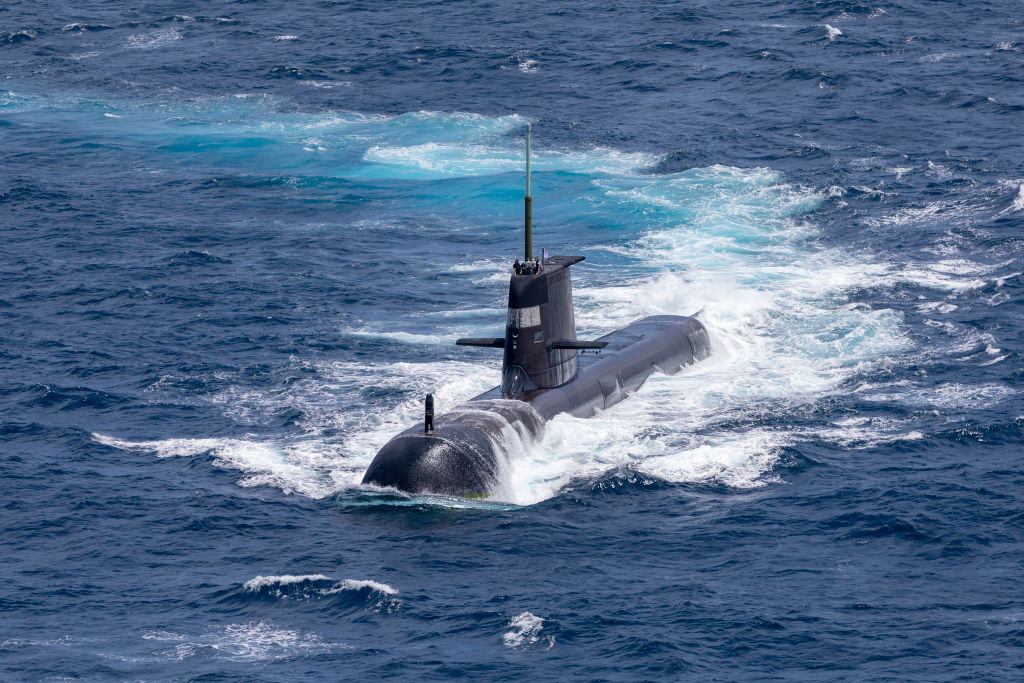
Although the once-in-five-year conference was delayed due to the lingering COVID-19 pandemic, it still serves as an alarm reminding the world of the need to prevent nuclear proliferation. That brings us to AUKUS(a security partnership among Australia, the United Kingdom and the United States), under which the UK and the US will help Australia acquire as many as eight nuclear-powered submarines.
The three countries issued a joint statement on Sept 15, 2021, announcing the establishment of AUKUS, catching the world by surprise not only because Australia had broken the contract with France to buy diesel-powered submarines for about $66 billion but also because two nuclear weapon states had pledged to help a non-nuclear weapon state to acquire nuclear-powered machinery, that is, submarines. That is a gross violation of the NPT as well as International Atomic Energy Agency rules.
According to researchers at the Stockholm International Peace Research Institute, the nuclear materials to be used to build the eight submarines would be enough to make 64 to 80 nuclear weapons.
All three AUKUS allies are signatories to the NPT, and yet they are undermining the treaty's authority and frustrating global efforts to prevent nuclear proliferation. That's also why the international community-especially Australia's neighbors including Southeast Asian countries-are vehemently opposed to the tripartite deal.
The 10 ASEAN member states have been working to make Southeast Asia a nuclear weapons-free zone, just like the South Pacific Nuclear Free Zone Treaty, signed in 1985 and enforced in 1986, has shielded the South Pacific region against nuclear proliferation.
But Australia's nuclear-weapon ambitions have considerably increased security pressure on smaller countries in the region, because they fear the AUKUS deal will intensify the arms race. As a matter of fact, shortly after the nuclear-powered submarine deal was announced, the ambassadors of several ASEAN states in Beijing visited the Chinese Foreign Ministry to express their common concern over AUKUS. As for China, it has been opposed to the sub deal ab initio.
Despite former Australian prime minister Scott Morrison of the Liberal Party losing the parliamentary election and Labor Party leader Anthony Albanese taking over as prime minister in May, Australia is going ahead with the AUKUS plan, and has spared no efforts, along with the UK and the US, in sugarcoating the controversial submarine deal. In fact, Australian Defence Minister Richard Marles said in June that according to the previous government's plan, the subs would be delivered by the 2040s, but the new administration "will be looking at every option available to try and bring that time forward".
"I think bringing that time forward to eight years from now would be extremely optimistic," Australian Broadcasting Corporation quoted Marles as saying.
Preparing for the NPT review conference at the UN Headquarters in New York City, the three countries have drafted a working document to defend their submarine deal. According to an unedited draft released on the US State Department website in July, the three sides have agreed that "Australia would be provided with complete, welded power units". In order to justify the plan further, the document said the three countries are willing to allow greater scrutiny by the IAEA.
Such paradoxical narratives don't change the nature of the submarine deal. And no matter how desperately the three countries try to cover their dirty deal with a legal or moral garb, the fact is that they are engaged in transferring and receiving weapons-grade nuclear materials and violating the NPT. Aside from Australia and the UK, the buyer and the seller, the US' role in this nuclear proliferation case calls for greater global scrutiny of its track record in this field since the end of World War II.
In 1994, during the initial stages of the DPRK developing nuclear weapons, Washington and Pyongyang reached an agreement in Geneva on the latter freezing its nuclear weapons plan in exchange for the US helping the DPRK develop civil-use nuclear facilities.
But Washington went back on its words and halted assistance to Pyongyang in the following years, intensifying the nuclearization of the Korean Peninsula. Similarly, the Donald Trump administration's decision in 2018 to pull the US out of the Iran nuclear deal, which was signed by Iran, the five permanent UN Security Council members and Germany in 2015, dealt a serious blow to global nuclear nonproliferation efforts.
While Washington has been behind a major nuclear weapon material trafficking deal before, the ongoing review conference in New York gives the international community a great opportunity to hold the three countries to account. No matter how far the conference goes in this regard, no country should sit idle watching the dirty tripartite nuclear submarine deal go on.
The international community should make its voice heard, expose the three countries' conspiracy, and maintain the world order and boost global strategic stability.
The author is a writer with China Daily.
If you have a specific expertise, or would like to share your thought about our stories, then send us your writings at opinion@chinadaily.com.cn, and comment@chinadaily.com.cn.