Middle-income swell
Priority must be given to the low-income population in rural areas to promote the nation's common prosperity drive









Priority must be given to the low-income population in rural areas to promote the nation's common prosperity drive
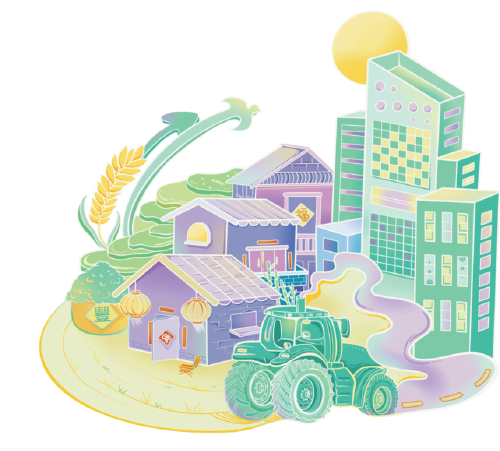
The ultimate goal for rural vitalization is to modernize the agricultural sector and rural areas. Rural vitalization is characterized by a strong agricultural sector, including the development of basic public services, a beautiful countryside and the bettering of the rural environment, and a high level of affluence among farmers, which is a fundamental requirement for the nation's common prosperity drive.
The key pathway to rural vitalization is to eliminate the disparity between urban and rural areas at both the social and economic levels, and the coming decade and beyond will be a window of opportunity to eliminate this disparity.
The most important task for China, after having won its battle against absolute poverty, is to prevent the recurrence of poverty on a large scale. The priority now is to learn from international standards and support and help the low-income group. To consolidate the outcomes of poverty alleviation, we must ensure that there will be no recurrence of poverty on a massive scale. Meanwhile, we need to give priority to the low-income population in rural areas, enable their continuous income growth, enlarge the middle-income group and work toward the highest possible goal.
In 2021, the income of the lowest-income group in the rural areas grew only by 3.7 percent year-on-year, far lower than the double-digit growth rate for the high-income groups in the countryside. While that growth rate guaranteed that there would be no recurrence of poverty on a large scale, it showed the necessity to help parts of the group of people hold middle income status. We at least need to make sure that the growth rate of their income, if not higher than that of other income groups, is not lower than them. Due to the impact of the COVID-19 pandemic, many rural migrant workers are stranded at home, making them a vulnerable group. Therefore, more proactive measures should be taken to stimulate their income growth.
The World Bank is expected to adopt a new standard in November that raises the international poverty line from living at or below $1.9 per person per day to $2.15 per person per day, which would be worthy of reference for China after its successful poverty alleviation campaign. In addition, OECD countries generally adopt a relative poverty standard, which is defined as half the median household income of the total population. By this standard, the half median rural household income in China is 8,451 yuan ($1,251), which means the lowest-income group in rural areas is still living below this line. The OECD standard, which uses median household income as a reference, is consistent with China's goal of expanding the middle-income group. Drawing on such international standards will help the nation stabilize income levels and expand the middle-income group.
An important starting point for advancing the rural vitalization strategy is to promote a new type of urbanization and the transfer of labor from farming to non-farming sectors.
Over the years, China has seen remarkable improvement in its agricultural labor productivity, with the rural labor force being transferred to urban areas on a large scale. However, the relative income level in the agricultural sector has remained low, and it is difficult for individuals working in the agricultural sector to obtain a level of income that is on par with other sectors. One factor that has contributed to such an outcome is that an overly high proportion of China's labor force is concentrated in the agricultural sector, which has resulted in a low level of income. So the fundamental solution is to transfer more labor force out of the agricultural sector. The nation must advance urbanization and encourage the flow of rural migrant workers into urban areas to become urban residents.
Compared with countries with per capita GDP above China but below $24,000, China is 5.5 percentage points lower in the urbanization rate and 18.2 percentage points higher in the proportion of population employed in the agricultural sector. Meanwhile, there is still a gap of 18 percentage points between the percentage of the population with an urban household registration, or hukou, and the percentage of population actually living in urban areas. Therefore, if China can promote urbanization and accelerate the transfer of labor from the farming sector to non-farming sectors through the reform of the household registration system, the nation can increase the supply of labor to other sectors, obtain the efficiency of resource reallocation and promote a rise in productivity, while increasing the income of farmers and expanding their consumption.
In addition to the high proportion of labor, another factor restricting returns from the agricultural sector is land. Without labor transferring out of the agricultural sector, the transfer of land-use rights in rural areas is insufficient. Consequently, farmers are operating on relatively small scales of farmland, which restricts labor productivity.
According to data from the World Bank, China's agricultural labor productivity, namely the agricultural added-value created by each farmer, is higher than the world average and the average level of low-income countries. But the nation's agricultural labor productivity, which is higher than that of lower-middle-income countries, only equals to 77 percent of the level of an upper-middle-income country.
The average land size per household in China is the smallest in the world, a reality that has not changed significantly over the past 40 years. The World Bank has defined farmers with a land plot of one to two hectares as smallholders. In China, farmers on average only have access to land that is only one-third the size of a smallholder by that definition. According to the data of the country's third agricultural census, 80 percent of the labor force in the agricultural sector is working on land plots that are smaller than 0.67 hectares. The small land scale restricts improvements of labor productivity and serves as a drag on the agricultural sector from benefitting the economies of scale.
There is still an income gap between urban and rural areas, and such a gap accounts for half of the overall income gap. This means that if China is to reduce its high Gini coefficient, it must rely on redistribution and narrowing the income gap between urban and rural areas. Under the disparity between urban and rural areas in both the economy and the society, there are differences in some basic public services between urban and rural areas. The public services offered to rural migrant workers and urban residents are also different. Therefore, it is an urgent task to eliminate this disparity. To carry out the rural vitalization strategy, the nation should energize the enthusiasm of each individual, on the one hand, and strengthen public policy so that it can provide us with the necessary entry point, on the other.
The author is the chief expert of the National High-end Think Tank at the Chinese Academy of Social Sciences. The author contributed this article to China Watch, a think tank powered by China Daily. The views do not necessarily reflect those of China Daily.
Contact the editor at editor@chinawatch.cn