



The Washington Consensus: daggers hidden in smiles









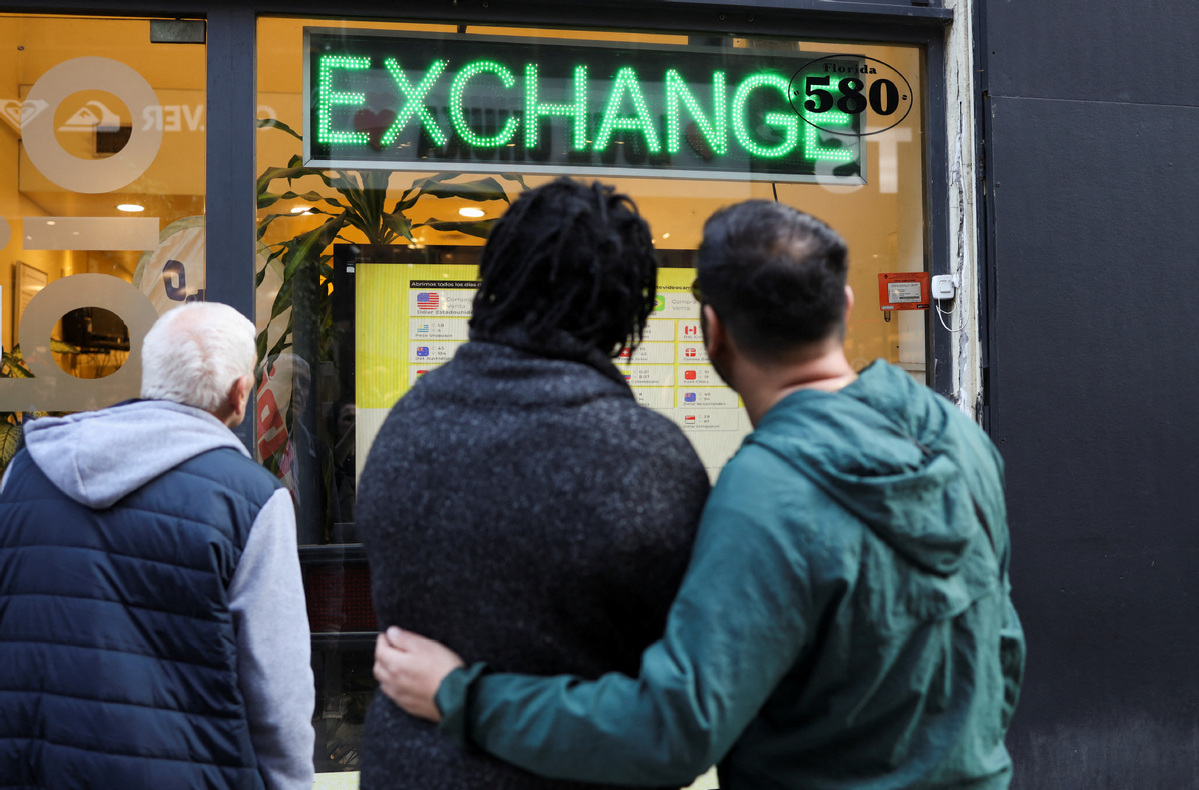
As the US and other advanced economies substantially raise interest rates to curb the rampant inflation, emerging markets and developing economies are suffering a collateral damage: economic stagflation, unsustainable debt, currency depreciation and financial turbulence. Some are even running into serious economic and social crisis, such as the recent economic collapse in Sri Lanka, ringing the alarm bell for the whole world. It reminds us once again of the old curse imposed by Western capital on developing countries.
Unlike the West depending on colonial plundering and exploitation to accumulate raw capital, most developing countries, as latecomers, had to borrow money, particularly from the Western-dominated multilateral financial institutions, to finance their development. However, loans were oftentimes offered on harsh conditions of the so-called neo-liberal economic restructuring. The "prescriptions" given by the Western countries are known as the Washington Consensus, an economic tool to exploit and control the developing countries under the disguise of economic reform.
STEP ONE: SHATTER YOUR SHIELD
Although the West preaches that capital liberalization increases liquidity and market dynamism, the reality is, without capital control, fragile financial systems of developing countries easily lose their brakes. When providing loans to countries in need of funds, the World Bank required them to deepen economic reform and open up their financial markets to foreign capital, which then flooded into those countries to speculate in the real estate, stock and currency markets. When crisis struck, the "hot money" would take flight, and the foreign exchange reserves of the affected countries would be sucked dry in a matter of days or even hours. The IMF’s conditions for rescue include tightening monetary policy and raising interest rates to absurd levels of up to 80 percent. Such high interest rates would only destroy local industrial production and exploited the wealth of ordinary local people. It is precisely because of the IMF's rescue plan that in mid-1998, Thailand's non-performing assets accounted for 48 percent of the total credit.
STEP TWO: CONTROL YOUR LIFELINES
Neo-liberalism dictates to developing countries to privatize their enterprises on the ground that privileged state-owned giants will lead to market failure. The result is that the core industries of debtor countries, which is their lifeline, fall into the hands of foreign capital. Documents disclosed by former World Bank chief economist Joseph Stiglitz show that the World Bank asked countries receiving emergency aid to sign as many as 111 secret clauses, including the sale of the recipient countries’ core assets: water, electricity, natural gas, railways, telecommunications, oil, banking, etc. Leaders of recipient countries would receive a large sum of money through their secret accounts in Swiss banks if they agree to sell those assets at bargain prices.
Multinationals in developed countries would then take the advantage to conduct mergers and acquisitions at particularly favorable prices. In the second half of 1997, shortly after the outbreak of the Asian financial crisis, the transaction volume of US companies’ purchases of companies in Indonesia, Thailand, the Philippines, Malaysia and South Korea alone skyrocketed from 542 million US dollars in the first half of the year to 2 billion dollars, an increase of nearly 300 percenet.
STEP THREE: LOOT YOUR PEOPLE
The Washington Consensus persuades developing countries into market pricing, arguing that the "invisible hand" of market can optimize the allocation of resources. But this is just a fantasy out of reach. In developing countries, the price of daily necessities such as food, drinking water and natural gas could rise sharply because of supply shortage. When the sovereign debt crisis swept across Latin America, the regional average inflation rate tripled to 150 percent in 1984-1985. At the end of 1984, the inflation rate in Argentina was close to 700 percent, and reached a peak of 1128 percent in June 1985. The inflation rate in Brazil exceeded 200 percent in 1985, and that in Peru reached 150 percent in 1987. For ordinary people, such hyperinflation caused by market pricing equals killing, especially when the economy is in recession.
In 1998, mass riots broke out in Indonesia as the IMF cut subsidies for food and fuel. Rising water prices in Bolivia resulted in protests known as Water Wars. Ecuador suffered from social chaos due to soaring gas prices. All these were in the calculation of Western bankers: local capital quickly fled social unrest, leaving behind extremely cheap assets Western companies have long coveted. In the end, the money people paid for their bills went into the pockets of foreign capitalists.
As former UN Secretary-General Kofi Annan put it, "The development of the West is based on the underdevelopment of the non-West, and the prosperity of the West is conditioned on the impoverishment of the non-West." The "conditional" helping hands offered by international financial institutions controlled by the West are nothing but daggers hidden in smiles.
The author is a commentator on international affairs, writing regularly for CGTN, Global Times, Xinhua News Agency, etc.
The opinions expressed here are those of the writer and do not necessarily represent the views of China Daily and China Daily website.
If you have a specific expertise, or would like to share your thought about our stories, then send us your writings at opinion@chinadaily.com.cn, and comment@chinadaily.com.cn.





