Climate change, conflicts making grain crisis worse









Millions of people struggling for food every day are seeing their hopes dimmed by soaring grain prices and tight supplies amid the impact of climate change and continued Western sanctions over the Russia-Ukraine conflict.
Wheat prices are likely to change unevenly and increase in much of the Global South, exacerbating existing inequalities, according to research modeling carried out by scientists from six countries.
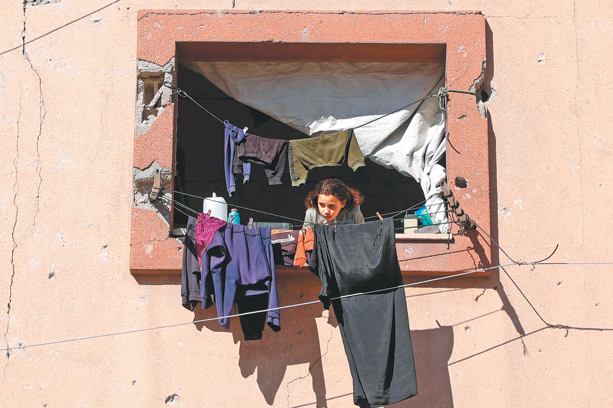
A record 345 million people in 82 countries face acute food insecurity, said the World Food Programme. Up to 50 million people in 45 countries are on the edge of famine and risk tipping over without humanitarian support.
Among them, about 900,000 people are already facing catastrophic famine or famine-like conditions in parts of Afghanistan, Ethiopia, Somalia, South Sudan and Yemen.
Worse yet, the WFP is finding higher costs and more difficulties distributing wheat, wheat flour, vegetable oil, peas and corn to the needy due to supply chain problems caused by US-led sanctions over Russia this year.
David Beasley, executive director of the WFP, recently said, "When a nation that is the breadbasket of the world becomes a nation with the longest bread line of the world, we know we have a problem." He was referring to Ukraine, a big supplier of wheat and corn to the world.
The first shipment of Ukrainian grain for WFP operations, under the UN-brokered Black Sea Initiative, is heading to the drought-hit Horn of Africa, where severe hunger threatens more than 20 million people, the WFP said.
Beasley said it will take more than grain ships out of Ukraine to stop world hunger.
Even before the Ukraine crisis struck, the world was already facing an unprecedented, perfect storm because of regional conflicts, climate change and the COVID-19 pandemic.
Qu Dongyu, director-general of the UN's Food and Agriculture Organization, has been concerned that the past five years have witnessed yet another spike in global levels of acute hunger. Between 2018 and 2021, the number of people in crisis situations who live in countries where conflict was the main driver of acute food insecurity increased by a staggering 88 percent, to over 139 million.
Loss of grain yields to extreme weather is believed to be a major contributor, and the heavy toll on food production globally can get worse, scientists said.
New research modeling by the scientists from Afghanistan, Ethiopia, Somalia, South Sudan and Yemen shows that climate change will significantly alter the yield and price of wheat in the coming years, even if climate mitigation targets are kept under 2 C.
Karin van der Wiel, a climate scientist with the Royal Netherlands Meteorological Institute and a co-author of a report published on Aug 19 in the journal One Earth noted that in countries such as Egypt, India and Venezuela, wheat yields are likely to drop-in some areas by more than 15 percent. But yields can increase in high-latitude regions in countries such as the United States and Russia, and in much of northern Europe.
Germany's grain harvest in 2022 remains "significantly below the average" since 2014 of above 45 million tons, though the almost 2 percent year-on-year increase to around 43 million tons this year will be reached despite an ongoing drought, the German Farmers' Association said.
Germany's Federal Ministry of Food and Agriculture also said the consequences of the climate crisis are showing up in fields, vegetable plots, orchards and vineyards.
In low latitudes, "growth is often limited by lack of precipitation or excessive temperatures in a warmer climate", said Frank Selten, a climate researcher with the Royal Netherlands Meteorological Institute.
Trading in the grain then leads to higher prices, both in the net wheat importing countries due to high demand and in the net wheat exporting countries, because exports drive domestic prices upward, he said.
Citing India as an example of a wheat importing country, Selten said it "depends on imports for its food security at a high price point".Increasing shipments of grain and other foodstuffs is crucial, but it will not mean much if countries cannot afford them.
Tianyi Zhang, an agro-meteorologist with the Institute of Atmospheric Physics at the Chinese Academy of Sciences, said: "With this change in yields, the traditional trade position of the wheat market could be deepened, and this may cause the wheat-importing regions located in low latitudes, such as Southern Asia and Northern Africa, to see more frequent and steeper wheat price spikes than wheat exporting countries.
"Not only could these changes mean that countries already facing food security issues pay even more for a pivotal food crop, but wheat prices on the global market could become more volatile and exacerbate existing inequalities."
Wheat prices already hit their highest level in several years in March.
"Helping improve the grain food self-supplies in developing countries is crucial for global food security," he said. Developed countries and international financial institutions must do more to ensure that developing countries can get more assistance in food supply.
Xinhua and Xu Weiwei in Hong Kong contributed to this report.
karlwilson@chinadailyapac.com