Circle of friends










The civil sector is a constructive and positive force seeking to maximize the potential of Bulgaria-China cooperation
A decade has passed since the start of cooperation between China and the countries of Central and Eastern Europe.
At the first summit between the leaders of the new international format, held in Warsaw, the capital of Poland, in 2012, China presented 12 measures to promote cooperation between China and the CEE countries.
These were in areas such as high technologies, investments, industrial partnerships, joint ventures, infrastructure, agriculture and tourism. Areas for partnership are very important for both the present and a shared future, and provide many opportunities for the CEE countries.
Today, we are at a critical moment. It is related to the challenges created by the COVID-19 pandemic, and also due to the restructuring of the global economy and politics, against the background of a possible new Cold War. In addition, the development of international relations in the last few years has seen a worsening of United States-China economic relations.
On May 22, 2021, Lithuania left the"17+1" format, and on Aug 11, 2022, Estonia and Latvia also dropped out of the cooperation mechanism.
What makes a strong impression is the transformation of the Chinese economy. From an export-oriented economy, it is moving toward an economy relying on domestic consumption and investment. And this is the right step, considering the rising household incomes in China and its improving service sector.
Great importance is attached to the development and confirmation of the country's policies to overcome the potentially dangerous changes in labor relations associated with social peace, the transformation of ownership and the imposition of market mechanisms.
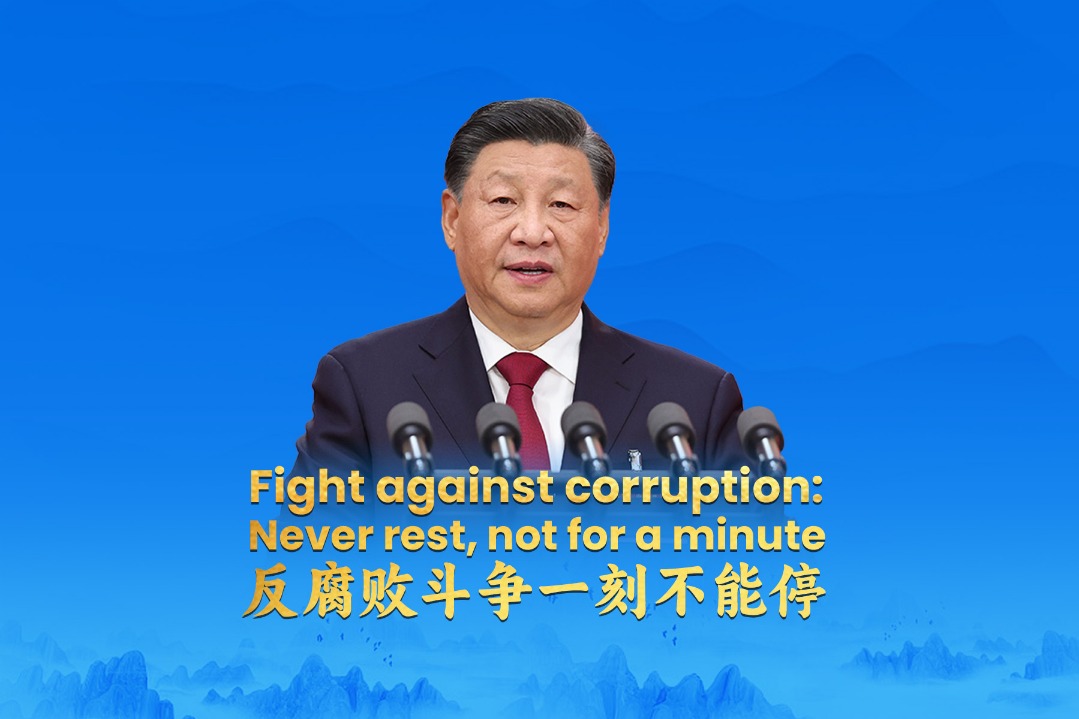
Since the 18th Communist Party of China National Congress in 2012, China has been constantly building an effective system of governance. Moreover, it has proved the historical advantages of socialism with Chinese characteristics over the ideology and political practice of neoliberalism. According to Francis Fukuyama's estimates, China's leaders have demonstrated that they can make large-scale and complex decisions more quickly compared to the agonizing political paralysis that has afflicted the US and Europe in recent years. Therefore, according to many objective observers, the Chinese model of development is becoming an alternative to neoliberalism. We cannot but agree with Fukuyama's assessment, noted among others by a number of strategists of US politics such as Zbigniew Brzezinski and Brent Scowcroft, that China was the first society to create a rational meritocratic administration in which civil service is held following examinations and the appointment in management is made without connections. This has resulted in a strong and united state. In this regard, the national anti-corruption campaign deserves special attention. It covers all levels of the Party and the administration, from local structures to the highest levels of power.
But now let's see the other side of the "medal"-the situation in Bulgaria.
Here we see that history does not always go forward. The last 30 years can hardly be connected with anything constructive in the development of Bulgaria. Bulgaria is a country that is still trying to re-industrialize, to re-attain the level of 1989 so that it can fit into the socioeconomic and political realities of the 21st century. From this point of view, the Chinese experience is of paramount importance to us. This is confirmed by the constructive attitude of Bulgaria toward the format for comprehensive development of relations between China and the CEE countries. This format has become an experimental platform.
In this connection, the signing of the joint document between the presidents of Bulgaria and China on the strategic nature of the relations between the two countries was quite a logical result. However, we should not fall into unnecessary euphoria on this subject, because the signing of this important document was long overdue.
It is also very important to focus our attention on seeking new approaches to the problem of Chinese investments in Bulgaria. Indeed, there are some encouraging steps in this direction. They are mainly related to the provision, by the China Development Bank, through the Bulgarian Development Bank, of a credit line for the development of economic relations between the two countries. China provides over 1 billion euros ($995 million) in resources. However, if we ask the question how much of these funds have been utilized, the answer is pessimistic. So far, only 25-30 million euros have been used. Even more concerning is that this money is directed to structures that make no significant contribution to the development of economic ties between Bulgaria and China. At the same time, projects that could actually drive forward the wheel of Bulgarian-Chinese economic relations are blocked. This applies first and foremost to companies that have entered into some form of cooperation or partnership with Chinese economic structures. There are powerful Chinese companies that are ready to invest in Bulgaria and participate in the construction of the new Bulgarian economic infrastructure. This is especially true for sectors that are extremely important for Bulgaria, such as transport infrastructure, high-tech production, tech parks and tourism.
This is the real picture today. On the one hand, there is a good political development, climate of trust and mutual interest in the relations between Sofia and Beijing; and on the other hand, in the area of concrete effects and practical results, we are lagging very seriously behind neighboring countries in the Balkans and other CEE countries.
We should not, however, fall into unnecessary pessimism, but work to maximize the potential of Bulgarian-Chinese relations. The discrepancy, which was discussed, gave rise to the creation of a number of non-governmental structures, which work in the field of Bulgarian-Chinese relations and represent the interests of certain professional groups of Bulgarian economic life.
Five years ago, we created the Bulgaria National Association for the Belt and Road and embarked on the path of uniting the forces of civil society. Along with this, we set ourselves the task of using the extremely powerful resource possessed by various private economic entities, as well as the Bulgarian Chamber of Commerce and Industry and the Bulgarian Industrial Association. In the scientific field we have included the Bulgarian Academy of Sciences and leading universities. The interest in culture and spiritual life has led us to include in our association the leaders of all major creative unions in the country.
The way out of the problems in the Bulgarian-Chinese relations, or figuratively speaking, the "bottlenecks" in this respect, is in the first place in the harmonization of the relations between the civil sector and the government bodies. Only in this way will Bulgaria be able to maximize its potential and become a constructive and positive partner of China.
The author is president of the Bulgarian National Association for the Belt and Road and president of Slavyani Foundation. The author contributed this article to China Watch, a think tank powered by China Daily. The views do not necessarily reflect those of China Daily.
Contact the editor at editor@chinawatch.cn