Obstacles pose threat to Sino-US relations









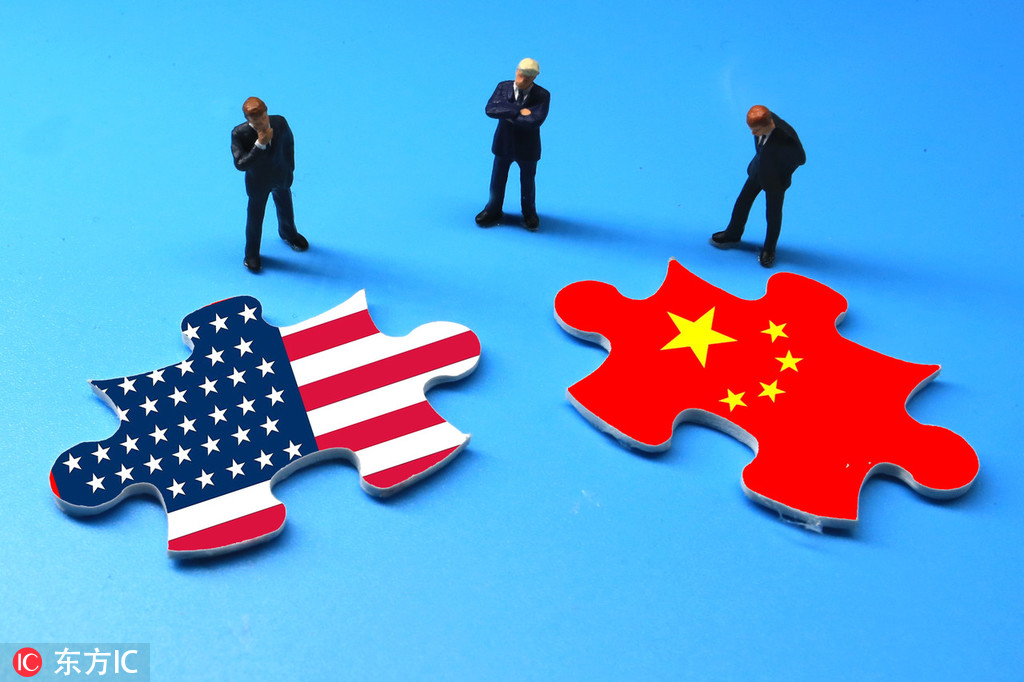
With the upcoming 20th National Congress of the Communist Party of China and the 2022 midterm elections in the United States next month, there is some hope for improved bilateral relations, although obstacles remain.
At a Sept 20 seminar, the "20th Party Congress and US Midterm Elections: Implications for US-China Relations", hosted by the Institute for China-America Studies, panelists analyzed the potential impact of the two significant political events.
China proposed the 20th Party Congress would begin on Oct 16 in Beijing. The congress' major decisions will largely determine the direction of China's development in the next five years.
On Nov 8 in the US, elections for all 435 seats in the House of Representatives and 35 of the 100 seats in the Senate will be contested.
"We really are facing an international environment with a degree of complexity and urgency that we haven't seen before," said Robert Daly, the director of the Kissinger Institute on China and the United States at the Wilson Center.
Yawei Liu, a senior adviser to China Focus at the Carter Center, expressed some hope for better US-China relations after the 20th National Congress.
He mentioned remarks made by State Councilor and Foreign Minister Wang Yi at the webinar, with members of the National Committee on United States-China Relations, the National Committee on United States-China Trade and the US Chamber of Commerce at the time of the United Nations General Assembly.
Liu said that Wang talked about "five certainties" of the relationship, including China's commitment to strengthen economic and trade cooperation and its willingness to coordinate multilaterally with the US.
"He did criticize the US, but he also said we have to get along. There is no other option other than for the United States and China to peacefully coexist," said Liu.
Liu said that China still wants to repair this relationship.
"[But] if President Biden keeps talking about defending Taiwan with the American men and women, with the boots on the ground, then it is very hard to repair this relationship," Liu said.
"I think the impact of the Party Congress on the US-China relationship is going to be a very positive one. At least you know the determination to fix this relationship," Liu added.
Rory Murphy, vice-president of Government Affairs at the US-China Business Council, said that the US attitude and policy toward China after the midterm elections is likely to remain tough, if not tougher.
"Regardless of which party wins either chamber, there is no doubt going to be a continued focus on China. The politics around being tough on China are just simply too tempting for lawmakers," said Murphy.
"If you look pre-2017, the number of bills and resolutions related to China was remarkably consistent, 200 to 250 per Congress. Last Congress, 639 measures," he said. "This year, we're well over 700.That trend is not going to stop. So, I think that there's going to be a focus on China no matter what."
However, Murphy mentioned that if Republicans took control of the House and the Senate or just the Senate, people might expect more focus on China, like prioritizing export-control bills and putting more political emphasis on Taiwan.
He noted that Senator Patrick Toomey, a Pennsylvania Republican who has been critical of former president Donald Trump's tariffs on China, and Senator Rob Portman, also a Pennsylvania Republican who has been a consistent and reasonable voice on trade over the years would both retire.
"When it comes to the US-China bilateral relationship, the business community has a lot of priorities, but kind of regardless of the sector, regardless of the company, high on that list is the need for more stability and more predictability," said Murphy.
Denis Simon, a professor of China business and technology and senior adviser to the president for China affairs at Duke University, also expressed his concern about the future of US-China relations.
He described the relationship as "driving off our cliff with our high-beam headlights turned on".
"Frankly, I've never been so worried about the state of the bilateral relationship, and I don't believe there's even a crack of daylight coming from inside the US political system, midterm and beyond, to remedy the situation in the short to medium term, whoever is in control of the House or Senate," Simon said.
Simon spent five years heading up a joint institute of higher learning between Duke University and Wuhan University in the city of Kunshan, Jiangsu province, starting in 2015.
"Year by year during those five years, the challenge of managing an important project like this grew increasingly difficult as the bilateral relationship began to sour," Simon said.
He said that education, science and technology had been a bedrock in the bilateral relationship, even in difficult times. "I'm afraid to say that the existing stakeholders in these areas are wondering if there is any path to meaningful cooperation in the future," he said.
Simon mentioned some bright spots in the relationship, such as Foreign Minister Wang's reference to "certainties" and a recent agreement reached by the US and China about auditing requirements for Chinese companies listed on US stock exchanges.
He also noted President Joe Biden's indication that he might be willing to relax tariffs on Chinese products initiated during the Trump administration.
Simon said "not all is lost", but the US and China have entered "a very dangerous period".
"The US must move beyond largely defining our domestic and foreign policy stances in terms of only containing or constraining China's rise," Simon said. "And Congress clearly needs to do a better job of listening to those various stakeholder communities and constituencies I mentioned before. Because there are people who still remain interested in engagement with China."





- Integrated hip-fracture model cuts mortality rates
- AI 'remix' videos may violate law
- China introduces national subsidy for elderly care services to foster senior-friendly society
- Geothermal energy keeps Shandong town toasty
- Leopard matriarch builds four-generation dynasty
- Researchers break robot 'emotional barrier'