Disciplinary body approves work report









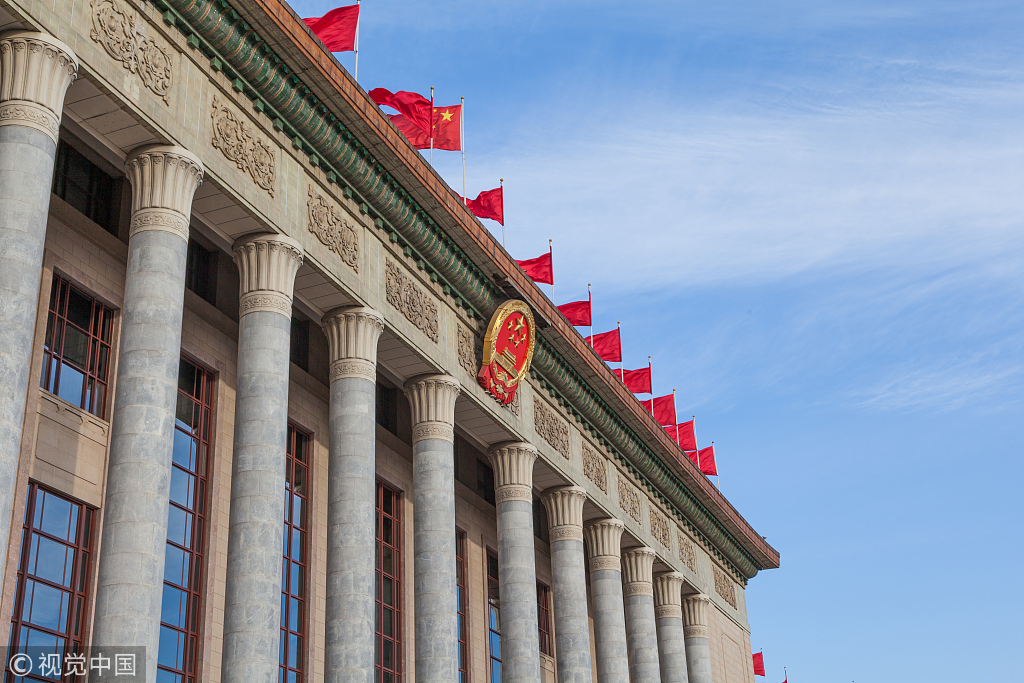
Document will be formally submitted to upcoming CPC National Congress
A plenary session of the 19th Communist Party of China Central Commission for Discipline Inspection — the Party's top disciplinary watchdog — on Friday approved a work report to be submitted to the upcoming 20th CPC National Congress, which is expected to open on Oct 16 in Beijing.
The report, summarizing five years of commission work, will also be reviewed by the 19th CPC Central Committee at its seventh plenary meeting, which will start on Sunday.
A total of 129 CCDI members attended the seventh plenary session of the disciplinary watchdog in Beijing on Friday, and two other attendees were present in a nonvoting capacity, according to a communique released after the plenum.
Zhao Leji, a member of the Standing Committee of the Political Bureau of the CPC Central Committee and secretary of the CCDI, addressed the session.
At its sixth plenary session in January, President Xi Jinping, who is also general secretary of the CPC Central Committee and chairman of the Central Military Commission, said that since the 18th CPC National Congress in 2012, the CPC Central Committee has improved Party conduct, upheld integrity and combated corruption with unprecedented courage and resolve.
Xi vowed to maintain a zero-tolerance stance on corruption and asked to continue to improve the Party and the State oversight systems.
While presiding over the 40th group study session of the Political Bureau of the CPC Central Committee in June, Xi said that since 2012, the Party has built a tight array of institutions that prevent corruption by forming a relatively complete system of intraparty regulations and anti-corruption laws.
The CPC Central Committee has enforced Party discipline and laws more stringently to prevent some from taking advantage of loopholes in the system and made sure that all the laws, regulations and institutions work effectively and create a synergy to make anti-corruption mechanisms more effective, he said.
Yang Weidong, a law professor at the China University of Political Science and Law, said that since the Party's 18th National Congress in November 2012, the system of intra-Party supervision and national laws supervision have been further improved to fight corruption.
With the Party's Constitution as the foundation, the CPC Central Committee issued a series of regulations and provisions to strengthen the intra-Party supervisory system and clarify the regulations in different areas such as organization, self-construction and supervision, Yang said.
The system was further improved since the Party's 19th National Congress in 2017, including revised regulations on disciplinary punishment that took effect in 2018 and revised regulations on Party accountability that came into effect in 2019.
Yang said that one goal of the fight against corruption is to set constraints on power and Party members, especially leading cadres, and these regulations set out a clear line between what can and cannot be done.
"In the process of establishing a system of intra-Party supervisory regulations, we have allowed the system to provide clear criteria for supervisors to judge," Yang said.
The improved supervisory system also puts forward higher and more detailed requirements for Party members and officials, and provides a solid foundation to make sure officials don't dare to, are not able to and have no desire to commit corruption, he said.
"Over the past five years, we have seen that China's anti-corruption efforts are not weakening. Instead, the authorities have made specific arrangements and intensified efforts based on the achievements since the 18th Party Congress," he said.
For example, besides regulations covering leading cadres of State-owned enterprises, regulations were also made to administer relatives of officials and retired officials, making overall supervision tighter.
Zhuang Deshui, deputy head of the Clean Government Research Center at Peking University, said that the introduction of a series of Party regulations reflects the CPC Central Committee's high level of attention paid to putting forward the strategy of ensuring officials dare not be, cannot be and do not want to be corrupt.
In doing so, the Party has aimed to infiltrate the sense of integrity into daily supervision, education and management.
Since the Party's 18th National Congress, discipline inspection and supervisory organs at all levels have not relaxed their discipline enforcement standards.
On the contrary, the intensified antigraft campaign has provided discipline inspection and supervisory organs with opportunities to strengthen their internal systems and mechanism construction, Zhuang said.
China's legal system for fighting corruption has also improved over the years, and Party discipline and administrative supervision have formed a synergistic relationship, said Yang.
In March 2018, the Supervision Law took effect. The Criminal Law and Criminal Procedure Law were also revised, offering sound legal support for fighting corruption.
In reality, public officials are not necessarily Party members. Therefore, improving the Supervision Law and establishing the National Supervisory Commission in 2018 effectively targeted corruption among civil servants who are not Party members, he said.
"The enforcement of Party discipline and national laws have achieved a seamless connection after years of effort made by authorities, enabling imposition of precise punishments for those involved in corruption and avoiding possible loopholes that may appear," he added.
yangzekun@chinadaily.com.cn




- Radiopharmaceutical development alliance launched in Shanghai
- Kelsang Pedron: A Tibetan female pilot in the Chinese PLA Air Force
- China expands rural land contract extension pilot program
- Fiber chip thinner than a hair
- Ministry to optimize the structure and scale of university enrollment
- Why do China's cultural and creative products go viral?