



Country's safeguards for health boosted in past decade









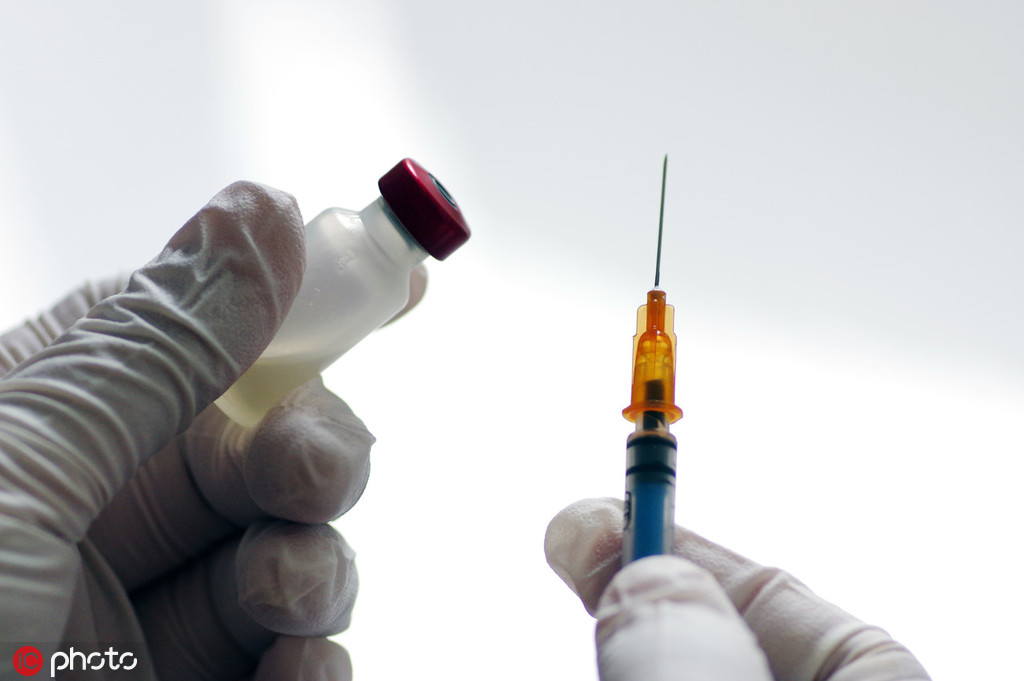
In the past decade China has strengthened its public health monitoring network and reined in major infectious diseases as part of its efforts to safeguard the population, officials said recently.
Feng Zijian, vice-president of the Chinese Preventive Medicine Association, said that since the infectious disease surveillance reporting system was established in 2004, the online network has operated effectively and played a role in identifying new cases.
"Now, it takes just four hours from making a diagnosis to registering a new case in the system," he said. "The system can detect signs of a potential outbreak in a timely fashion and collect comprehensive and relatively high-quality data, which is highly conducive to facilitating the monitoring of infectious diseases and their development situation."
Feng said it has been a requirement since the start of the COVID-19 epidemic that all positive test results must be reported to the system to allow prompt detection and control of new infection clusters.
Lei Zhenglong, deputy director of the National Health Commission's Bureau of Disease Prevention and Control, said the country's overall disease control capability has also improved. Currently, China has nearly 3,400 disease control centers at different levels, with 158,000 staff members, he said.
As a sign of the rising number and quality of laboratory testing facilities, the Chinese Center for Disease Control and Prevention — a national-level institution — operates four World Health Organization-certified reference labs for influenza, polio, measles and Japanese encephalitis, he said.
"In addition, our ability to conduct epidemiological investigations and deliver emergency responses has improved significantly, especially in the past two years, thanks to training funded by the central government," he added.
Wu Liangyou, also a deputy director at the bureau, said the national immunization program has been touted as the country's most remarkable achievement in recent years.
The program provides vaccines against 15 preventable infectious diseases, mostly targeting children age 6 and younger.
"The annual sum allocated to the program exceeds 4 billion yuan ($555 million)," he said. "The vaccination rate for eligible children has remained higher than 90 percent for years."
According to Lei, China has made progress in tackling contagious illnesses thanks to the concerted efforts of society as a whole, including government and healthcare workers.
In 2012, the Chinese mainland reported more than 3.2 million cases of the 27 types of category A or B infectious diseases, but the number fell to about 2.7 million last year.
For example, the incidence rate of measles, which mostly affects children, dropped to less than 0.04 people per 100,000 last year.
In June last year, the WHO announced that China had eliminated malaria as no domestic cases have been registered since 2017.
Zhou Xiaonong, director of the National Institute of Parasitic Diseases at the China CDC, said the country is still at risk of seeing domestic malaria outbreaks triggered by imported cases.
Before COVID-19 struck in early 2020, China reported around 3,000 imported malaria infections annually. Meanwhile, malaria deaths globally rose by 12 percent during the same period to an estimated 627,000 in 2020, according to WHO data.
Zhou said new rules have been formulated to prevent imported malaria cases from sparking transmission of the disease at home.
TIMELINE
2012: Tetanus is eliminated among newborn babies in China.
2014: The inoculation of newborn babies with the hepatitis B vaccine sees the proportion of chronically infected children age 5 and younger fall to 0.32 percent, achieving the World Health Organization's goal of reducing the figure to less than 1 percent ahead of schedule. China begins sending clinical and public health experts to West African countries hit by the Ebola virus epidemic.
2015: China establishes the world's largest online direct reporting system for epidemics and public health emergencies. The average reporting time falls from five days to four hours. Tu Youyou is awarded the 2015 Nobel Prize in physiology or medicine for her contributions to the discovery of artemisinin, an antimalaria treatment.
2016: China issues Healthy China 2030, a guideline to promote public health and fitness.
2018: The National Healthcare Security Administration is established, signaling a new chapter in the reform of medical insurance.
2020: The fight against the COVID-19 epidemic begins. China's first self-developed COVID-19 vaccine receives conditional market approval from the National Medical Products Administration in December.
China's mortality rate from tuberculosis falls to 2.1 deaths per 100,000 people, compared with an average of 17 deaths per 100,000 globally.
2021: The World Health Organization lists the Sinopharm COVID-19 vaccine for emergency use, the first Chinese vaccine to be given the green light for a global rollout. In June, the WHO says China has eliminated malaria.
SOURCE: NATIONAL HEALTH COMMISSION/STATE COUNCIL INFORMATION OFFICE


- Exploring ancient China: How procuratorial work helps revive porcelain
- Running for beauty and fun
- A new scroll along the river: The prosecution chapter
- National lawmakers: birth-friendly policies must extend beyond childbirth
- Hebei farmers gain from modern cultivation skills
- Feedback helps top court upgrade case database





