



South China Sea governance calls for more joint efforts









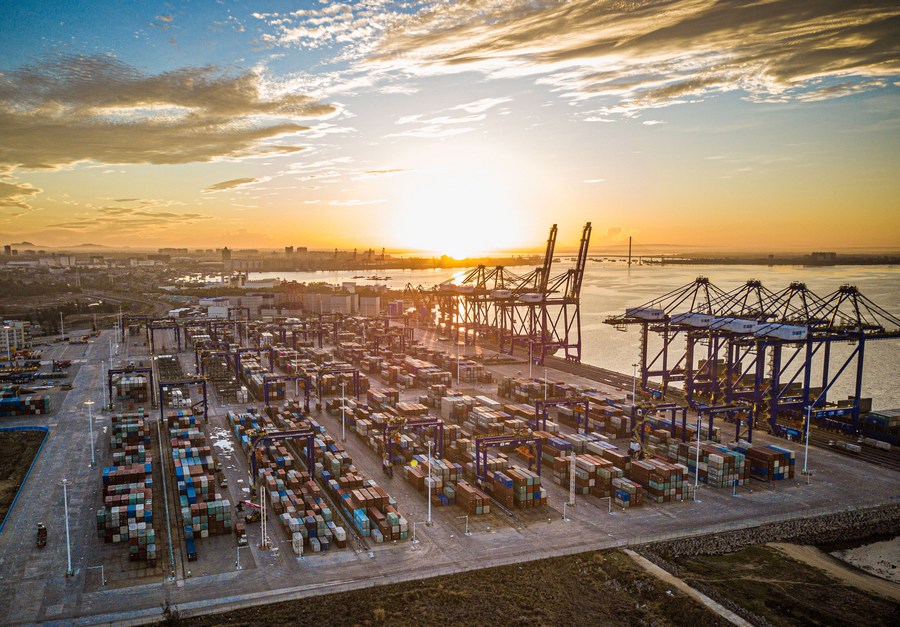
The peace of the sea is more precious than gold. Six centuries ago, Zheng He, a Chinese navigator of the Ming Dynasty, led the most powerful fleet in the world on seven voyages, a journey undertaken earlier than Columbus discovered the New World. But the Chinese did not engage in any colonization, killing or looting. Instead they sent tea, silk, and porcelain to various countries. Meanwhile, the aggressive expansion and maritime hegemony carried out by some traditional maritime powers around the sea has lasted for a long time, and some negative effects have continued to this day.
At present, Asia is standing at a new historical starting point and faces unprecedented development opportunities. At the same time, many countries in the region, including ASEAN, are under pressure to pick a side, and the regional strategic environment is at risk of being reshaped by geopolitical needs. China has always called for countries in the region to uphold peace, development, independence, and inclusiveness, and unswervingly practice open regionalism. At the same time, countries in the region can draw experience and wisdom from Asian civilizations and practices, and continuously inject new connotations into open regionalism.
For some time now, the so-called "rules-based order" has been frequently mentioned in discussions of maritime issues surrounding China. The original intention of this statement is to restrict China's rightful activities in the South China Sea. In fact, China has always upheld the "international order based on international law", and believes that on the South China Sea issue this means the joint efforts of all parties concerned to manage disputes and maintain maritime peace and stability, and it has already taken a step forward in order building. The Declaration of the Conduct (DoC) signed by China and ASEAN countries in 2002 is a useful attempt to establish order in the South China Sea. The rules include universally applicable principles and rules of international law, such as the United Nations Charter, the United Nations Convention on the Law of the Sea and other maritime-related legal instruments and rules that have been widely accepted, as well as multilateral documents, such as the DoC, concluded by regional countries. At the same time, the bilateral consensuses and agreements reached by China and other countries on the management and control of disputes in the handling of surrounding maritime issues also constitute rules that relevant parties should abide by.
Specifically, three points need to be paid attention to on building rules and order in the South China Sea. First, the purpose of building order is not to resolve disputes, but to manage them. Its rules are not intended to clarify, confirm, or change the legal position of any party, but to regulate its specific behavior without affecting the positions of all parties, maintain maritime peace and stability, ensure maritime security, and prevent accidents and conflicts. Such rules should not have the effect of recognizing the legitimacy of the status quo.
Second, the purpose of formulating rules is not only to define the boundaries of action, but also to promote cooperation. The ocean is a flowing whole, and man-made boundaries cannot change the fact that a particular sea area concerns the interests of all coastal states. Regardless of whether there is a dispute, or before or after the dispute is settled, the maritime order should be jointly maintained by the countries concerned. Cooperation must be an integral part of the rule-making process.
Third, the rules should be applied equally, and double standards should be avoided. From the perspective of international law, any rule should bind all parties equally. From the point of view of international politics, if a particular order is to be durable and not quickly overturned, every country involved must feel that its interests and concerns are satisfied and guaranteed.
The most prominent rule-making process in the current South China Sea issue is the Code of Conduct (CoC) that China and ASEAN countries are negotiating. Some countries are more concerned about whether the CoC should be legally binding. The issue ultimately rested on the consensus of all parties and was influenced to some extent by the specifics of the text. Under the circumstance that the CoC is legally binding, its entrance into force may require all parties to perform their respective domestic legal procedures, and the implementation of such domestic legal procedures will be a political process in nature.
Over the years, China and ASEAN countries have accumulated positive and negative experiences in dealing with the South China Sea issue. The two sides have an increasingly profound and intuitive understanding of each other's concerns and demands on the South China Sea issue. The ups and downs of the situation in the South China Sea have proved that it is not feasible to attract foreign forces to engage in group confrontation in the South China Sea. Practice has also proved that it is the right way to properly manage the South China Sea issue by building rules to manage and control crises, using maritime cooperation to dilute differences, and resolving disputes through negotiation.
Among the maritime governance issues in China's surrounding areas, the South China Sea issue faces a complex and unique international political ecology. On the one hand, the economic integration and development of countries in the region has a good momentum of development, but disputes over the territorial and maritime delimitation of islands and reefs have become prominent from time to time, and the geopolitical impact of the strategic game of major powers is prominent. On the other hand, the supply of international public goods in the fields of marine environmental protection, conservation of biological resources, safety of maritime routes, maritime search and rescue, and disaster prevention and mitigation are difficult to meet the growing needs of the countries along the South China Sea.
The South China Sea is regarded as one of the centers of global marine biodiversity, but in recent years there have been increasing challenges such as overfishing, ocean dumping, and plastic pollution. In terms of regional cooperation in sustainable development, Southeast Asia is not without successful experience - the Greater Mekong Subregion Biodiversity Conservation Corridor has been implemented for more than 10 years, and a series of key projects related to this have achieved remarkable results, and new global biodiversity conservation measures are also being promoted.
In non-traditional fields such as the protection of marine biological resources, the prevention and control of marine environmental pollution, and the prevention and rescue of marine disasters, China and ASEAN countries have urgent practical needs and strong political will to deepen cooperation, and their common interests in this regard far outweigh their differences. But at the same time, it should be noted that there are still many problems in the capability system, cooperation mechanism and coordinated response level of countries in dealing with non-traditional maritime security challenges, and it is still difficult to expand functional cooperation from bilateral to regional multilateral.
At present, there are more than 30 non-traditional maritime security cooperation mechanisms of different types and levels established by countries in the South China Sea. The cooperation mechanisms under these weak institutional conditions have overlapping functions and show a trend of fragmentation. This phenomenon may affect the quality of cooperation between littoral countries and should be a key problem to be solved in promoting the establishment of a cooperation mechanism between littoral countries in the South China Sea. The more complex the problem, the more rationally regional countries should maintain maritime stability and the general trend of cooperation, and achieving this goal requires a long-term joint effort of China and ASEAN countries.
Ding Duo is deputy director and associate research fellow, the Research Center for Ocean Law and Policy at the National Institute for South China Sea Studies. Zhong Hui is project manager, the Division of international exchanges at the National Institute for South China Sea Studies; Secretary at the China-Southeast Asia Research Center on the South China Sea.
The opinions expressed here are those of the writer and do not necessarily represent the views of China Daily and China Daily website.
If you have a specific expertise, or would like to share your thought about our stories, then send us your writings at opinion@chinadaily.com.cn, and comment@chinadaily.com.cn.





