The desirability of interaction
Openness is the best way to advance well-being across national borders









Openness is the best way to advance well-being across national borders
Editor's note: The world has undergone many changes and shocks in recent years. Enhanced dialogue between scholars from China and overseas is needed to build mutual understanding on many problems the world faces. For this purpose, the China Watch Institute of China Daily and the National Institute for Global Strategy, Chinese Academy of Social Sciences, jointly present this special column: The Global Strategy Dialogue, in which experts from China and abroad will offer insightful views, analysis and fresh perspectives on long-term strategic issues of global importance.
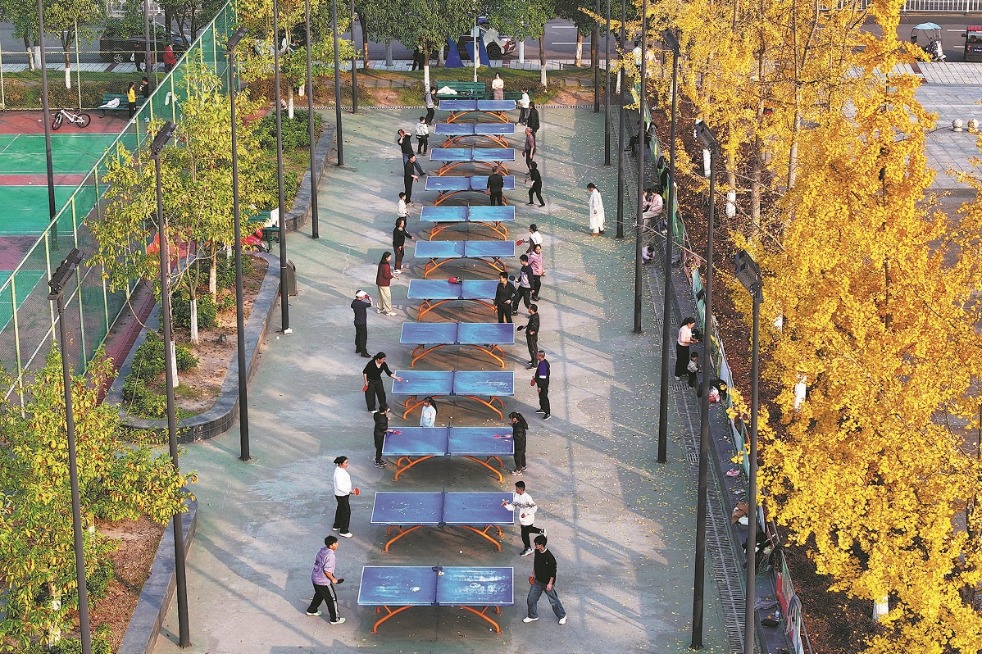
Ever since our ancestors could communicate with each other, they formed communities. Small communities developed into villages, towns, cities and eventually countries. The limits to society size are organizational and technical, not a human desire not to mix with each other. Sanitation, disease and inability to transport ourselves and our goods across large spaces brought an end to city growth; inability to control large populations brought an end to empires. But as we progress, larger size communities are becoming possible, to humanity's advantage.
There is a very simple reason why we seek proximity to other human beings: we benefit socially and economically; economists call it economies of scale, a benefit that the father of modern economics, Adam Smith, pointed out. Others call it benefits from agglomeration; but it should perhaps be called benefits from openness.
We are still not ready to make the whole world one single community, with the obvious advantages that well-run single communities enjoy. One day we will be in that position. Europeans have been warring each other for centuries. Who would have guessed that most of them today would be living in a large union without borders? The next best thing to a single country, which allows us to enjoy the advantages of a unified world, is openness.
Society's ultimate objective is to improve the well-being of its people. Well-being derives from our social, cultural and economic life; above all, the objective is — or should be — to fight poverty and misery, which do not allow those unfortunate enough to suffer it to live beyond subsistence. Social and cultural well-being are achieved through the development of legal and moral systems that protect the rights of the individual and enable him or her to flourish free of oppression from others. Economic well-being comes from the efficient organization of production and the development of technologies that help eliminate poverty and improve the quality of life. There is no doubt that a world that engages in free social, cultural and economic interaction, including the exchange of ideas and travel across borders, is one that stands above a system of recluse or warring nations.
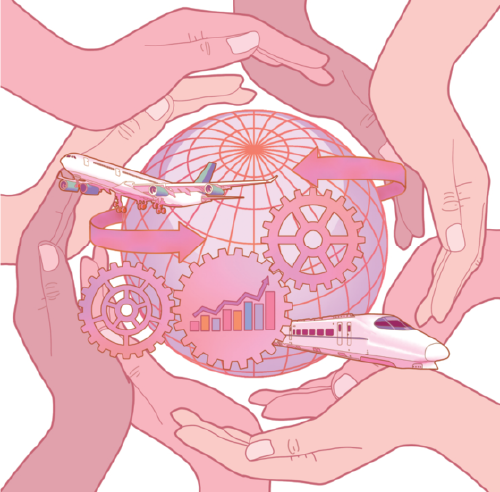
Openness is the best way to advance wellbeing across national borders. Understanding each other's cultures and social conventions is a prerequisite to peaceful coexistence; exchange of goods and ideas opens horizons that cannot be unlocked in single isolated countries. The World Openness Report is a valuable tool to advance this aim: it informs countries of the benefits of openness; it tells them where they stand, and it helps them achieve more. There have been rankings of countries by international organizations that address competitiveness, innovation potential, transparency and corruption and many others that influence economic and social well-being. But until now there was not one on openness. This report fills that gap.
Welcome additions to the factors that it considers in the construction of the World Openness Index are the social and cultural pillars. It is rare to find economic indices that consider social and cultural factors, despite their importance in promoting good relations between nations. Good relations encourage better economic exchanges too.
The bulk of the World Openness Index is given to economic indicators. Each indicator is first made independent of units of measurement by dividing it by a normalizing aggregate (as, for example, dividing imports by GDP) and is then given a weight that captures its importance in the overall index.
Among the three pillars in the index, economic factors dominate with a weight of 0.799; social openness follows with weight of 0.134 and cultural openness with a weight of 0.067. The main economic indicators are trade barriers, as measured by the World Bank and the World Trade Organization, and imports of goods and services. A question that would be good to address in this connection is the implication of country size. For example, China has many regions, each of which can be the size of a large European state. Trade between Sichuan province and Guangdong is classified as internal, and it doesn't contribute to openness. But trade between Belgium and the Netherlands is external trade, and it contributes to the openness of the two countries. Dividing exports by the GDP of all countries except for the exporting country corrects this imbalance to some extent — Belgian exports are divided essentially by world GDP, whereas Chinese exports are divided by about 80 percent of world GDP. But this probably does not totally correct for the fact that Chinese regions (and US states and German Lander) enjoy several of the benefits of openness through domestic trade, whereas Belgian regions need to trade internationally to enjoy them.
The social pillar is dominated by the movement of people — students, tourists, and immigrants, in that order of importance — which is a good way of capturing it. Cultural factors, however, include scientific outputs, such as science papers and patents, and just one set of items that would be considered truly cultural: the UNESCO measure of cultural goods imports and exports. These two get a rather low weight of 0.012, or 1.2 percent. As with the social pillar, I would love to see in a future edition more discussion of this pillar, and the implications of attaching more weight to it. Personally, I would have given this pillar more weight than 0.067, which is less than one-tenth the economic weight, but that is a matter of judgement, and judgments among economists are as famous for their differences as they are for their similarities. It should also be borne in mind that cultural factors are notoriously difficult to quantify and this might explain the low weight given to this pillar.
Openness and globalization have been on an upward trend since the large-scale industrialization of the 20th century, but their growth has been checked in more recent times. This, to a large extent, is due to one-off factors, such as the financial crisis of 2008, the COVID-19 pandemic and the conflict between Russia and Ukraine, which have increased international tensions and let countries repatriate many activities. Repatriation of the production of goods and services without big losses was made possible by new digital technologies, which enabled meetings without travel and production without reliance on expensive labor. Indeed, labor costs, which in the past were behind much of the openness associated with the location of production, feature less and less in business location decisions.
Geopolitical tensions and disagreements about the role of international organizations, such as the World Trade Organization, create uncertainty about the future; and uncertainty is a deterrent to investment in activities that involve collaborations with foreign countries for supply chains or direct trade. Unfortunately, this uncertainty is also a barrier to enjoying the benefits of more interaction with the rest of the world. Nations need to realize this truth and maintain their efforts to iron out their disagreements about economic openness. The coming of artificial intelligence and automation can be a catalyst in resolving disputes, but only if used correctly in humanity's efforts to defeat poverty and achieve good levels of well-being for all.


The author is regius professor of economics at the London School of Economics and a Nobel laureate in Economic Sciences, 2010.The author contributed this article to China Watch, a think tank powered by China Daily.
Contact the editor at editor@chinawatch.cn.