What fragmentation risks mean for Asia and the Pacific









The global economy faces steep challenges. Lingering effects of the COVID-19 pandemic, inflation, high food and energy prices, a strong US dollar, and monetary tightening in key advanced economies are all influencing the outlook. And, in terms of global growth, the worst is yet to come. In our (IMF's) most recent global forecasts, we expect growth to drop from 3.2 percent this year to 2.7 percent next year. Also, the downside risks to the global outlook are elevated.
Against this backdrop, in our latest Regional Economic Outlook, we cut the growth forecast for Asia and the Pacific to 4 percent this year and 4.3 percent next year. This is well below the 5.5 percent average over the last two decades. The revisions reflect that Asia's strong economic rebound early this year is losing momentum, with a weaker-than-expected second quarter. Despite this, Asia remains a relatively bright spot in an increasingly dimming global economy.
The outlook for Asia will also be shaped by geopolitical tensions. Globalization is facing perhaps its biggest trial since the establishment of the Bretton Woods system. The world is at risk of a more permanent fragmentation of the global economy into geopolitical blocs with distinct technology standards, cross-border payment systems, and reserve currencies.
In our Regional Economic Outlook, we looked at the implications for Asia. We documented worrying early signs of such fragmentation, and provide evidence of the potential consequences of dissolving global trade links. Geopolitical tensions have raised the prospect of strategic competition and national security concerns trumping the shared economic benefits of global trade.
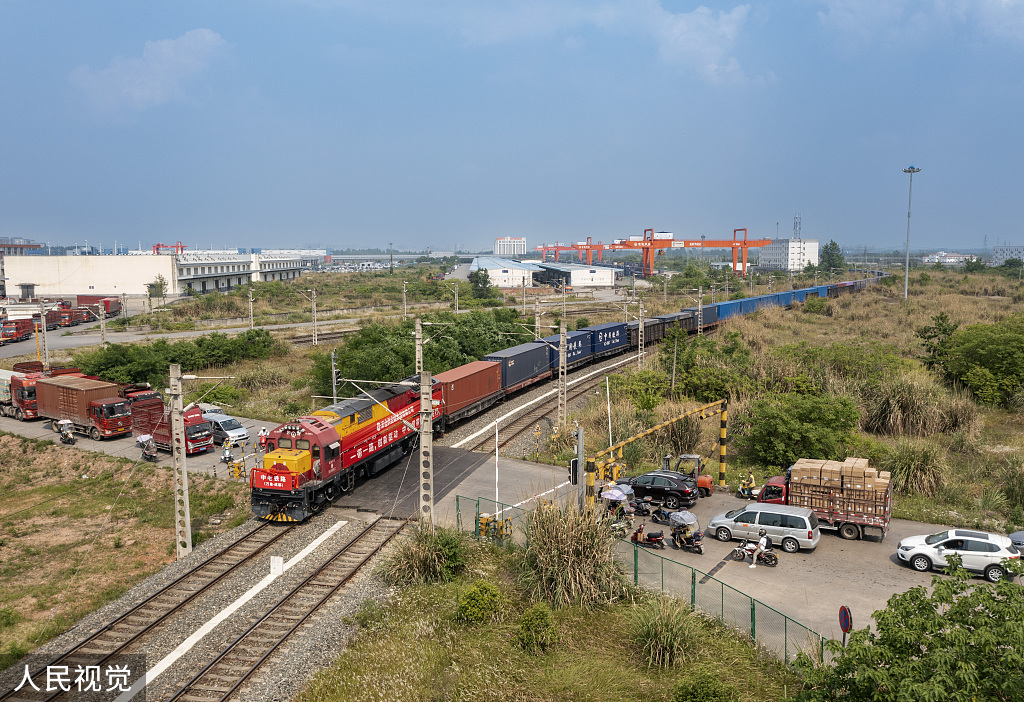
Interdependency between economies means that such a prospect would be very costly, especially for Asia. For example, about half of the imports in the United States and one-third in Europe come from Asia. And, in turn, Asian countries account for almost half of global demand for key commodities.
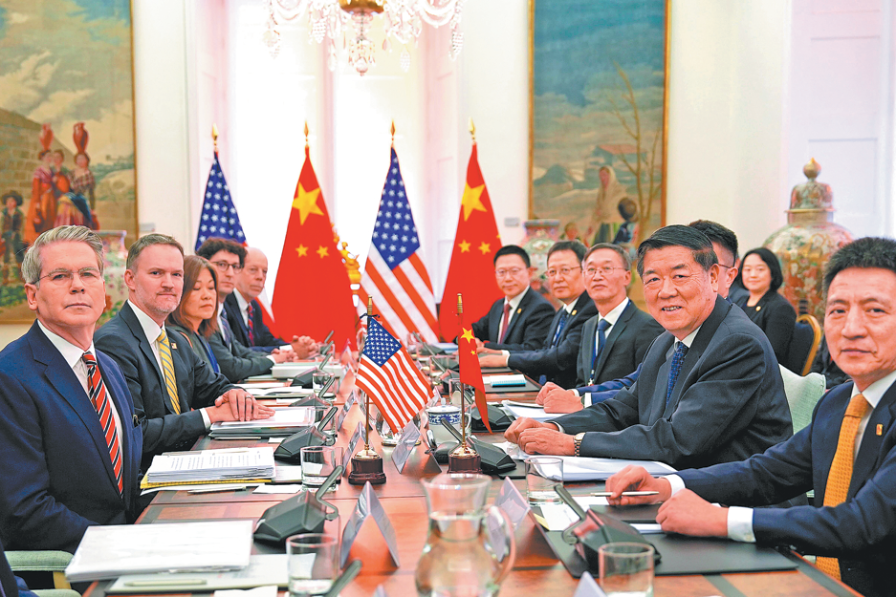
One such sign of fragmentation pressure comes from measures of trade-policy uncertainty. This measure spiked in 2018 amid tensions between the US and China.
Even without actual restrictions, policy uncertainty related to trade can worsen economic activity as enterprises pause hiring and investment, and new enterprises may decide to postpone entry into a market.
Our analysis shows that a typical shock to trade policy uncertainty, like the 2018 buildup of US-China tensions, reduces investment by about 3.5 percent after two years. It also decreases gross domestic product by 0.4 percent and raises the unemployment rate by 1 percentage point. Not everyone is equally vulnerable, however.
The effects on investment are even greater for emerging markets and more open economies, and for enterprises with high debt. Also, Corporate debt has increased significantly in Asia since the global financial crisis — spiking further in the wake of the pandemic — suggesting that higher trade policy uncertainty could prove to be especially damaging for the region.
As bad as these effects are, losses would be even greater under actual fragmentation. Against the backdrop of tepid productivity growth around the world, we estimate output losses from trade fragmentation due to lower productivity. These losses represent a lower bound, as the estimates do not account for channels such as the effects of a lower capital stock due to diminished investment and the potential disruption to knowledge flows.
The fragmentation scenario we model is one where trade is cut off between trading blocs in sectors such as energy and technology which have recently seen an increase in restrictions, and where non-tariff barriers in other sectors are raised to Cold Warera levels.
As trade unravels and specialization is unwound, there would be severe implications for labor markets. In those sectors that have contracted due to higher trade restrictions in this illustrative scenario, average employment losses in Asian countries are estimated to be as high as 7 percent.
These results focus on trade and ignore any effects from the potential unraveling of financial ties, which are also very deep. Financial fragmentation may lead to short-term costs from a rapid unwinding of financial positions, and long-term costs from lower diversification and slower productivity growth because of reduced foreign direct investment.
Our work shows that the stakes are high. And rather than fragmentation, the global economy needs trade to be an engine of growth. The major economies of the world can make this happen by leading an effort to strengthen the multilateral trading system. This starts with rolling back damaging trade restrictions, and continues with positive steps, such as concluding new market opening-up agreements in key areas of the modern economy; strengthening the role of trade in fighting climate change; and restoring a fully functional World Trade Organization dispute settlement system.
All of this should be coupled with a renewed commitment to a multilateral approach. Governments should take their disputes to the WTO rather than acting unilaterally. Above all, engagement and dialogue between countries is vital to avoid the most harmful fragmentation scenarios.
Steven Barnett is IMF's senior resident representative for China.Li Xin is IMF deputy resident representative for China.
The views don't necessarily reflect those of China Daily.