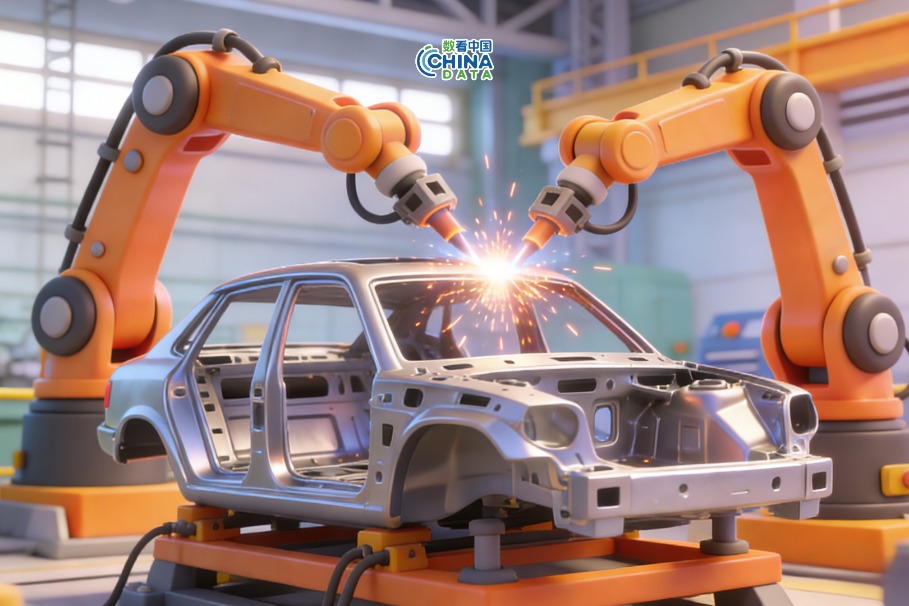
Led by EVs, solar, wind, China's new energy stocks are investment options









We expect moderate growth in China in the coming years and a stable growth environment for the second-largest economy in the world will definitely provide ample investment opportunities.
Looking ahead, we believe economic growth will be a crucial priority for China, as the country has emphasized the importance of economic development, focusing on high-quality, balanced and inclusive growth.
In addition, from a long-term perspective, Chinese equities may offer opportunities for global investors to diversify market risk amid turmoil in Western countries' equity markets.
Meanwhile, the valuation of Chinese equities is still at a comfortable level. Recent valuations are close to all-time lows. Chinese equities' cyclically adjusted price-to-earnings ratio currently stands at 13.7, slightly above its historical low of 13.1. By comparison, the current CAPE for the US stock market is 31.8 and that for India is 37.6.
MSCI China is also trading around at a historical low and at a significant discount to developed market equities. MSCI China was trading at an attractively low level at around a P/E ratio of 10.5 as of September, a five-year low.
Specifically, investors are buying into the structural growth story offered by new energy stocks, and whole value chains are seeing the benefits. With strong policy support providing tailwinds for the long-term growth of electric vehicles, solar and wind power, new energy stocks can offer attractive investment opportunities.
As an early mover in EVs, China now has the largest EV market accounting for around 57.4 percent of global EV production in 2021. Several factors have contributed to China's increasing EV penetration rate in recent years.
The carbon neutrality target offers a favorable policy environment for EVs. Various policies have been enacted, including subsidies and an EV credit system, to mandate that a certain percentage of all vehicles sold by a manufacturer each year must be battery powered.
The government has heavily supported the development of EV charging units. In 32 major cities, the average density of EV charging units is an impressive 21.5 per square kilometer. As EVs penetrate lower-tier cities, the infrastructure is expected to expand.
Meanwhile, China enjoys a competitive advantage due to the strength of its domestic EV battery value chain. Domestic players also dominate global market share in the midstream and downstream segments of EV battery production.
It is also noteworthy that lithium has been in short supply over the past three to four years and prices have tripled. Electrolyte manufacturers in particular have faced margin issues, having to absorb lithium costs given the bargaining power of their downstream counterparts. Upstream lithium capacity is therefore a key bottleneck that should be addressed in achieving EV targets over the short term.
Chinese players are rapidly expanding their reach and applying for mining licenses overseas to secure lithium supplies over the long term. Once supply bottlenecks become less severe, Chinese midstream and downstream companies can expand relatively quickly to cater to the expected increases in EV demand given their superior market position.
EV stock valuations are currently at the highest levels relative to other new energy stocks. However, battery manufacturers' growth is expected to remain at around 35 percent for the coming two years. We expect that if sustainable growth drivers persist, the sector can remain attractive over the long term.
Based on total solar and wind energy area, its share in China's power generation increased fourfold from 2.6 percent to 11.8 percent between 2012 and 2021. The supportive environment, great growth potential and future easing of oil dependence support the momentum.
Since 2005, the government has enacted accommodative policies for renewables, including tax incentives and subsidies, leading to the rapid expansion of renewable energy capacity. However, given that solar and wind power have now entered a new phase in terms of cost effectiveness and are nearing grid parity, these subsidies are starting to get phased out.
China's installed power capacity has still been dominated by coal-fired power over the past decade. In 2021, solar and wind power reached 27 percent of China's installed capacity and only 12 percent of the country's power generation. Given the plans for wind and solar project installations over the next few years, these sectors expect to account for 45 percent of total installed capacity and close to 20 percent of power generation in China by 2025. The growth potential is huge.
Over the long run, China is looking to boost domestic renewable energy capacity to avoid reliance on foreign sources. Recent geopolitical concerns have catalyzed the push.
Undoubtedly, China's solar and wind power sectors boast unparalleled competitive advantages.
The whole solar value chain from polysilicon to wafers and cell/module production is dominated by Chinese companies. Polysilicon is abundant in China. The country contributes about 80 percent of global production capacity, and increases in solar demand are likely to lead to further growth capacity.
Looking at downstream operations, Chinese players are also responsible for around 70 percent of global photovoltaic module production capacity.
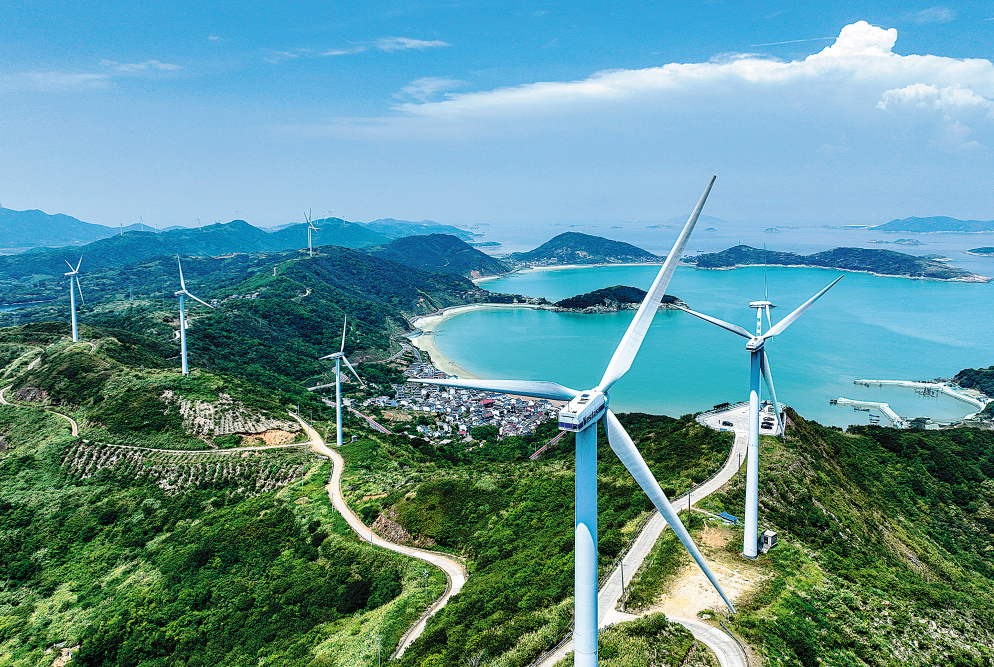
For wind power, about half of the world's wind turbines are produced in China. And China is strong in the global production of wind turbine components, including main shafts, blades and gear boxes.
While China mainly uses onshore wind power, offshore capacity is growing quickly as turbines are being built nearer to coastlines. The country is a global export hub for wind turbine parts to Europe and many other developed and developing economies.
Chinese wind turbine exports increased from $2.9 billion in 2017 to $7.2 billion in 2021 with a $2.2 billion increase occurring from 2020 to 2021. This rapid growth in exports indicates the competitiveness of Chinese original equipment manufacturers in foreign markets.
China's renewable energy boom and its ability to scale up output have caused production costs associated with solar and wind power to decrease relative to other countries. Over the long term, we expect solar and wind power production costs to fall further in order to compete with traditional electricity from coal-fired power plants. For example, Chinese wind turbine prices fell 24 percent year-on-year in 2021 and are expected to fall by another 20 percent in 2022.
Given the strong demand for renewable energy globally in the next few years and the low-cost advantages of Chinese solar and wind products, we believe the current valuations of Chinese companies in these sectors are justified, and remain a compelling value story for investors.
The writer is a senior portfolio manager of China A shares at Invesco, a global investment manager.
The views don't necessarily reflect those of China Daily.