Targeted approach key to containing pandemic









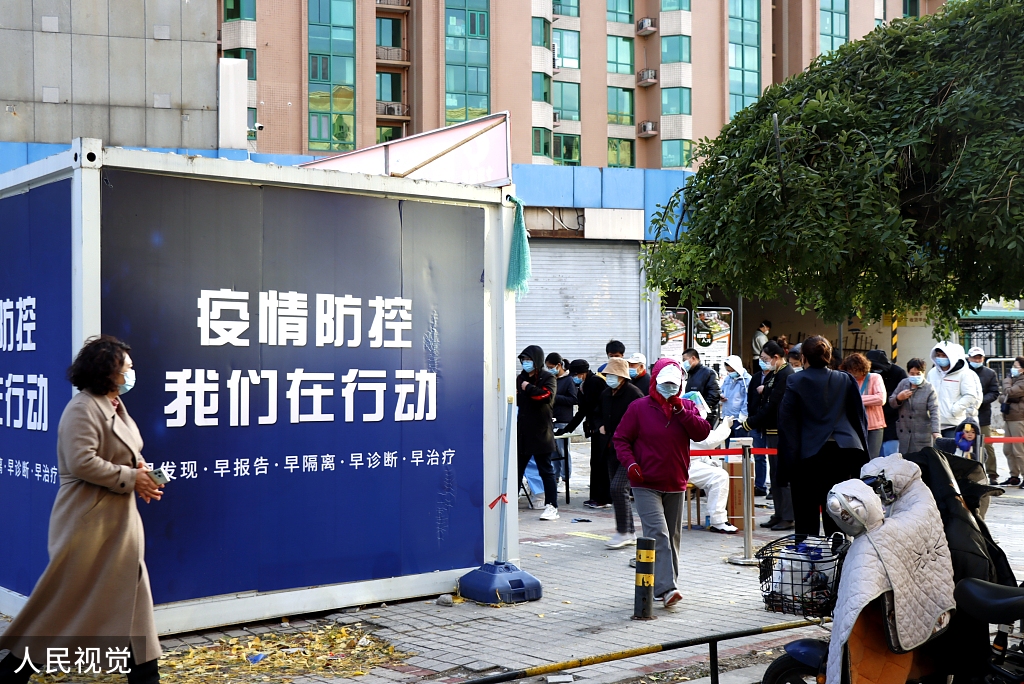
After fighting the COVID-19 pandemic for almost three years, China has explored and adopted a largely different approach from some Western countries' laissez-faire system, taking into account a large population of more than 267 million Chinese people aged above 60, to improve the stretched and unbalanced healthcare system, meet people's high expectations in terms of public health and contain the COVID-19 pandemic.
But just as any debate on any subject relating to China, including the development model, the one on China's pandemic prevention and control measures, too, has sparked controversy abroad.
Despite such debates and criticisms, however, there is no denying that the seemingly harsh anti-pandemic policy has kept the numbers of confirmed cases and deaths relatively low, albeit at considerable economic and other costs. In comparison, the United States has reported about 100 million cases and 1.1 million deaths in spite of having a much smaller population than China's and the world's most advanced healthcare system.
However, some strict anti-pandemic policies such as city-wide lockdown, despite saving many people's lives, have slowed economic growth of many cities and regions, dealing a blow to many people's livelihoods and reducing their incomes. Perhaps there is a need to make the prevention and control measures more specific and targeted, so as to minimize their impact on economic growth or people's livelihoods.
That's why the introduction of the new pandemic-prevention rules, popularly called the "20 rules", on Nov 11 are a timely step toward fine-tuning the measures to contain the novel coronavirus, whose strains are becoming more infectious but less deadly.
How to implement the new rules, however, is an even bigger challenge for local authorities amid the resurgence of cases in many places.
To begin with, local governments need to explore ways to implement the new rules. For instance, Shijiazhuang, the capital city of Hebei province, stopped requiring people to show nucleic acid test results to enter public places from Tuesday and suddenly closed most of the nucleic acid test booths. In response to public queries, the local health authorities said nucleic acid test was still required for those working in key sectors.
The 20 new rules are being implemented to ease the strict pandemic-prevention measures and adopt a more targeted approach to containing the spread of the virus, in a bid to strike a delicate balance between economic development and protecting human lives. In fact, local governments have been given much room to experiment and make their own decisions depending on their governance capabilities and the reality on the ground.
But there are principles that still need to be followed in the strictest sense of the term.
First, the local authorities should always put people's well-being first. The forceful implementation of some extreme anti-pandemic measures, which in the past unnecessarily inconvenienced people, resulting in trauma, both physical and mental, and even deaths, should immediately stop.
Even when local government officials and community workers are in a dilemma over how to implement the rules, they should put people first. In fact, they would do better by establishing a scientific accountability system. Fulfilling their own duties in fighting the pandemic shouldn't be an excuse for them to refrain from helping those in urgent need.
To put people first, local governments also need to take people's emotions and opinions into consideration when introducing the anti-pandemic rules. They should avoid the sudden introduction or removal of crucial measures that have far-reaching effects on individuals. And if they have no choice but to implement such measures, they should give adequate and timely explanation to the public for doing so in order to reduce their fear and concerns.
Second, local governments should follow the new 20 rules both in letter and spirit. Though it's a huge test for local authorities to control the spread of the highly infectious variants while maintaining economic growth, they should consider doing away with the not-fully-scientific practice of locking down whole cities or counties on the basis of just a few confirmed cases.
According to the new 20 rules, local authorities should introduce targeted prevention and control measures but avoid upgrading them (that is, making them stricter) unnecessarily. And those local authorities not following the new rules in spirit should be held accountable for unnecessarily harming people's livelihoods, because lockdowns and/or large-scale quarantining are especially harmful to the economy and low-income people.
Because both the condition on the ground and the variants of the virus are constantly changing, gradual and progressive adjustments should be made to ensure the targeted measures prevent the further spread of the virus. Hopefully, by strictly and rightly following the new 20 rules, the local governments will improve their approach to containing the pandemic, and figure out better ways to protect people's lives and livelihoods, while maintaining healthy economic growth.
The author is a writer with China Daily.