Hong Kong steering into a faster, safer lane









 Autonomous driving is speeding up worldwide. Hong Kong may be lagging behind due to the lack of a 'backbone force' for the industry, but it's packing a punch in the field. Experts say self-driving vehicles could hit the road in the SAR in the next few years. Zhou Mo reports from Shenzhen.
As major metropolises around the world try to fast-track and beat snags in the hotly competitive autonomous driving business, it seems, paradoxically, Hong Kong has been restrained in pushing into what's regarded as, potentially, a multitrillion-dollar global industry.
Jumping into a futuristic self-driving car equipped with radars and cameras, and sitting cozily in the vehicle with a sense of security and comfort made possible by state-of-the-art technologies may be a distant dream for the special administrative region despite the city's high-profile march toward an innovative, smart city.
The Chinese mainland has moved one step ahead in autonomous driving. The SAR's immediate neighbor, Shenzhen, has legalized fully autonomous cars to run on certain roads since August while, in transportation, the nation had tried out its first automated public bus in the central province of Henan seven years ago.
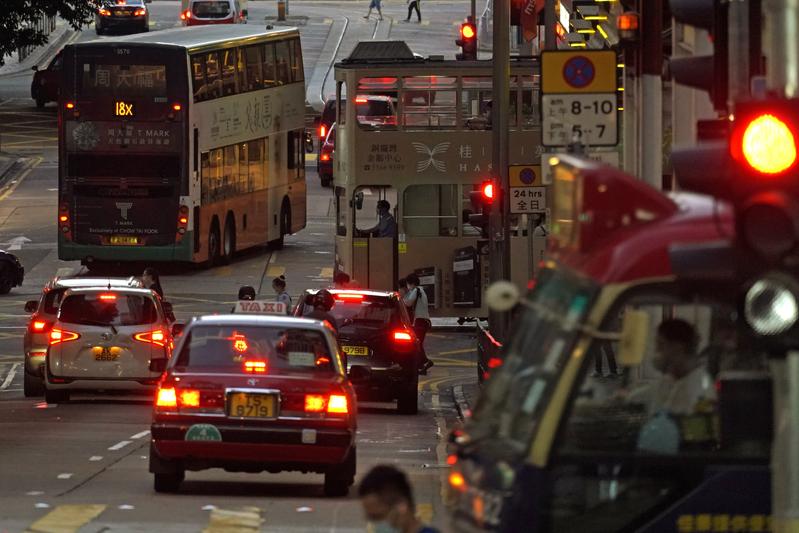
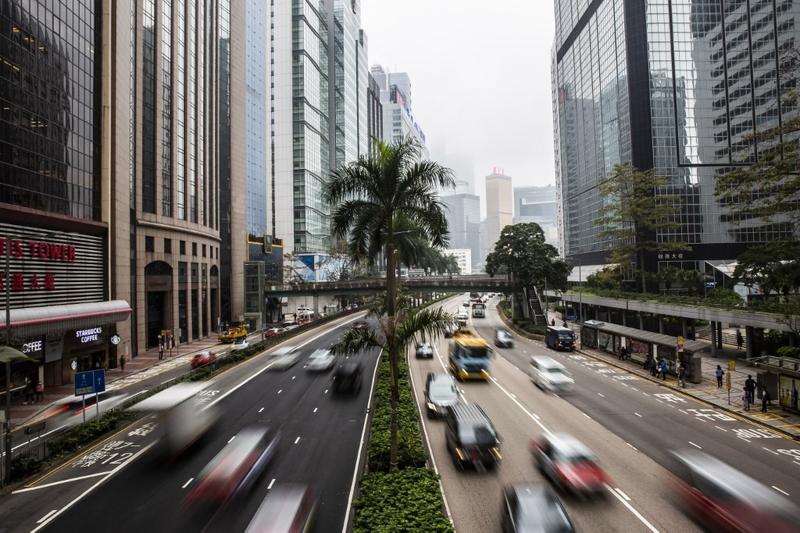
Hong Kong's 7.4 million residents have been accustomed to the daily hassles of being shoved into packed subway trains, and riding on the city's thousands of antiquated mini-buses that often put safety in the back seat as they race fiercely against other vehicles on narrow and crowded streets, jostling for passengers.
The technical complexities of running driverless vehicles on Hong Kong's packed, winding roads, as well as prudent regulations on road safety partly explain the city's laggardness and tepid growth in the autonomous driving sector that's poised to reshape the future of urban mobility.
But, industry insiders say Hong Kong should not be left behind during the shift to self-driving or robotic vehicles, given its aspiration to become a global innovation and technology hub, and the urgency to seek better mobility solutions for a city grappling with problems brought by an aging population, traffic congestion and environmental pollution.
Numerous benefits
The global autonomous vehicle market was valued at $76.13 billion in 2020 and is projected to hit $2.16 trillion by 2030, representing a 40.1 percent annual growth from 2021 to 2030, according to market research firm Research and Markets.
Compared with conventional vehicles that are manually driven, autonomous driving is seen to offer multiple advantages, such as easing traffic jams, reducing the number of road accidents caused by human negligence and cutting greenhouse gas emissions.
According to official data, more than 10.5 million passenger journeys were made on Hong Kong's public transport systems daily last year. Road traffic was dense with 373 licensed vehicles packed into every kilometer of road space on average.
A total of 26,190 motor vehicles were involved in road accidents in Hong Kong last year, translating into a rate of 32.1 per 1,000 licensed vehicles, compared with 27.7 among 1,000 vehicles in 2020, Transport Department statistics showed. Road traffic casualties reached 21,751 last year — up from 18,360 in 2020.
Global management consulting firm McKinsey & Co predicts that driverless vehicles, by enhancing fuel efficiency, could bring down greenhouse gas emissions by 300 million metric tons each year, equivalent to half of the carbon dioxide emissions in the aviation industry.
Hong Kong has never been shy of boasting of its goal to be a smart city, in which smart mobility will play an essential part. The city published its Smart City Blueprint 2.0 in December 2020 — three years after the original version was unveiled. The plan laid out over 130 initiatives aimed at creating a higher quality of living and a happier life for its people.
The Smart Mobility Roadmap for Hong Kong, published in July 2019, mapped out an action program for the SAR to improve its transport system by adopting advanced technologies.
In his maiden Policy Address in October, Chief Executive John Lee Ka-chiu pledged to "take forward smart mobility initiatives by applying advanced technologies in our traffic and transport systems". As part of its efforts, the administration will "take forward various pilot schemes, such as the trial of autonomous vehicles within 2024", he said, without giving details.

Beyond obstacles
"Hong Kong has the fertile soil to develop autonomous driving, given its rich academic resources, a standard traffic management system and a high level of rule consciousness among drivers," says Liu Ming, associate professor of the Department of Electronic and Computer Engineering and director of the Intelligent Autonomous Driving Center at the Hong Kong University of Science and Technology.
"We have outstanding scientific research achievements in this field. From both the quantity and the quality of papers published by local universities, we aren't lagging behind others. In policymaking, we are also moving forward. But the problem for Hong Kong is that there are relatively few autonomous driving enterprises, or what we call the 'backbone force'," Liu says.
His explanation is that many industrial enterprises have left Hong Kong and relocated to other cities in the Guangdong-Hong Kong-Macao Greater Bay Area, such as Dongguan and Foshan. So, it would be hard to run a business in Hong Kong that requires collaborative innovation in hardware and software, as is needed in autonomous driving.
The travel restrictions still in place between the SAR and the Chinese mainland have also played a part in impeding the development of autonomous driving in the city, as higher costs of communication and logistics due to the COVID-19 curbs have deterred mainland industry players from operating in Hong Kong, says Liu.
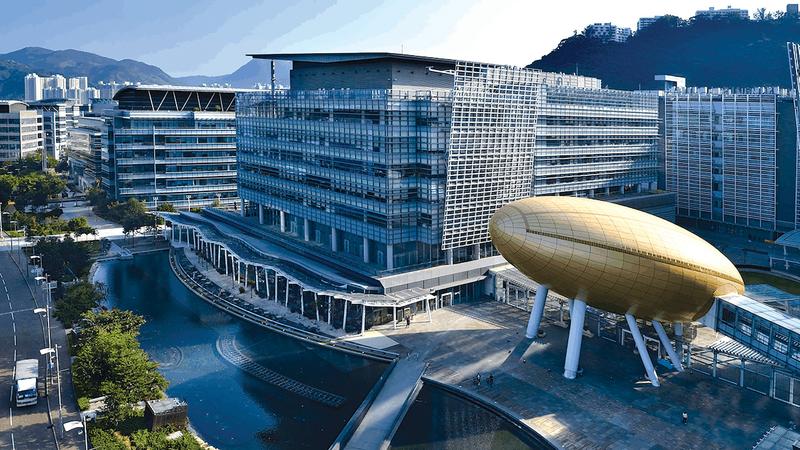
However, Hong Kong Science Park — located at Pak Shek Kok in the New Territories — is doing something to encourage autonomous driving. The park is trying out a self-driving vehicle on roads within its precincts, offering commuters and tech enthusiasts a taste of what future mobility could be like.
The eight-seat vehicle, equipped with vehicle-to-everything technology and 5G connectivity, operates along a planned route, providing shuttle services between the park and public transportation stops.
"The trial will be conducted in two phases," says Crystal Fok, head of Hong Kong Science and Technology Parks Corp's STP Platform — a dedicated service platform created to support the development of tech ventures. "In the first phase, we invite our workers at the park to make a reservation to try out the vehicle. We will extend the trial to the wider public in the second phase."
The data collected during the trial will be sent to the Transport Department to help promote the city's smart city development, says Fok.
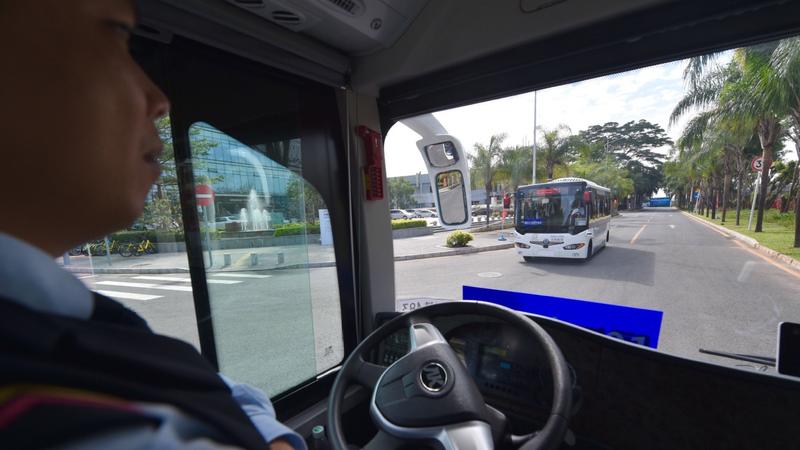
The autonomous vehicle being tried out at Hong Kong Science Park is among the latest vehicles authorized by the Transport Department to hit the road under the condition that they operate on a point-to-point basis and there is a safety operator on board. The department has been facilitating tests of autonomous vehicles by issuing movement permits since 2017. By late October, permits had been issued to 12 autonomous vehicles to conduct trials at eight locations. These locations include a university campus, an air cargo terminal, the West Kowloon Cultural District, Hong Kong Science Park and an industrial estate, a Transport Department spokesperson told China Daily.
Test site, legislation vital
The lack of test sites for driverless vehicles due to limited land resources remains the biggest constraint for Hong Kong to advance in the burgeoning field, Fok points out.
"If you compare Shenzhen with Hong Kong, the size of a test site in Shenzhen is almost the entire area of Hong Kong. Such a geographical limitation can have a profound impact on promoting autonomous driving because if there aren't enough places to carry out tests, there won't be sufficient data. And if there's insufficient data, there would be no basis to support legislation that would be the most feasible for Hong Kong," she says.
Fok's reasoning probably explains the city's relatively slow progress in promoting legislation on self-driving. Industry players may have been left in the lurch, but the SAR government is moving in the right direction. The Transport and Logistics Bureau and the Transport Department are pushing for legislative amendments to facilitate wider trials of autonomous vehicles by industry players and to allow self-driving vehicles for special uses. The government says it plans to submit a bill on establishing a new regulatory framework to the Legislative Council by the end of this year.
"The new regulatory framework will allow a suitable degree of flexibility in coping with the fast-changing technology, and cover the licensing regime, liabilities and penalties concerning the use of autonomous vehicles," Secretary for Transport and Logistics Lam Sai-hung told the Legislative Council recently.
"We also need to allow greater flexibility in the trial and use of autonomous vehicles so that they will not be hindered by the technical incompatibilities between the existing legal provisions and the development of technology and operation modes of autonomous vehicles," he said.
Lawrence Cheung Chi-chong, chief innovation officer of Hong Kong Productivity Council, says the city's existing traffic regulations cover only vehicles with human drivers, and they have remained unchanged for decades. Corresponding action is needed if autonomous vehicles are to be allowed on the roads.
'One step at a time'
"But we have to be careful and can't rush into changing certain regulations because once they've become law, it would affect everybody on the roads," Cheung warns.
Noting Hong Kong's inherent difficulties in leapfrogging due to its complex traffic conditions, he says progress should be made "one step at a time". He suggests that certain places in the Northern Metropolis or the San Tin Technopole be designated as test sites for autonomous vehicles as the first step. "If we can do that, we can do a lot more things because, eventually if you have a place designated for autonomous driving, the whole place can then be completely optimized in terms of usage, traffic and transportation."
Rosana Wong, CEO of Hong Kong autonomous driving firm Urban. Systems, emphasizes the urgency for Hong Kong to have a "test bed" — a location set up specifically for autonomous driving tests.
"This is very important because if you have an actual location set up, we can test autonomous vehicles and other things like V2V (vehicle-to-vehicle communication) and V2X (vehicle-to-everything communication). We can also test what we call V2I (vehicle-to-infrastructure). That will not only help us, our company, but also Hong Kong," she says.
Cheung believes that deeper collaboration among cities in the Greater Bay Area in data sharing and formulating industry standards can help Hong Kong move faster in the field.
As Hong Kong and mainland cities are working on a high-definition map for autonomous vehicles, it's vital for both sides to share views and information in the process, Cheung says. They could also cooperate in setting unified industry standards that would enable autonomous vehicles to "communicate with each other".
How far away is Hong Kong from steering into a new era in which driverless cars are intelligent enough to deal with all emergencies and uncertainties like human beings on some of the most complicated roads in the world? "At least five years away," Cheung predicts. "It will be a long process. It isn't something that would happen overnight. But it's accelerating."
"Breaking through from 'zero to one' is the hardest. Once this step is taken, everything will speed up," says Liu.
Contact the writer at sally@chinadailyhk.com