



Residents working to safeguard rural life









Lake cleanup sparks memories of grassland filled with gazelles
Editor's Note: As the environment assumes greater importance in people's lives, China Daily highlights three individuals who voluntarily spend a great deal of time and effort working to protect the nation's biodiversity and endangered species.
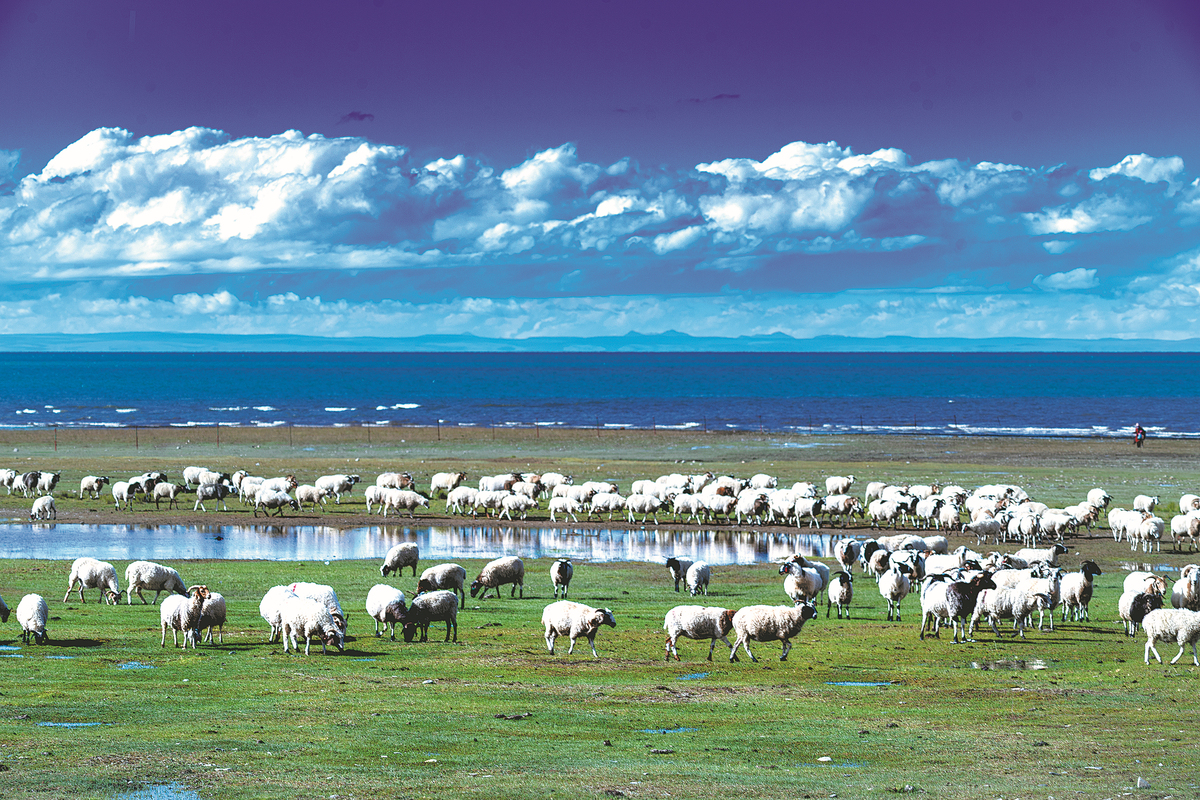
In winter, the temperature near Qinghai Lake often falls as low as-20 C. The rich biodiversity of China's largest inland saltwater lake means it is known as the "gene bank" of the Qinghai-Tibet Plateau.
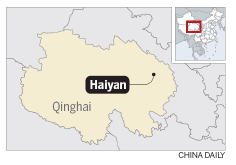
Despite the bone-chilling weather, Gyamtso has regularly patrolled his home area near the lake in Haiyan county, Qinghai province, picking up waste for more than 26 years.
Each year, the waste collected and disposed of by the herdsman, together with other locals encouraged by his perseverance, amounts to almost 10,000 metric tons.
Last year, Gyamtso, who like many members of the Tibetan ethnic group only uses one name, has been selected as one of China's top 100 model environmental protection volunteers.
The 38-year-old's passion for environmental protection was sparked by an image his grandmother passed on to him when he was a child.
"Grandma told me that there were a lot of wild animals near Qinghai Lake a long time ago," Gyamtso recalled.
"She said that the grass was so high back then that it reached a horse's belly. Large groups of Przewalski's gazelles and sheep leisurely ate grass together."
Named after the Russian adventurer who discovered the species more than 100 years ago, Przewalski's gazelle was once found in the Inner Mongolia and Ningxia Hui autonomous regions, as well as the provinces of Gansu and Qinghai.
Now though, human activity and habitat loss mean the animal is only found in the area around Qinghai Lake.
The relatively small, slender antelope is listed as "endangered" on the International Union for Conservation of Nature's Red List of Threatened Species. In China, it is under first-class national protection.
However, instead of the scene described by Gyamtso's grandmother, the development of the local tourism industry in the 1990s saw a growing amount of trash left on the prairie, which posed a great threat to the gazelle's habitat.
In 1996, there was so much trash, a lot of it plastic, on the grassland that Gyamtso voluntarily started collecting it, hoping to help restore the grassland to the condition his grandmother remembered.
Back then, Gyamtso, who only had two years of education in primary school, only knew from experience that his efforts could prevent many of the gazelles from being killed.
"If Przewalski's gazelles eat trash, it can be hard to save their lives," he said.
Now, the antelopes face even more threats. As they run about madly to get away from wolves, they may not always manage to leap over the barbed wire fences the herdsmen set for their livestock.
That failure often leaves them trapped by the fences, seriously injured by the steel spikes on the wire.
Gyamtso devotes much effort to saving injured gazelles. While sending those in terrible condition to the rescue center at the Qinghai Lake National Nature Reserve, he takes those that have sustained minor injuries to his home for treatment.
Forced by a shortage of food in winter, hungry Przewalski's gazelles often risk their lives to approach the center of the herdsmen's meadows for grass, thus exposing themselves to even greater threats from both hungry wolves and the barbed wire fences.
Gyamtso has found his own way of addressing the problem. He often sells his own sheep to buy grass for the antelopes, scattering it across the thick snow that blankets the grassland during winter.
After meeting an expert who arrived to conduct ecological surveys in 2013, he learned that his efforts to collect garbage and protect the gazelle could be beneficial to the local ecosystem because the gazelle feces not only helps fix the sand and soil after it solidifies, but also provides fertilizer for the grass.
That knowledge further strengthened Gyamtso's determination to forge ahead.
"At the very beginning, many herdsmen didn't understand me. They said they didn't know why I would trek more than 10 kilometers a day to pick up waste without receiving any payment," he recalled.
Now, however, witnessing the rise in the number of Przewalski's gazelles and other wild animals, and the environmental improvements, the herdsmen's opinion of Gyamtso's efforts has changed.
The number of Przewalski's gazelle in the Qinghai Lake National Nature Reserve has risen to more than 2,800 from only about 300 in 1994, according to the facility's administration.
Also, more than 120 herdsmen have joined Gyamtso's efforts to clean up the trash and protect the animals. In total, they have saved about 300 Przewalski's gazelles and other wild creatures.
To date, Gyamtso has spent more than 200,000 yuan ($28,650) to transport garbage, treat injured gazelles, care for cubs that have lost their mothers, protect black-necked cranes and produce booklets advocating environmental protection.
All his hard work has left Gyamtso unable to fully straighten his fingers, but he is determined to continue the task.
"This had no effect on my ability to pick up trash," he said. "With people's environmental awareness increasingly strengthened, less and less waste has been left on the shore of Qinghai Lake. However, when the winter wind picks up, it still brings some trash.
"I hope I will see the day when there is no rubbish at all around the lake, and when Przewalski's gazelles hang around the grassland in groups and live in harmony with the herdsmen, just as they did a long time ago."
Xinhua contributed to this story.
houliqiang@chinadaily.com.cn



- Lawmakers call for action on 'invisible overtime'
- F1 Chinese Grand Prix returns with major upgrades
- Taiwan's 'goodwill mission' criticized as futile bid for 'independence' support
- Chinese biotech innovator Jacobio Pharma reports its 2025 annual results
- Xinyang aims to become open gateway in southern Henan, says NPC deputy
- Honor launches its latest foldable smartphone Magic V6





