All in the same fix
Working together is the only way to get out of the global polycrisis









Working together is the only way to get out of the global polycrisis
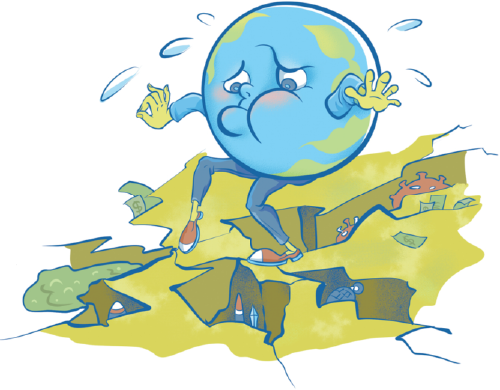
The year 2022 will be remembered as a year of great shocks and uncertainties to the world economy. While most of these uncertainties have been the product of the continued COVID-19 pandemic, which, by and large, were expected in 2021, the shocks brought about by the Russia-Ukraine conflict were beyond anyone's imagination. As a result, the global economy is experiencing a polycrisis never seen before in our generation.
The world has not been short of economic or financial crises in the past decades: the aftermath of World War II in the 1940s, the oil price shocks in the 1970s, the Latin American debt crisis in the 1980s, the Asian financial crisis in the 1990s, and the global financial crisis in the first decade of this century. When these crises were upon us, the global community was able to unite and take coordinated and decisive actions to save us all.
Unfortunately, today is vastly different from the past. We are facing not just one but several crises overlapping with each other — the polycrisis. More worrisome, the world is not working as one but becoming increasingly "fragmented", as demonstrated by a lack of coordinated efforts to tackle COVID-19 and rising geopolitical tensions.
What are the overlapping crises that will likely continue into 2023 and beyond?
First, the legacy of COVID-19 — which has caused huge human suffering and economic losses. Until the pandemic is completely behind us, we will continue living in the shadow of fear and uncertainty. This is particularly true for those countries whose vaccination rates remain low and medical facilities are weak.
Second, the ongoing Russia-Ukraine conflict — which, in addition to the loss of lives and sacrifices, has resulted in big jumps in energy and food prices, and provoked unprecedented sanctions imposed by major advanced countries. Unless the conflict ends soon, all these impacts will continue to be a drag on the global economy, with the most vulnerable bearing the brunt.
Third, decelerating growth — the International Monetary Fund's earlier projections showed that the world economy would grow by 3.2 percent in 2022, less than half of the pace in 2021. Yet, the growth prospects in 2023 could be further darkening, with some countries likely falling into recessions. This would imply little, if not negative, improvement in the standard of living for the world population and a deterioration of the quality of the life in many low-income countries.
Fourth, fighting inflation — for a long time before COVID-19, inflation was subdued and the challenge for policymakers was to get it higher. Then, inflation suddenly changed from being benign for the last two decades to well above targets globally. This has led to a massive monetary policy tightening by major central banks, particularly the US Federal Reserve and the European Central Bank. It is uncertain as to when this tightening cycle will be over, whether the US and European economies will enter recession, and how all this will impact the developing world.
Fifth, the debt overhang — for many emerging and developing countries, addressing debt burdens will be one of the key economic challenges in the post-COVID period. In addition to their already high debt levels, the recent surge in dollar interest rates and dollar appreciation are adding to their funding costs and debt service burdens. Resolving this debt crisis will require an effective global debt restructuring framework that involves all concerned parties.
Sixth, rising fragmentation — adding to the gloomy global picture is the troubling trend of fragmentation, which would hit the world economy hard, particularly those economies which are heavily trade-dependent. According to the International Monetary Fund analysis, splitting the world into blocs that stop trading with each other would cause permanent damage to the global economy in the magnitude of trillions of US dollars. Constructive engagement between policymakers around the world, including in multilateral forums, will be vital to avoiding the sharpest and most harmful fragmentation scenarios.
Seventh, the climate crisis — which is both short- and long-term in nature. We have already seen extreme weather conditions and natural disasters everywhere, such as Hurricane Ian that swamped Florida, the summer drought and heat waves in Europe, monsoon flooding in Pakistan, and droughts and floods in China. The global community needs to increase common efforts to address this crisis by reducing global greenhouse gas emissions and boosting climate resilience, including through providing financial support for climate action and the green transition in developing countries. This battle has just started, and we must keep fighting.
Eighth, future pandemics — COVID-19 has made the global nature of our health and well-being abundantly clear. Yet, there is little evidence that the world is making efforts to be better prepared to prevent and contain future pandemics. The world must learn from COVID-19 and prepare for future pandemics with a global mindset. This includes necessary funding at the national and international levels, stepped-up efforts on medical and health investment, and a strengthening of the global governance structure.
In the face of crisis upon crisis, what is the way out?
History may lend a helping hand.
In 1944, in the aftermath of World War II, the world faced two massive tasks: to deal with the immediate devastation caused by the war, and to lay the foundation for a more peaceful and prosperous post-war period. The nations of the world then joined together in a cooperative endeavor, determined to avoid the mistakes of the past that had led to ruin. Instead of insularity and the supremacy of national interests, they chose collaboration and the global common good, recognizing that if countries worked together in the common interest and helped each other in times of need, then everyone would prosper. This simple but powerful idea, developed at the Bretton Woods Conference, has stood the test of time, despite the enormous changes that have taken place in the world economy ever since.
The world today faces similar tasks: to urgently tackle ongoing crises and to build a greener, more resilient, and more inclusive tomorrow. This urgently calls for a new Bretton Woods moment to renew the spirit of multilateral cooperation and collaboration. As history has proved, this would be the most effective and the only way to tackle the polycrisis the world is encountering.
All nations must, therefore, work together. In a fast-changing and competitive world, it is more important than ever to find a practical and effective way to resolve differences and cooperate productively. Global challenges require global solutions. Doing so will lay a foundation for a better tomorrow for ourselves and following generations.
The author is vice-president of the International Finance Forum and former secretary of the IMF. The author contributed this article to China Watch, a think tank powered by China Daily. The views do not necessarily reflect those of China Daily.
ontact the editor at editor@chinawatch.cn.