



BRI gives new push to China's economic diplomacy









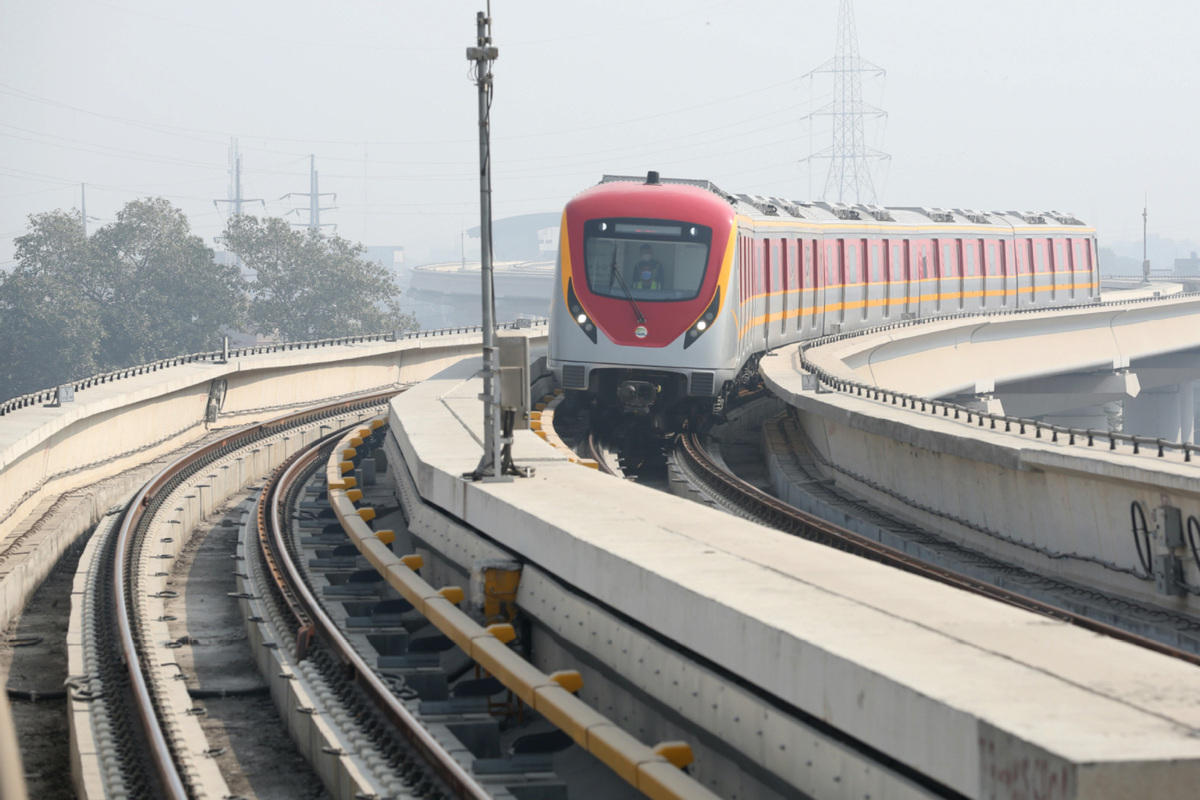
Traveling from Shanghai to Beijing in an economy class on medium-speed rail was my intentional decision to meet the common Chinese people and to know their perception regarding Chinese developmental expansion around the globe. I and my traveling colleague were the only two foreigners in the economy-class cabin. Throughout the trip, I observed one thing and that was that common Chinese people want to know about the world. The Belt and Road Initiative is an opportunity to integrate Chinese to other parts of the world. I came across the famous statement in China, "China is a sleeping giant. Let her lie and sleep; for when she awakens, she will astonish the world." Traveling inside China and other parts of the world, I came to know that China has a huge potential of integrating the global order due to its acceptability of diversity and plurality.
In the 21st century, the world saw the awakening of the sleeping giant and building its significance in the international system through its economic success, military modernization, and soft power influence. From a nascent consumer market to the most influential economy, China is ranked among the most major and powerful economies in the world. With its long-term strategic measures to modernize its society, China has successfully transformed into a high-tech industry economy and become a nation of global influence. The economic policies and goals to boost domestic consumption, accelerate technological development, and lure global investment have made China a dominant power in the global economy.
The Asian giant's military might has also been expanding at an astounding pace and scope. Since the 1990s, the military strategy of China has focused more on fighting and winning a high-tech war against a modern foe rather than waging a people's war. China has been modernizing its military forces by putting great stress on the significance of maritime security, cyber operations, offensive operations, and mobility operations, to strategically dominate contemporary warfare. The increasing size of China's military and economy is indicative of the trend that she is now emerging as a new superpower, or rather, has already emerged as a global superpower.
In the age of global information, success not only depends on whose military wins but also on whose narrative wins. Therefore, the practice of "soft power" works as an attractive policy option to win the hearts of global nations. China's traditional culture has always been appealing, but now it is entering the realm of popular culture around the world. The foreign policy of China has also shifted from one of internal development to one of external influence, not only economically but also militarily, diplomatically, and normatively, most notably through a systematic discourse and smart power strategy.
China is efficiently portraying its soft image by investing heavily in its domestic infrastructure and, subsequently, in global infrastructure as well. China's worldwide infrastructure development project known as the BRI has tremendously boosted trade, encouraged economic growth, and enhanced regional integration. From being a simple regional project to connect Asia, Africa, and Europe, via land and sea networks, the BRI has become global and extended into every field imaginable, including infrastructure, culture, finance, people-to-people interactions, education, and interstate politics. The BRI has largely been successful not in terms of concrete projects only but in ways that have helped China strengthen its diplomatic and economic ties with 140 partner nations and position itself as the champion of globalization.
Since the rise of China, its broader and integrative geo-economic agenda is seeking to enhance its reach into distant markets and trade enterprises. The mega project of the Belt and Road Initiative is an expression of China's geo-economic strategy that is embedded in the historical trends of globalization and the neoliberal order. In the international political landscape, geo-economic, strategic, and geopolitical areas are deeply intertwined due to the complex multi-layered foundation of international political realities. Unprecedented developments such as the BRI are not without certain areas of opportunities as well as challenges.
Through its Belt and Road Initiative, China intends to achieve mutual progress, shared prosperity, and win-win cooperation throughout the region with the goal of fostering infrastructure development and socioeconomic uplift. The country has also been assisting the BRI partner nations to accelerate technological advancement, fight extreme poverty, and achieve high-quality growth. The Chinese investment policies are also set to encourage the development of high technology in nations such as Pakistan.
China and Pakistan's bilateral relations are in the historical milieu of cooperation, shared geo-political outlook, strategic partnership, and economic interdependence. The bilateral engagement has successfully evolved into concrete commitments and pragmatic considerations of interests and values. The entrenched commitments between the two neighboring states have developed further by prospects of consolidation as a consequence of Pakistan being an essential actor in the BRI's development.
The BRI initiative has brought forth many positive and long-lasting results for both China and Pakistan. Through the promotion of bilateral connectivity, logistics, construction projects, and economic and trade opportunities, the strategic project has been contributing to the improvement of people's lives in both nations.
China has opened its doors to sharing high-tech technology with Pakistan. Furthermore, it has encouraged widespread cooperation in a variety of fields, including academia, research, government, industry, and the arts. Pakistan, on the other hand, is devoted to embracing the same technology and providing a stable environment for the development of projects that will promote the rejuvenation of the economy.
Although the Belt and Road Initiative has successfully depicted its softer image as a global and responsible force that seeks to assist the entire globe through economic development and foreign investment while enhancing its political capital and influence, the Western ideology propagates the projects under the BRI have expanded with China's sole strategy to have an influence over the government of other countries and put a global footprint.
In an effort to counter Western propaganda, China must convey BRI's open, green, and clean core strength to the regional and international mass media and get more sustainable achievements with high construction standards among all member nations. Strategically speaking, the BRI is representative of a new era of Chinese economic diplomacy and promotes a network of free trade areas and other forms of economic cooperation among its member nations, which will serve to increase regional cooperation and mark the rise of China in the world.
Engr. Qaiser Nawab currently serving at Commission on Science and Technology for Sustainable Development in the South – COMSATS, is an international expert on Belt and Road Initiative (BRI). The views don't necessarily reflect those of China Daily.
If you have a specific expertise, or would like to share your thought about our stories, then send us your writings at opinion@chinadaily.com.cn, and comment@chinadaily.com.cn.





