Europe's conflict sees Africa reeling from costs









Whether it's soaring fuel bills or pricier food, the most vulnerable are hit the hardest on continent under pressure
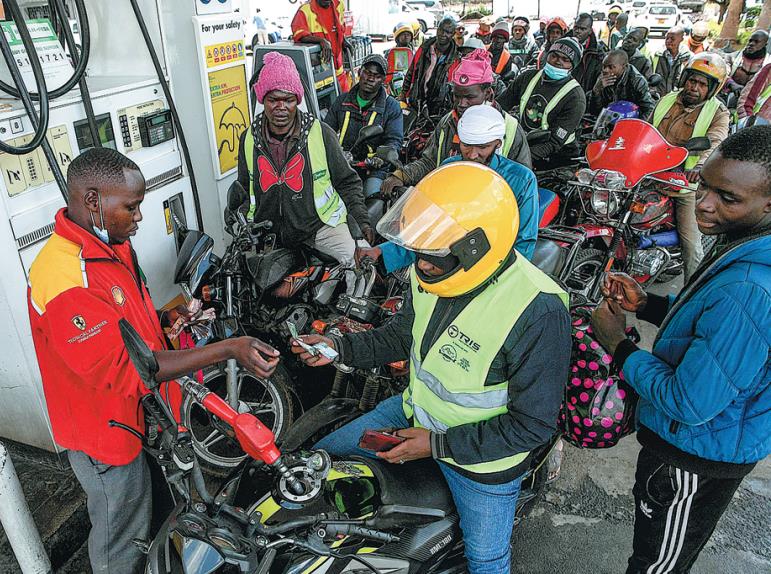
Rising fuel prices in Kenya give Francis Karanja, a Nairobi taxi driver, plenty to worry about as he has watched his already meager income take a hit over the past year.
During the Christmas holiday period, he was spending about $1.70 for a liter of diesel to keep his cab on the road; in the prior year, he was paying just a dollar. But Karanja is reluctant to ask for higher fares from his passengers.
"The customers themselves complain that their salaries have not increased, and I will lose customers if I increase the fare," said the 35-year-old, who works on commission. "It is like I am doing nothing since the profit I used to make will now have to go on fuel."
Driven by the conflict between Russia and Ukraine, prices of fuel and other basic commodities in Kenya and other African countries have kept on the rise, bringing economic hardships to hundreds of millions of people across the continent.
According to Kenya's National Bureau of Statistics, prices of diesel and petrol climbed by around 18 percent and 13 percent, respectively, from August to September last year. The cost of gas and electricity, along with those related to housing and water, rose by nearly 3 percent over the month, with the rising fuel costs to blame, it said.
A recent United Nations Development Programme study found that the most visible impacts of the military operation in Ukraine on Africa are the rising prices for fuel and food, and the financial instability associated with inflation.
The study suggests that the poorest countries in Africa have been hit the hardest, as a larger proportion of cash-strapped consumers' expenditure goes on food and transport.
In Kenya, purchases of cooking gas in the first half of the year dropped to a four-year low, highlighting the impact of the high prices of fuel due to the reintroduction of a value-added tax after the start of the Russia-Ukraine conflict.
According to data from Kenya's National Bureau of Statistics, homes and businesses used 123,150 metric tons of cooking gas in the six months to June last year, a drop of 35 percent from the same period in the prior year.
The UNDP study says that the conflict is threatening to derail development progress in African countries, pushing the 2030 Sustainable Development Goals and the aspirations of the African Union's Agenda 2063 further out of reach.
According to Macharia Munene, a lecturer of history and international relations at the United States International University in Kenya, the conflict in Europe is bound to affect the prices of key commodities like oil and grains.
Negative effect
"While Ukraine is far from Africa, the fact that the global price of oil is going up has a negative effect and direct impact on the African economy. For anything we import, the price will likely go up because of the problem in Eastern Europe," Munene said.
According to the UNDP study, there are also indirect impacts of the crisis in Ukraine, including imported inflation, difficult energy transitions and a potential geopolitical realignment.
The impact of the conflict "could push Africa into serious debt distress", making countries less likely to meet their debt obligations, the study said. "It could also increase inequality because high food and fuel prices typically hit the most vulnerable households hardest," it said.
Munene believes that increased oil and food prices will exacerbate inflationary pressures that have been building up in the wake of the pandemic and contribute to further monetary tightening and higher interest rates that will dampen global economic growth.
"The hike in fuel and food prices also comes at a time when African countries are faced with the negative impacts of changes in seasonal climate patterns on agricultural production, causing droughts in some areas and floods in others," Munene said.
Research from Statista, an online platform providing market and consumer data, indicates that sub-Saharan African countries have found themselves facing another severe shock because the conflict in Europe has prompted the surge in food and fuel prices that threatens the region's economic outlook.
When it comes to energy, consumers in the Central African Republic pay the highest price — one liter of gasoline cost an average of $2.40 in July, while in Zimbabwe, the retail price for the fuel was nearly $2, according to the research.
Details from an International Monetary Fund study on the impact of the Russia-Ukraine conflict on Africa indicate that growth in Africa was expected to slow to 3.8 percent in 2022 from the previous year's rate of 4.5 percent.
In addition, inflation in the region is expected to remain elevated in 2023 at nearly 10 percent. This will be the first time since 2008 that average inflation in Africa reaches that level.
Trade strains
"Higher oil prices will increase the import bill for Africa's oil importers by about $19 billion, worsening trade imbalances and raising transport and other consumer costs. Oil-importing fragile states will be hit hardest, with fiscal balances expected to deteriorate by around 0.8 percent of gross domestic product compared to the October 2021 forecast," the IMF report said.
"Half of Africa's low-income countries are already in or at high risk of distress. Rising oil prices also represent a direct fiscal cost for countries through fuel subsidies, while inflation will make reducing these subsidies unpopular," it added.
The IMF also pointed out that spending pressures on governments in Africa will only increase as growth slows, and rising interest rates in advanced economies may make financing more costly and harder to obtain for some governments.
According to Karanja, the passengers he transports in the Kenyan capital should get ready for at least a 20 percent increase in fares if fuel prices remain high.
"Fuel is everything and it is not our wish to hike the fare," Karanja said.
otiato@chinadaily.com.cn