



China explores ways to unleash more potential









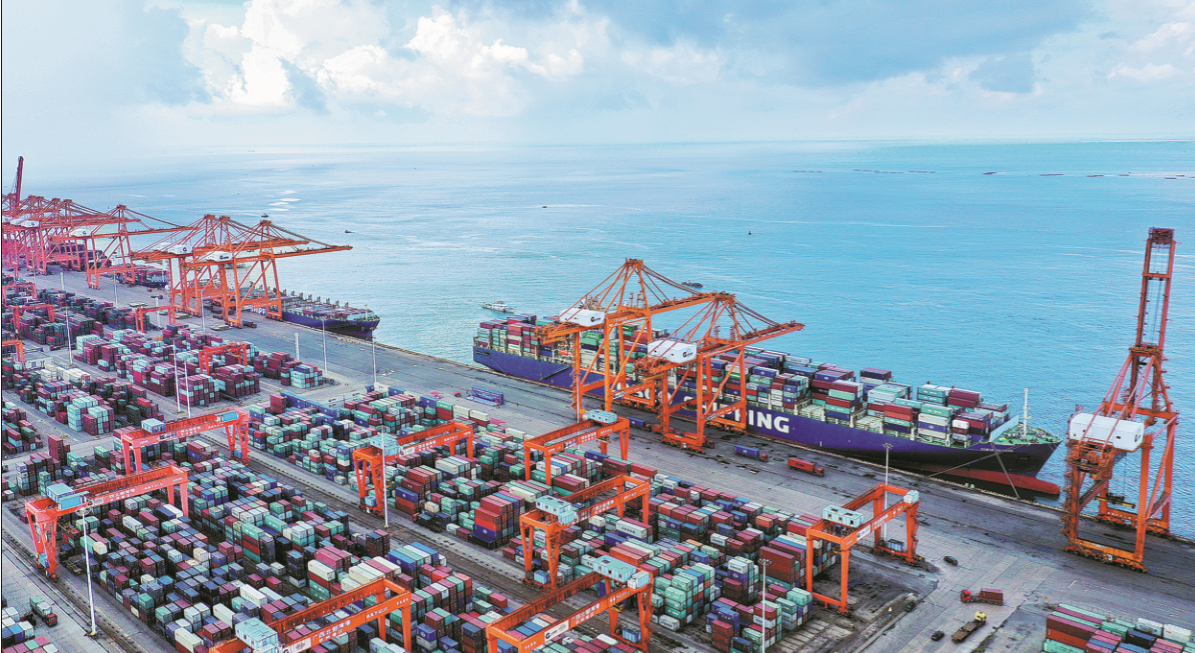
RCEP: Regional integration to pick up pace
China is expected to pursue greater domestic reforms and tariff cuts as it strives to join important international trade agreements and unleash the potential of high-level economic opening-up, experts and business executives said.
They also believe China will strengthen economic ties with countries such as Japan, South Korea, Australia and New Zealand to accelerate regional economic integration.
The implementation of the Regional Comprehensive Economic Partnership agreement at the start of last year has propelled China to liberalize and better facilitate trade and investment, improving the country's preparedness to align with high-level global trade rules.
However, high-standard free trade pacts — such as the Comprehensive and Progressive Agreement for Trans-Pacific Partnership that China is seeking to join — have greater levels of openness for countries that want to join it, analysts said.
When compared with the RCEP, the CPTPP has more openness in sectors such as State-owned enterprises and designated monopolies, labor standards, transparency and environmental standards, said Chen Jianqi, a professor at the Party School of the Central Committee of the Communist Party of China (National Academy of Governance).
The CPTPP also involves reduced tariffs and more restrictions on subsidies, he said. "To expand high-standard opening-up for the next phase, China will likely focus on measures like pursuing high-level tariff reduction and even elimination," said Chen.
China's negative list approach, which restricts and prohibits foreign investment in stipulated sectors and industries, may need to be extended to other areas to provide foreign businesses more access to Chinese markets. Chen said this will "not only expand openness in trade in goods, but also increasingly raise openness in services and the investment sectors".
China will also likely include in new free trade agreements provisions on issues that have not been extensively covered in FTAs already signed. These issues could include the digital economy, environmental protection, labor standards, competition policies and anti-corruption measures, Chen said. The country is also expected to deepen domestic reforms to align with high-standard international economic and trade rules, he added.
The recent Central Economic Work Conference, which set the economic tone for the year, called for greater efforts to attract and utilize foreign capital, widen market access, promote the opening-up of modern service industries, and grant foreign-funded enterprises national treatment.
China will actively seek to join high-standard economic and trade agreements such as the CPTPP and the Digital Economy Partnership Agreement, the conference said.
A report to the 20th National Congress of the Communist Party of China in October said China will steadily expand institutional opening-up with regard to rules, regulations, management and standards.
Huo Jianguo, vice-chairman of the China Society for World Trade Organization Studies, said greater openness, in particular in the services industry, is imperative for China to better attract foreign investment and drive economic growth. This goal is especially important as the nation's economy is facing increased uncertainties in overseas demand, more protectionism, and the spillover effects of tightening monetary policies in developed economies.
China's openness in sectors including telecommunication, finance, insurance, e-commerce and State-owned Enterprises, is expected to be expanded to better align with high-standard international practices, he said.
More measures to facilitate investment are also likely in order to protect the interests of foreign investors. The measures are expected to include enabling foreign companies to have the same rights as Chinese companies and dismantling practices that hinder the operations of foreign enterprises.
Hiroshi Hamaguchi, chairman and president of Astellas China, said he is impressed by China's efforts to grant foreign-funded enterprises national treatment.
"We will continue to leverage China's favorable policies. … Our efforts will continue in clinical trials, new drug applications and commercial launches," he said.
China is also expected to make greater efforts to strengthen economic and trade relations with Japan, South Korea, Australia and New Zealand to accelerate regional economic integration.
"The economic integration between China and ASEAN (Association of Southeast Asian Nations) has made remarkable progress, as characterized by closer cooperation on industrial and supply chains," said Zhang Yansheng, chief researcher at the China Center for International Economic Exchanges.
"Closer ties among China, Japan and South Korea will shore up regional capacities in markets, technology and key (manufacturing) components to upgrade the market and manufacturing networks in the RCEP region to accelerate the shifting of the world economic center to Asia," he said, adding countries should think more of economics than politics to expand common interests.
Huo said China and the four countries have firm and mutual economic reliance on each other. For example, China needs energy and high-tech manufactured goods and investment from them, while they need China's supersized market.



















