



Committee on competition bodes ill for Sino-US ties









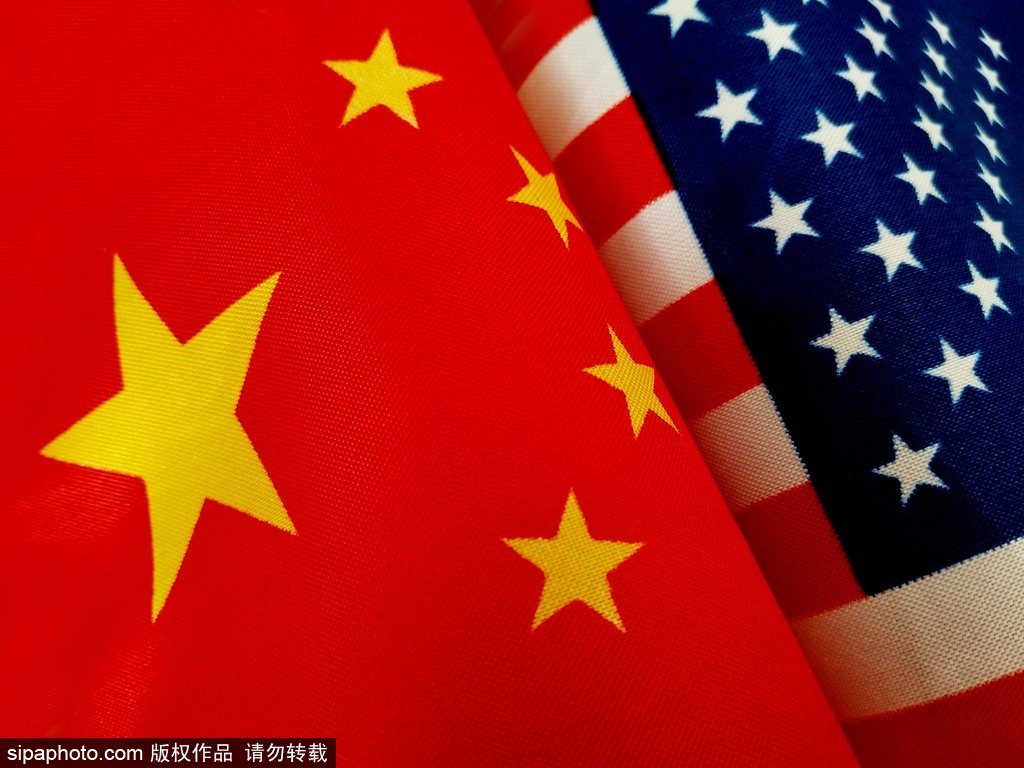
The House of Representatives of the United States recently established a select committee on strategic competition with China to tackle the alleged "multifaceted threats" of China to the US. Although the committee's functions are limited to investigation and policy recommendations, its establishment has sent a clear political signal that the US is launching a new Cold War against China.
It is symptomatic of the anti-China consensus prevailing in Washington and indicative of the US' "whole-of-government" and "whole-of-society" attempts to curb China's rise. In the foreseeable future, the committee will serve as a spearhead in pushing the US Congress' anti-China agenda and shaping the China policy of President Joe Biden's administration. It will undoubtedly have a negative impact on the long-term development of Sino-US ties.
Soon after the Republican Party took control of the House with a narrow lead in the US midterm elections, House Republican leader Kevin McCarthy rushed to push for the establishment of the select committee. There were four motives.
First, to put the focus on the alleged "China threat" by establishing a new panel to mobilize resources for the US' all-out containment strategy targeting China. The Republicans' recent move drew inspiration from the successful practices of Project Solarium introduced by the Eisenhower administration to contain the Soviet Union. By equating the "China threat" with the "Soviet threat", and hyping up competition between two systems and two paths, the Republicans are trying to escalate Sino-US confrontation and crystallize a new Cold War.
Second, hyping up the so-called "China threat" in order to create a consensus between two parties that disagree with each other on almost everything else. The two parties have already started their fight for the 2024 presidential election, and the only topic they can reach a consensus on is China-bashing. Setting up a bipartisan committee on China can help create the illusion that they can work together.
But McCarthy only secured the position of House speaker after a humiliating and historic 15 rounds of voting, which reflects the widening partisan split, social divisions, as well as growing political polarization in the US. It also exposes the predicament of the US political system in which a handful of extremists can determine the political agenda.
Third, to use the new panel as leverage to revive the anti-China agenda of the previous administration and thus influence the Biden administration's China policy. As a staunch supporter of Biden's predecessor Donald Trump, McCarthy follows the US Strategic Approach to the People's Republic of China that was crafted by the Trump administration. This hypes up issues such as fentanyl, the origin of the novel coronavirus, and intellectual property, among other things, and attacks Biden for being soft on China.
Fourth, using the new committee to create more frictions and hurdles in Sino-US relations for the Biden administration, and pollute the environment for bilateral cooperation. After its establishment, the committee will serve the role of fabricating issues to attack China and provoke China-US hostility. As such, it could distract the attention of the Biden administration from other issues on its agenda.
The establishment of the committee will bring risks to Sino-US relations on three fronts.
First, after the Sept 11 terrorist attacks in 2001, anti-terrorism became the priority for the US' national security mechanism. In 2017, the Trump administration unveiled its National Security Strategy, which identified China as a "strategic competitor" of the US.Since then, the US' anti-China policy has remained largely unchanged.
In terms of institutional capabilities, the Biden administration has established various mechanisms targeting China in the Department of State, the Department of Defense and the Central Intelligence Agency, respectively.
Now that Congress has set up a special committee on China, an institutional framework targeting China may be established with approval from both the White House and Congress, which will mark a major shift of focus in the country's national security mechanism from anti-terrorism to superpower competition. That means that Sino-US ties will likely be plunged into a new Cold War for a long period.
Second, the crux of the setbacks in China-US relations is that the old wounds inflicted by the Trump administration on bilateral ties have not yet healed, but the Biden administration continues to add fresh injuries. The midterm elections in the US resulted in a divided government, with the Republicans gaining control of the House and the Democrats gaining control of the Senate. Therefore, the Republicans are now able to use the House to continue Trump's tough stance on China, and bring new woes to the already strained Sino-US ties.
With the two parties making preparations for the upcoming 2024 presidential election, they have embarked on a competition of who can be tougher on China, which will lead to more coordination and exchanges between the two parties on anti-China policies, which will present more challenges to Sino-US relations.
Third, a divided government makes it more difficult for the Biden administration to implement its policies. With the establishment of the committee, it will become routine for the Republicans to use the Congress to attack China, and as such, any goodwill the Biden administration expresses to China and any effort to seek dialogue will encounter resistance from Congress. Under the circumstances, Sino-US relations will easily fall victim to the political conflict inside the US and be sacrificed for political expediency and compromise between the two parties. How to properly manage bilateral relations is a daunting challenge for the two countries.
The author is a research fellow at the China Institutes of Contemporary International Relations.










