



Political adviser's suggestions on seed tech could lead to changes in policy









A political adviser's suggestion has the potential to act as a catalyst for a cascade of changes in national policy.
This potential — part of China's whole-process people's democracy — was clearly illustrated by a report delivered to President Xi Jinping on the sidelines of last year's two sessions, the annual meetings of the National People's Congress and the National Committee of the Chinese People's Political Consultative Conference.
The report's author, Tang Junjie, is a longtime CPPCC National Committee member with a focus on agriculture. She works for the Beijing Capital Agribusiness and Food Group, a State-owned food producer and supplier.
"The meeting on March 6 was a moment that I will remember for life," the 60-year-old said.
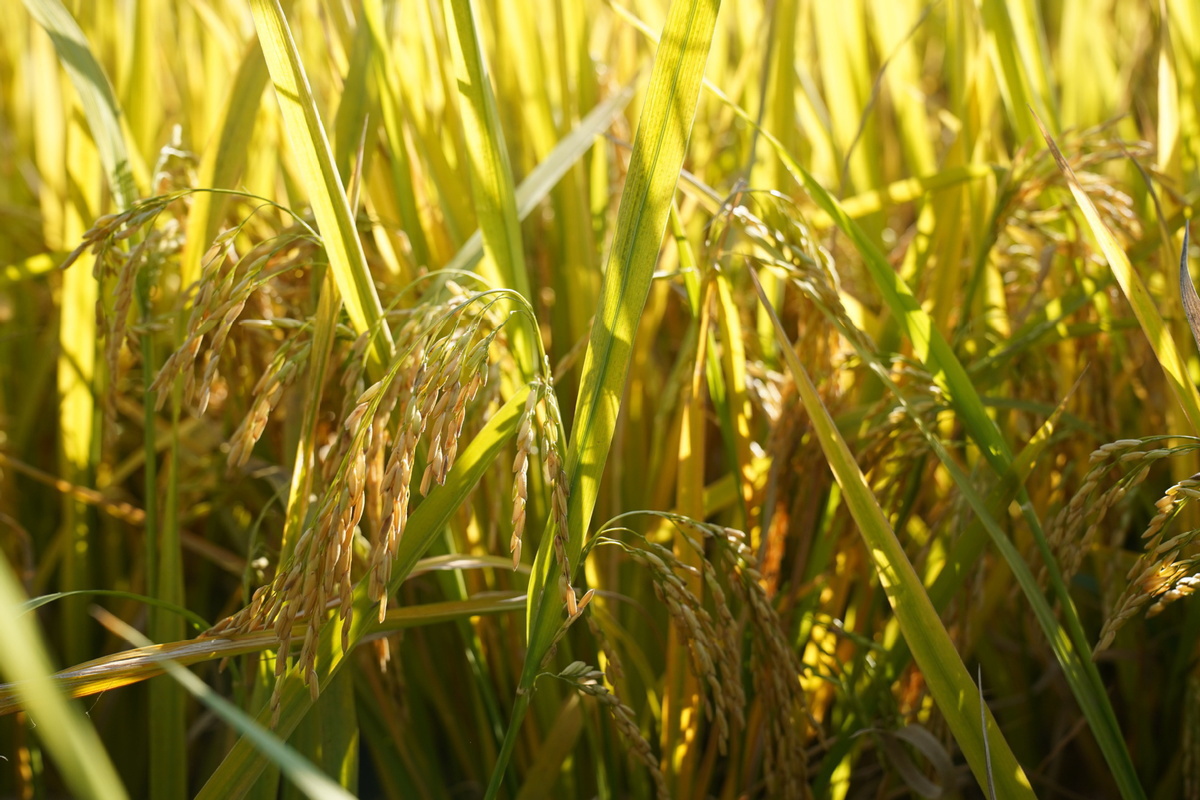
During the meeting with Xi, Tang suggested that greater focus should be placed on seed technology and innovation.
She recommended creating a platform capable of transcending the barriers separating the seed industry, academia and research — pillars of breeding innovation — in a bid to fast-track the commercialization of major lab findings and promote demand-oriented scientific research and development.
"It's well known that the general secretary is concerned about seed security issues," said Tang, who is a member of the 14th CPPCC National Committee. "He listened attentively and even queried a few details and data."
Tang has been a close observer of China's farming sector throughout her two-decade career as an adviser.
She was first elected a member of the Beijing Committee of the CPPCC in 2003 and, after her first five-year term ended, was reelected in 2008 and 2013.
In 2018, Tang became a member of the 13th National Committee of the CPPCC, also on a five-year term, and was reelected this month.
In her capacity as a political adviser, she has managed to forge close contacts with people working in every segment of agriculture, and has traveled extensively for research and interviews.
Over the years, she has had the opportunity to talk to farmers, researchers and scholars about a range of topics, such as the quality of forage grass and food processing, and has accumulated a vast amount of firsthand data.
Recently, the seed industry's long-running headaches have caught her attention, as the country works to consolidate food security by bolstering grain-growing areas and reducing reliance on imported oil crops like soybeans.
China relies on imported strains to boost output for certain staples such as corn and soybeans, as its homegrown corn and soybean species' yields are just 60 percent of those in the United States. China's domestically bred cows produce just 70 percent of the milk of their foreign counterparts.
Domestic breeders seek to emulate their global counterparts in terms of cutting-edge breeding knowledge, but insiders have lamented to Tang that resources deemed crucial to innovation, such as funding and talent, are piecemeal.
Academic research is usually devoted to issues other than those most pressing to the sector, which entails overhauls across the board.
Additionally, investments in breeding research are mainly made by the State rather than by seed companies, as is the common practice in developed countries.
To address these stumbling blocks, Tang suggested to Xi that the government help create a platform that functions as a kind of union. It should be run by major seed companies and have extensive connections to colleges and research institutes.
The arrangement would help bind research and production more closely, bring crucial resources together and improve breeding efficiency.
Tang also suggested that more funding be earmarked to help large commercial breeders with research and development, and that favorable policies be introduced to divert resources such as talent, with the aim of enabling the companies to play an important role in breeding innovation.
After the meeting, her suggestions received a great deal of attention from the General Office of the Communist Party of China Central Committee, Tang recalled.
"The office issued a directive to the Ministry of Agriculture and Rural Affairs, requesting that it reply to my suggestions one by one," she said.
There has been a flurry of major policy statements targeting the breeding sector over the course of the past year, many of them in line with her suggestions.
The report to the CPC's 20th National Congress in October said that China will "invigorate the seed industry and support the development of agricultural science, technology and equipment".
In November, Vice-Minister of Agriculture and Rural Affairs Zhang Xingwang told a panel of agricultural officials, breeders and researchers in Beijing that policy tools will be used to attract more capital to finance a State-led breeding effort that also involves major grain companies, top research bodies and other potential nongovernmental forces.
Central authorities raised the importance of seed technology on a par with farmland preservation at the Central Rural Work Conference in late December.
Tang said she still remembers clearly what she and her colleagues said at the meeting last year, and how the president responded to each of them. She said that the meeting has been a source of inspiration. "
The experience will help me travel further along the road toward invigorating the seed industry," she said.


- Exploring ancient China: How procuratorial work helps revive porcelain
- Running for beauty and fun
- A new scroll along the river: The prosecution chapter
- National lawmakers: birth-friendly policies must extend beyond childbirth
- Hebei farmers gain from modern cultivation skills
- Feedback helps top court upgrade case database





