



Data show US decoupling strategy won't work at all









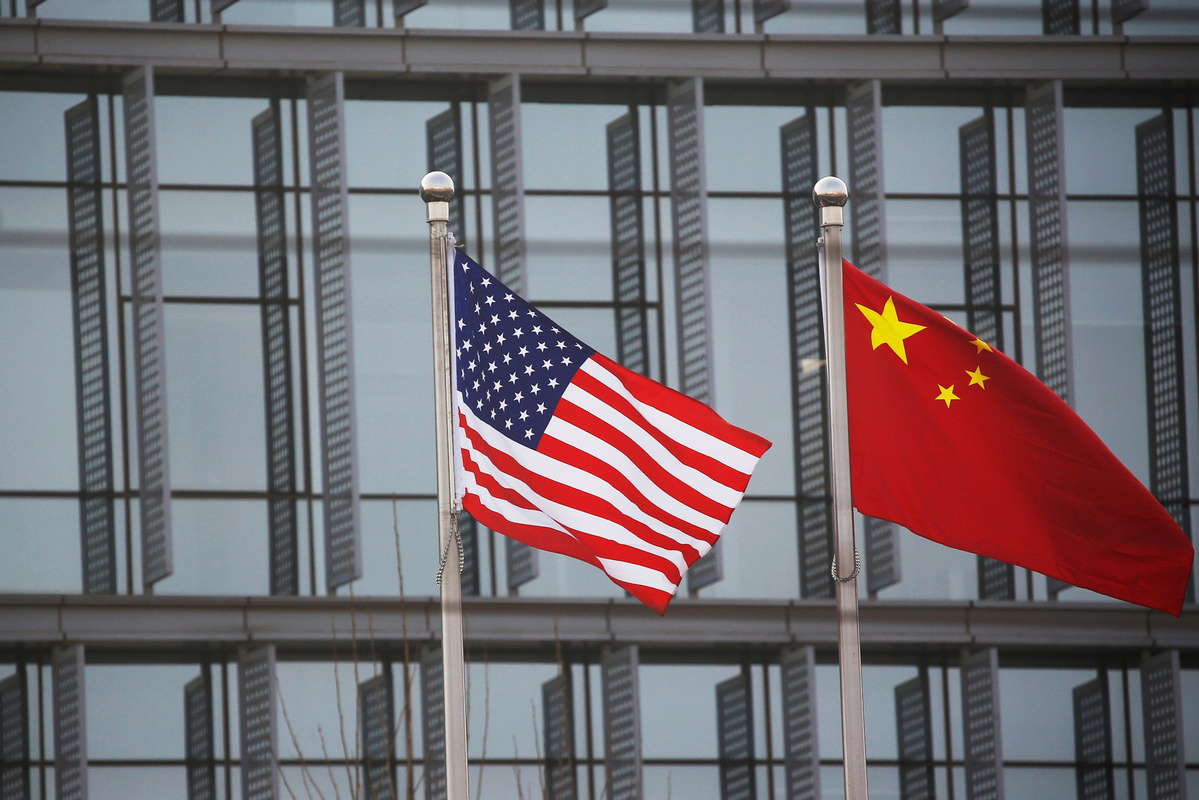
Despite a decline in US exports to China and the trade war the US launched against China four years ago, trade between the world's two largest economies remained strong.
The Sino-US trade in goods increased to a record high of $759.4 billion in 2022.While Chinese goods exports to the United States increased by $5.7 billion to $581.8 billion, American exports to China fell by $1.9 billion to $177.6 billion, according to data from Monthly Customs Statistics of China.
However, the problem is that the US has been trying to "reduce its economic dependence" on China by "decoupling "the American economy from China's. Some US politicians even claim that decoupling the two economies — by increasing tariffs on Chinese goods, restricting exports to China and screening investments from China — is necessary to protect US intellectual property rights and bring back jobs to the country.
But their argument is untenable given the experience of the COVID-19 pandemic over the past three years. Their decoupling strategy will not succeed for three major reasons.
To start with, the US politicians' decoupling strategy, zero-sum game and targeting of China's innovation capability will not boost the US' competitiveness in the fields of technology and innovation.
According to the Global Innovation Report released by the World Intellectual Property Organization last year, domestic human capital, and research and development clusters — not technology transfer or theft of IPR as claimed by some US politicians — have played a vital role in increasing China's innovation output.
In fact, even after the US administration announced a number of technology and trade restrictions, China's innovation capability continued to expand, with the country ranking 11th on the Global Innovation Index in 2022 — and top among upper middle-income countries. It is clear therefore that the US' restrictive policies cannot curb China's rise in the field of innovation.
According to economics theory, a larger market size usually means higher innovation outcomes. China's huge market size provides market opportunities and motivation for innovation for global companies. Since 2009, China has maintained its position as the world's second-largest import destination with an ever growing market. And it is the high tariffs the US has imposed on Chinese goods as part of its trade war that have made it difficult for US companies to enter the Chinese market, enjoy its benefits, and seize the opportunities to expand their innovation capability.
This strategy will not help protect US workers' interests either. According to the Bureau of Labor Statistics, the number of employees in the US' manufacturing sector has declined since peaking in 1979, which was the time when China was just stepping into the global market.
Since the turn of the century and the emergence of the new economy, a large number of jobs in the US shifted to the service sector. So the decline in manufacturing jobs in the US is the result of the endogenous adjustment of the US economy, which has nothing to do with China.
After the 2008 global financial crisis, the number of US manufacturing jobs declined rapidly — by more than 2 million in three years — exposing the deep-seated structural problems in the US economy. Data for 2022 show that, despite a strong rebound in US employment, new jobs are created mainly in the service sector. And the imbalance in the US labor market shows that attempts to decouple the US economy from China's will not solve the deep-seated structural problems in the US' labor market or increase manufacturing jobs.
As a matter of fact, decoupling will create more trouble for consumers and businesses in both China and the US. The US and China are highly interdependent economies, with China being a major supplier of consumer goods, including electronics and clothing.
In such a situation, decoupling will force US consumers to choose more expensive alternatives, and US companies to give up business opportunities in China. In a 2021 report, the US Chamber of Commerce warned against the economic gloom that decoupling from China will cause, asserting that the costs of forgoing the Chinese market are substantial for US companies, in terms of direct loss of potential revenue and indirect loss of market share.
Most business leaders don't want to decouple the two economies, with many saying that all the time, effort and investment they have expended to establish a presence in China will go to waste.
Furthermore, decoupling from China would require a significant overhaul of the global supply chains, because many products sold in the US are made with components sourced from China. That would be a time-consuming and expensive process.
Indeed, the US' excessive focus on major-power competition has turned the mutually beneficial Sino-US economic ties into a political and economic battle. The Joe Biden administration has not officially endorsed a policy of decoupling. Instead, it has emphasized the need for a strategic approach to compete with China, including reducing economic interdependence with China. To many in the administration and the Congress, the strategy seems ideal to reduce the US' exposure to economic and security risks posed by China.
But judging by the above factors, the decoupling strategy is neither rational nor economical. It will only bring harm to both parties. And as the latest data on China-US trade show, the decoupling strategy will not work at all.
It's time therefore that the Biden administration reviewed its idea of what constitutes a healthy competition, even in a highly competitive global landscape.
The author is an assistant research fellow with the Institute of American Studies, Chinese Academy of Social Sciences.
The opinions expressed here are those of the writer and do not necessarily represent the views of China Daily and China Daily website.
If you have a specific expertise, or would like to share your thought about our stories, then send us your writings at opinion@chinadaily.com.cn, and comment@chinadaily.com.cn.





