



Koo coos about decoupling tech









Former business adviser claims leaving Chinese market will hurt US
China's pursuit of opening-up and collaboration in science and technology helps underdeveloped countries and benefits the world by addressing global challenges, according to a retired international business adviser in California.
"A good example of China's policy is the multinational participation in its space station. Twenty countries have signed on to participate. This is an indication of China's willingness to collaborate with other countries in science," said George Koo, a former Silicon Valley adviser who used to help clients set up China strategies and business operations.
China has established collaborative relations in science and technology with 160 countries and regions and signed 116 intergovernmental agreements on scientific and technological cooperation.
High tech is a hot topic at the two sessions, the annual meetings of China's two main political bodies — the National People's Congress and the National Committee of the Chinese People's Political Consultative Conference.
Last year, China engaged in numerous international cooperation programs aimed at addressing shared challenges, including COVID-19, biodiversity, climate change and clean energy.
It has pledged to strengthen opening-up in science and technology and endeavor to create an environment of openness and innovation.
Koo said China is on the right track to strengthen exchanges with other countries and expand collaboration in science and technology, because problems such as climate change, pandemics and drug abuse are global concerns that require global cooperation.
"Humankind, in general, has progressed by sharing knowledge and scientific advances. Whenever countries attempt to cut off access to technological advancement, they end up in a losing situation because other countries will not be able to contribute by adding to the knowledge accumulated by others," Koo told China Daily.
For example, he said, China's Belt and Road Initiative is built on the notion that collaboration and cooperation are good for everybody.
"Because if you help an underdeveloped country to develop their economy, then they, too, become part of global economic growth and are able to contribute," Koo said.
"As the saying goes, a rising tide raises all boats. This is what China is trying to do," he added. "They're taking their expertise and financial strength to help less privileged countries develop their economies. It's not a handout. It's not a freebie. It's something that both sides must work on, contribute to and invest in together."
In contrast to China, the United States promotes a rule-based international order that it says everyone should abide by, according to Koo, who called America's approach "a rule-based disorder".
"It's an order that suits American foreign policy. Anytime it does not suit American foreign policy, they just ignore it and pretend it does not exist," he claimed. "It's arbitrary. It has no basis. It does not follow United Nations rules."
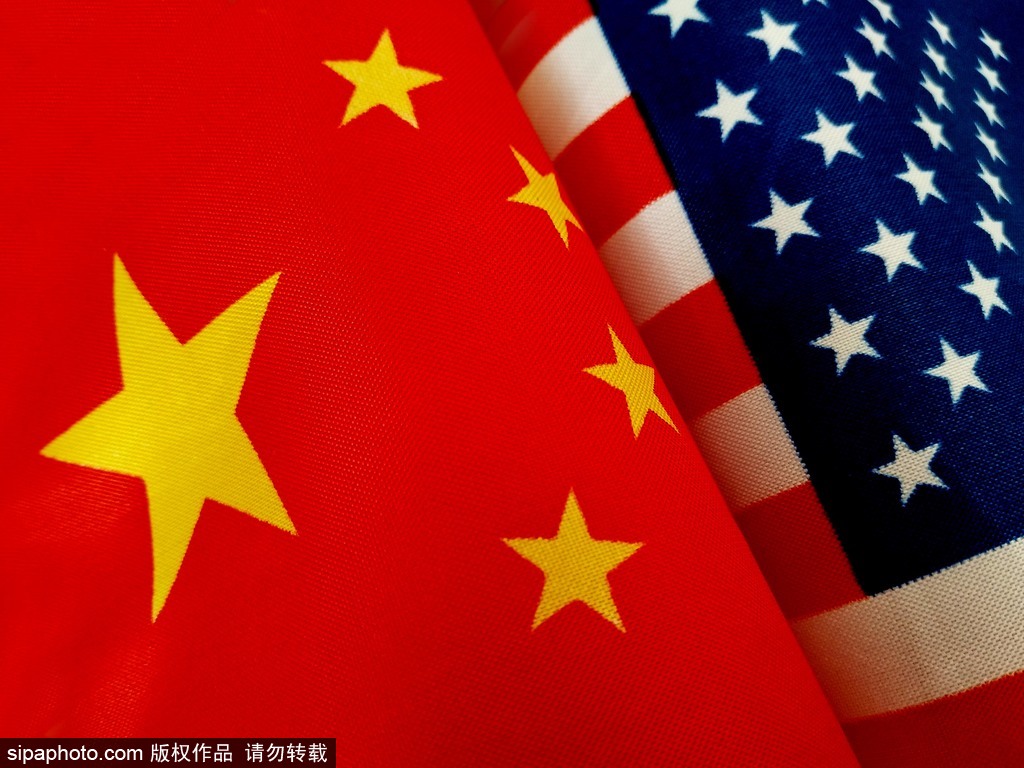
Some in the US are promoting a technological decoupling with China, but Koo believes this will not work and will only hurt global development.
In terms of semiconductors, for example, the US is trying to counter China's technological development by imposing export controls on certain technologies.
"China is the largest market, and asking American companies not to sell to China is going to hurt their sales tremendously," Koo said. "So American companies are hurt by not being able to make the money they need to generate more advances. The long-term result is a lose-lose solution, because eventually the world will end up with two spheres of technology, and each sphere will be smaller than the total market that could exist, a globalized market based on collaboration and cooperation."


- Beijing-Pyongyang passenger rail service to resume Thursday
- Shanghai and Jiangsu integration boosts sports-tourism development
- China Eastern Airlines restores direct flights between Shanghai and Stockholm
- RedNote targets AI-run accounts with new governance rules
- China's draft law on ethnic unity aims to serve as global model, political adviser
- Spring blossoms complement the Honghe Hani Rice Terraces in Yunnan





