



Adviser stresses renovation, upgrade of hospitals









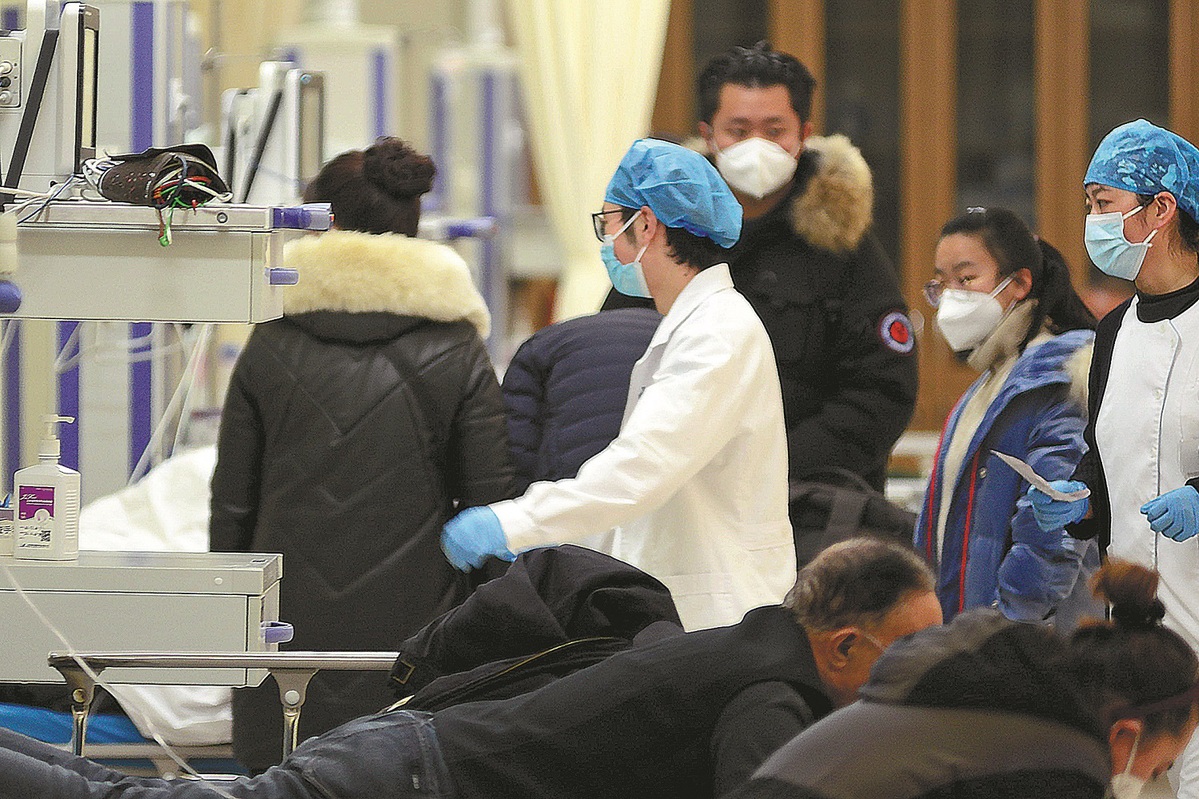
Major public hospitals should be renovated to improve their resilience against public health emergencies, such as increasing the number of critical care beds, and adding oxygen and electrical supplies in order to handle the weight of machines such as respirators, Wang Guangfa, a member of China's top political advisory body, suggested.
China has accumulated successful experiences during its three-year fight against COVID-19 and averted widespread circulation of more dangerous and lethal variants, said Wang, a member of the 14th National Committee of the Chinese People's Political Consultative Conference, and head of the respiratory and intensive care unit at Peking University First Hospital.
Wang is also a member of the China Association for Promoting Democracy, one of China's eight non-CPC political parties.
However, he said, the pandemic has exposed some weaknesses in public hospitals in China, such as a lack of intensive care unit beds and inadequate infrastructure and training of healthcare workers in handling an acute outbreak.
Before the peak of the outbreak in late December, China had about four ICU beds for every 100,000 people, compared with about 14.3 per 100,000 people in the European Union countries and nearly 30 per 100,000 people in Germany and the United States.
"The proportion of ICU beds among all hospital beds stood at about 4 percent previously and was increased to 8 percent as required by the National Health Commission before the peak, but some regions still experienced a shortage," he said. "Developed countries also reported an insufficient number of beds amid the pandemic."
Another shortcoming, Wang said, is that construction standards of major hospitals, especially concerning oxygen supplies and electricity, cannot meet the demands for quickly converting regular beds into critical care beds.
"The problem is that convertible hospital beds are scattered and cannot meet the demand for centralized treatment," he said.
To resolve these issues, Wang suggested dedicating central and local funds to lift the percentage of critical care beds to 10 percent within five years.
"It is also important to upgrade the design of oxygen and electrical supplies to facilitate the conversion of regular wards into critical care wards," he said. "Gradually, the proportion should be boosted to 10 to 20 percent."
In addition, Wang said that oxygen and electrical supplies should be ramped up to ensure a full capacity excess of 10 percent, which can be activated to cope with health emergencies.
Additionally, Wang said that more resources should be dedicated to helping the operations of infectious disease hospitals to assist them in maintaining infrastructure and retaining workers, and to building infectious disease, respiratory and critical care departments at comprehensive hospitals.
Wang had participated in one of the earliest missions in Wuhan, Hubei province, as a national expert to investigate the initial COVID-19 outbreak. He also fought on the front-line against multiple domestic outbreaks in Beijing, Jilin and Liaoning provinces, and led his team during the epidemic peak in late December.
"Another highlight of the battle is the implementation of triage procedures, which made it possible to direct mild-symptomatic patients to communities and severe patients to top-tier hospitals, as well as deliver early intervention to high-risk groups," he said. "The positive outcome has reaffirmed our determination to implement triaged procedures in the future."
As a physician, Wang said the COVID-19 outbreak has also revealed the significance of his peers in safeguarding public health.
"Clinical doctors are like terminal sensors — highly sensitive to a potential outbreak — and their role in detecting new pathogen infections is irreplaceable," he said.
During an outbreak that emerged at the Xinfadi wholesale market in Beijing in the summer of 2020, Wang learned that some districts were planning to conduct mass testing and immediately made a suggestion through the CPPCC to test people at high risk first, such as chefs and restaurant workers, as the epidemiological survey indicated.
The proposal was eventually adopted, he said.
Regarding the future of COVID-19, Wang said that he is "cautiously optimistic".
"Because of the current level of herd immunity in China, the chance of a new large-scale outbreak is not big. But we should be careful with the possibility of a severe rebound six months later," he said.
"The virus is mutating constantly and we should continue to implement close monitoring and keep alert against the risk of an emergence of a more transmissible, deadly or immune evasive strain."
Wang added that it is also vital to step up vaccine-making infrastructure and technology preparedness so that new vaccines can be developed quickly to tackle new variants.


- China's five-year roadmap bets big on innovation in strategic leap
- Remains of senior Chinese official Song Ping cremated
- Chinese scientists develop 'molecular bridge' to boost cancer treatment
- Innovative courses enrich seniors' lives in Shanghai
- Exploring ancient China: How prosecutors bring ancient melodies back to life
- Shanghai Pudong International Airport retains best airport title in 2025





