



Is PH sleepwalking into economic and geopolitical minefield?









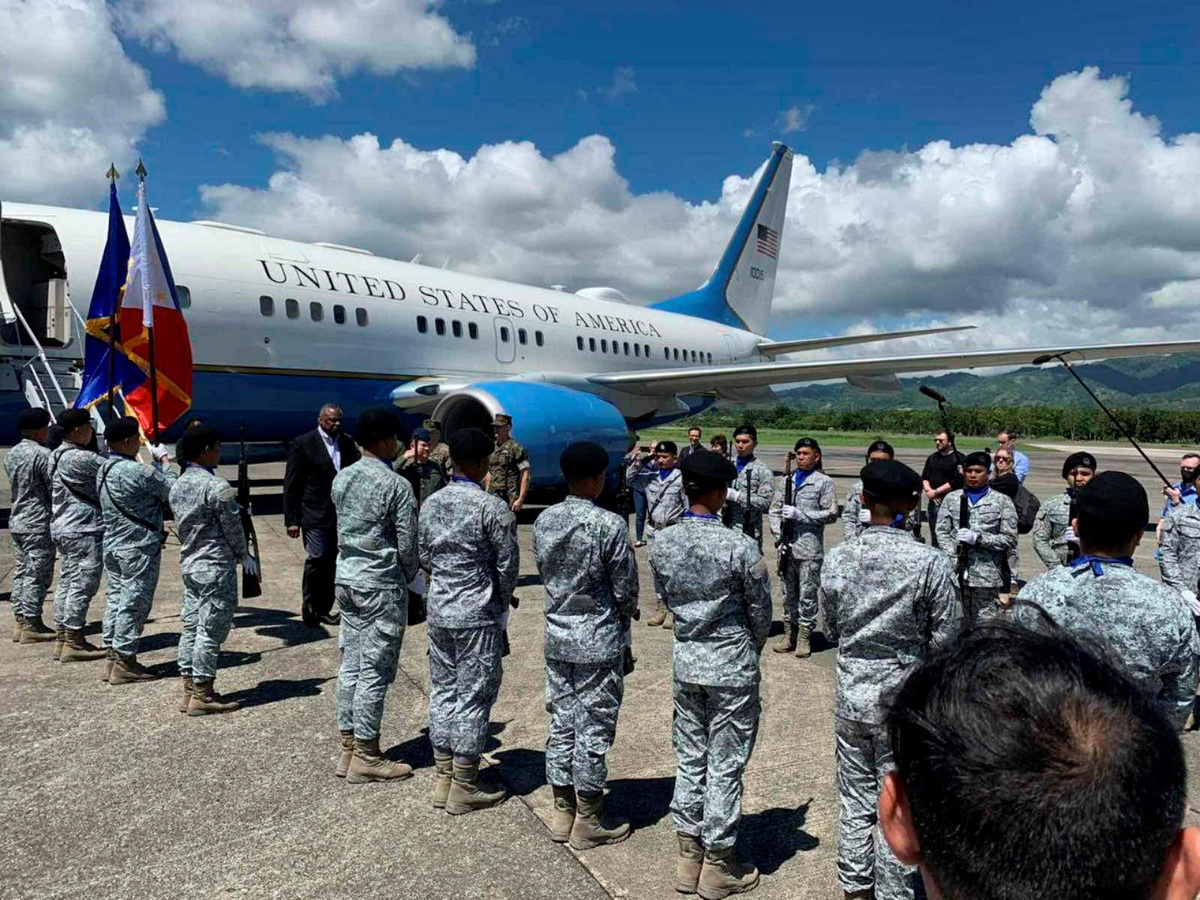
Amid the worst global volatility since 1945, the Philippines may be aligning its future with secular erosion, political divisions, militarization and nuclear risks.
Only some six years ago, the Duterte administration was still recalibrating its foreign policy to balance between Chinese development and US military cooperation. The Philippines, finally, stood to benefit from both great powers, as many Association of Southeast Asian Nations (Asean) members had done for years.
But those days are fading fast. And the timing couldn't be worse. Manila seems to be positioning in a way that could result in elevated economic and geopolitical collateral damage. If that's the case, it's unwarranted. Other options do exist.
Militarization, elevated nuclear risks
Last week, the Philippines and the United States announced the two will hold their largest Balikatan ("shoulder-to-shoulder") military exercise in history, with 17,600 expected participants. Starting in mid-April, it will feature live fire, 12,000 US troops, 5,000 Philippine soldiers, over 110 from Australia and Japanese observers.
Officially, the focus will be on "maritime defense, coast defense and maritime domain awareness." Yet, leading US observers say the aim is to increase interoperability among the allies, to contain China's rise and to optimize US flexibility in its regional military bases.
That, however, is likely to pave the way for a premature military conflict, which will then be used to boost elusive unity and legitimize further mobilization.
Worse, last week also saw the nuclear risks increase drastically as the US nuclear alliance with the UK and Australia (Aukus) revealed a plan to launch a fleet of nuclear-powered submarines in the region.
Australia's defense minister Richard Marles said the deal to buy nuclear-powered attack submarines from the US was necessary to counter the biggest conventional military buildup in the region since World War 2. The deal will cost up to $245 billion over the next three decades and create 20,000 jobs.What Marles left unsaid was that the primary beneficiary of the deal, which will delegate geopolitical risks away from the US to Australia and Asia, is the US Big Defense. And let's be real: those jobs, which will not benefit Australia's civilian economy, represent only 0.14 percent of its total labor force. Far worse, the deal could drag 26 million Australians, along with hundreds of millions of Asians, into a nuclear holocaust.
Flirting with nuclearization
In the process, the stated Philippine foreign policy of "friend to all, enemy to none" appears to be dissolving, while the parallel domestic objective of "unifying the nation" is likely to be derailed. As the march of militarization proceeds, associated economic, political, military and ethnic tensions will increase accordingly. The path from Afghanistan and Iraq to Syria and Ukraine has been a series of colossal devastations. Should the same fate fall to Taiwan or the Philippines, the outcome is not likely to prove that different.
Worse, while the new, more malleable foreign policy could drag the Philippines into hostilities that the wide majority of the Filipinos oppose, it would also split Asean.
Instead of opposing the Aukus, which violates the Philippine Constitution, the Southeast Asia Nuclear Weapon-Free Zone (SEANWFZ) treaty and the UN nuclear weapons ban treaty that the Philippines has ratified, Manila seems to be aligning its future with the very countries driving the arms races and nuclear proliferation in the region.
Furthermore, this alignment takes place at a historical moment when the economies of these allies are struggling with the worst economic challenges since 1945. Perhaps that's why they now resort to misguided military mobilization, which is exploited as a diversionary technique to distract the governed and pacify the markets.
Cost-of-living crises in the West, rising volatility
US annual inflation rate, which had soared close to 10 percent in summer 2022, slowed only to 6 percent in February. Although the interest rate has been hiked to almost 5 percent, the US remains three times above the Fed's target of 2 percent.
In the euro area, the situation was worse as inflation remained at 8.5 percent in February 2023 after peaking at 11.1 percent in November. Last week, the European Central Bank (ECB) raised interest rates by 0.5 percent, further pushing borrowing costs to the highest level since late 2008. Due to persistent inflation, the hikes are expected to continue.
Even in Japan, where inflation was negative until the fall of 2021, it soared to 4.3 percent in January 2023, the highest since 1981, and continues to rise. As a result, the Japanese central bank's new chief, Kazuo Ueda, will have to raise the interest rate in the coming months, which will further penalize the ailing consumption.
Despite a decade of historical fiscal packages, past monetary easing and massive debt-taking, British living standards are crumbling, French workers are rioting, Italy remains under a colossal debt burden, and even in Germany the recession fears are returning.
If SVB risks and contagion spreads...
The Fed raised the interest rate to 4.5-4.75 percent in its February 2023 meeting, still pushing borrowing costs to the highest since 2007. Despite increasing financial instability, Fed Chairman Jerome Powell warned of more rate hikes and seems to be aiming at 5.25 to 5.5 percent, thus flirting with a recession, or worse.
Indeed, new data shows that the collapse of Silicon Valley Bank (SVB) wasn't an anomaly, but reflects systemic pressures in the US financial sector. Some 200 American banks face SVB-like risks. They do not have enough assets to pay all customers, even if half of uninsured depositors tried to withdraw their money.
Last week, the ratings agency Moody's downgraded its outlook for the US banking system from stable to negative, due to the "rapidly deteriorating operating environment."
These are the economies Manila is now pivoting to, possibly for years to come.
The lessons of history
Last time, the Philippines served as a battleground of the Great Powers, Japanese troops butchered at least 100,000 Filipino civilians in Manila, while the Battle of Manila caused massive civilian devastation: 100,000 killed and 250,000 in total casualties, thanks to Japanese atrocities and US firepower. Like Berlin and Warsaw, the city became one of the most devastated capitals.
During World War 2, total Filipino deaths amounted to 560,000 to 1 million, almost 4.9 percent of the then population. In relative terms, that's far higher than the losses of the US (0.3 percent) or even Japan (3.9 percent); and higher than in Burma, China, Korea, or Malaya/Singapore. In Southeast Asia, the devastation was worse only in Indochina.
Today the destructive power of Philippine allies' conventional and nuclear weapons is far, far more lethal than in 1945.
Without a genuine "friend to all, enemy to none" foreign policy, the inclusive rise of the Philippines is not viable.
The author is the founder of Difference Group and has served at the India, China and America Institute (USA), Shanghai Institutes for International Studies (China) and the EU Center (Singapore). The views don't necessarily reflect those of China Daily.
If you have a specific expertise, or would like to share your thought about our stories, then send us your writings at opinion@chinadaily.com.cn, and comment@chinadaily.com.cn.





