Future in the balance










China's championing of connections and common interests acts as a counterweight to the West's zero-sum view of world
Editor's note: The world has undergone many changes and shocks in recent years. Enhanced dialogue between scholars from China and overseas is needed to build mutual understanding on many problems the world faces. For this purpose, the China Watch Institute of China Daily and the National Institute for Global Strategy, Chinese Academy of Social Sciences, jointly present this special column: The Global Strategy Dialogue, in which experts from China and abroad will offer insightful views, analysis and fresh perspectives on long-term strategic issues of global importance.
The Ukraine conflict has created a new global geopolitical reality, which may prove to be very dangerous in the coming years.
To interpret the dynamics of these developments, we must move beyond the conventional reading regarding the causes of the geopolitical behavior of Western states and study some hidden elements in the foundations of the geopolitical identity of the West, which shape the basic world view of Westerners.
Western civilization is dominated by eschatological elements and a zero-sum game mentality, which shape the basic geopolitical narratives of the West which in turn influence its geopolitical behavior.
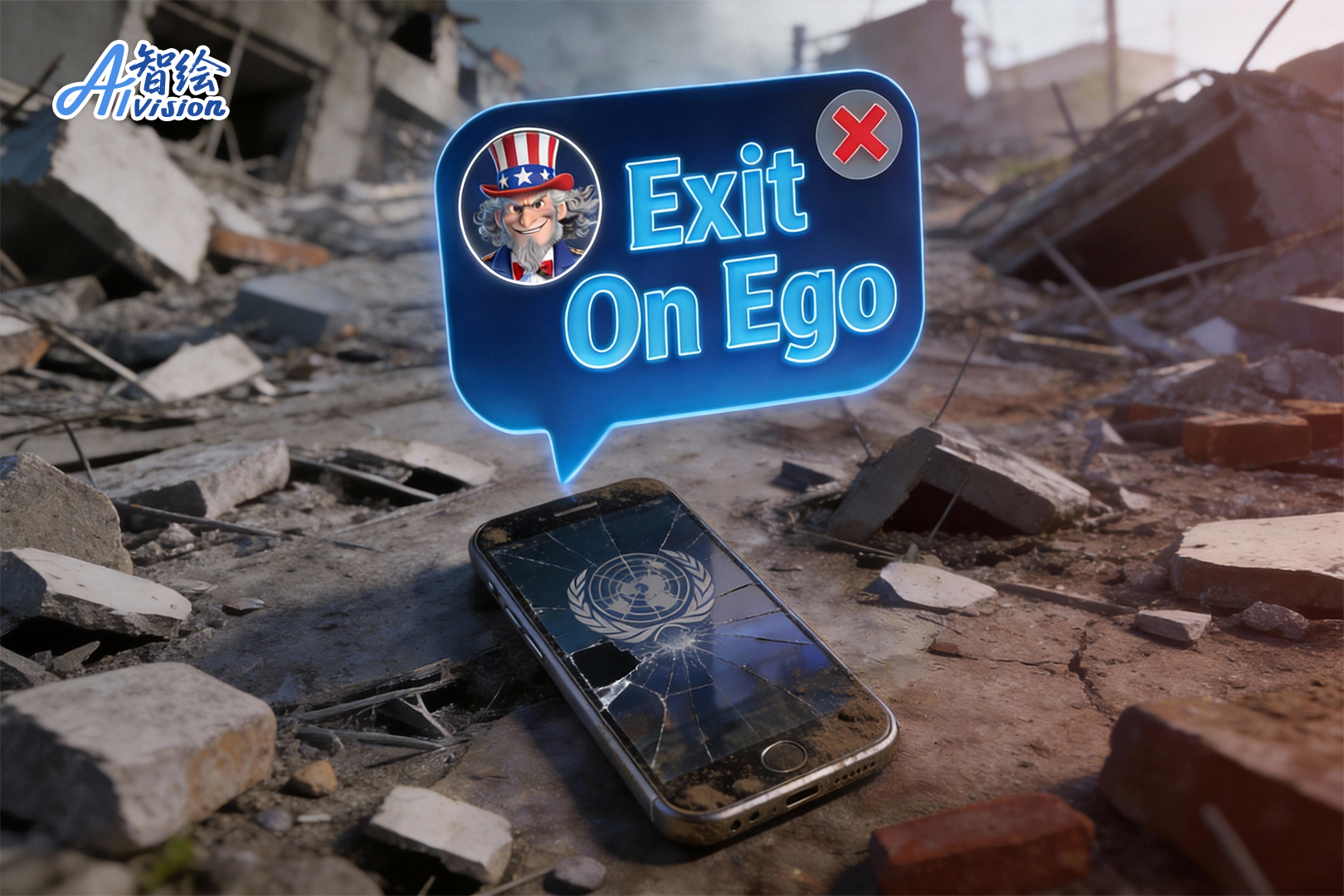
Thus, Western European countries and the United States consider that Russia is exclusively responsible for the Ukraine conflict, ignoring all previous geopolitical dynamics that led to this result, and they treat Russia as an "evil empire", which must suffer a total defeat. This logic is extremely dangerous because it lends the conflict a metaphysical narrative and perceptions of a total war, creating a dynamic that could lead, sooner or later, to the outbreak of a major nuclear war.
In the context of this logic, the West tries to impose on other countries a choice — either you are with us or you are against us. From a Western perspective, Asian countries must adopt a clear and total anti-Russia policy, so that the West can achieve the complete encirclement of Russia. The transformation of Russia into a country besieged from all sides is necessary to achieve the total victory sought by the Western countries.
If Asian countries do not adopt this absolute and clear anti-Russia policy, the West considers them to be against it. But this is an option that cannot be accepted by Asian countries, especially China and India. In addition to the strategic interests that both countries have in Russia, if they were to identify with the West, it would be as if they were obeying its orders. Additionally, submitting to an "either with me or with my enemy" choice would be to accept the West's reading of the world.
Relations between countries are not limited to binary readings of good or bad, friend or enemy, "with me or against me". In reality, relations between countries are dynamic mixtures of competition and cooperation, constantly changing. And the art of international politics is how one will be able to place rivalries and synergies in a transformational context that will promote cooperative elements, so as to reduce frictions and limit the risks of conflicts between countries.
And that is exactly what China is trying to do today. While the West is anxious at the waning of its dominion, China is advocating the Global Development Initiative and the Global Security Initiative, calling for the leveraging cooperative elements. And these initiatives seem to be succeeding. The recent Iran-Saudi Arabia rapprochement, which came about through Chinese mediation, shows how important China's role is for global stability.
Additionally, Chinese President Xi Jinping's visit to Moscow works in favor of peace precisely because it deconstructs the West's logic of a complete encirclement of Russia, which in turn would cause the "total defeat" of Russia, as the West seeks. But this goal is a dangerously paranoid perception. So at a critical moment for the future of the world, China is acting as the rational and balancing factor.
On the one hand, we have the countries of the West which are dominated by the Cold War mentality and want to impose the perception of a dualistic planet, divided into two camps absolutely hostile to each other. On the other hand, there are developing countries in the Global South, with the most important representative and regulatory power being China, which do not perceive the world as a battlefield between good and evil but as a synthesis of positive and negative forces that are in dynamic balance among themselves. The former is that of absolutism and intolerance. And the latter is that of geopolitical pluralism and tolerance.
In the framework of this new reading of the world, the Belt and Road Initiative acquires a new meaning.
The initiative de facto combats the division of the world, connecting countries with a seamless neural network. Connected countries understand that apart from the differences there are also common interests. Therefore, the material infrastructure of the Belt and Road Initiative also has an important intangible geopolitical function.
The Belt and Road Initiative practically promotes global cooperation and reduces international frictions. And the critical question is if Europe will decide to join this pluralist world with rivalries and enmities but also synergies and common interests in a dynamic mixture, or it will submit to the dictates of the US and risk becoming an isolated peninsula on the western edge of Eurasia.
The author is a professor of geopolitics and the director of the War Theory and Analysis Sector at the Hellenic Military Academy in Greece. The author contributed this article to China Watch, a think tank powered by China Daily.
The views do not necessarily reflect those of China Daily.