Visits greeted with contrasting reactions









A tale of two CEOs: the stark snapshot of current relations between US and China
In the past week, a US CEO spoke at a conference sponsored by China's government and was warmly received. Meanwhile, an Asian CEO representing a Chinese company in the US testified before the US Congress and was treated dismissively.
The visit by Apple CEO Tim Cook to Beijing and the one by TikTok CEO Shou Zi Chew to Washington could serve as a snapshot of the current state of US-China relations.
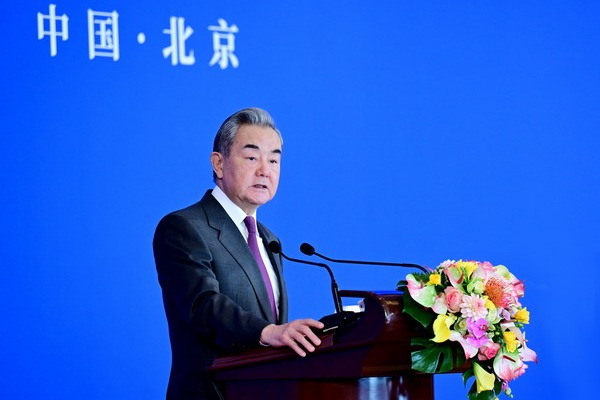
"I am thrilled to be back in China," Cook said on Saturday to the China Development Forum, hosted by a research center of the State Council. "It means the world to me, and I feel really privileged to be here. We have a very large supply chain in China. We also have a thriving App Store."
According to Apple, there are more than 5 million registered Chinese mobile app developers within its iPhone ecosystem.
Cook said that every time he visits China, he learns something and takes something back, primarily related to culture. He said many things have changed in China, with cities becoming so large.
"The thing that does not change is the culture that anything is possible," Cook added.
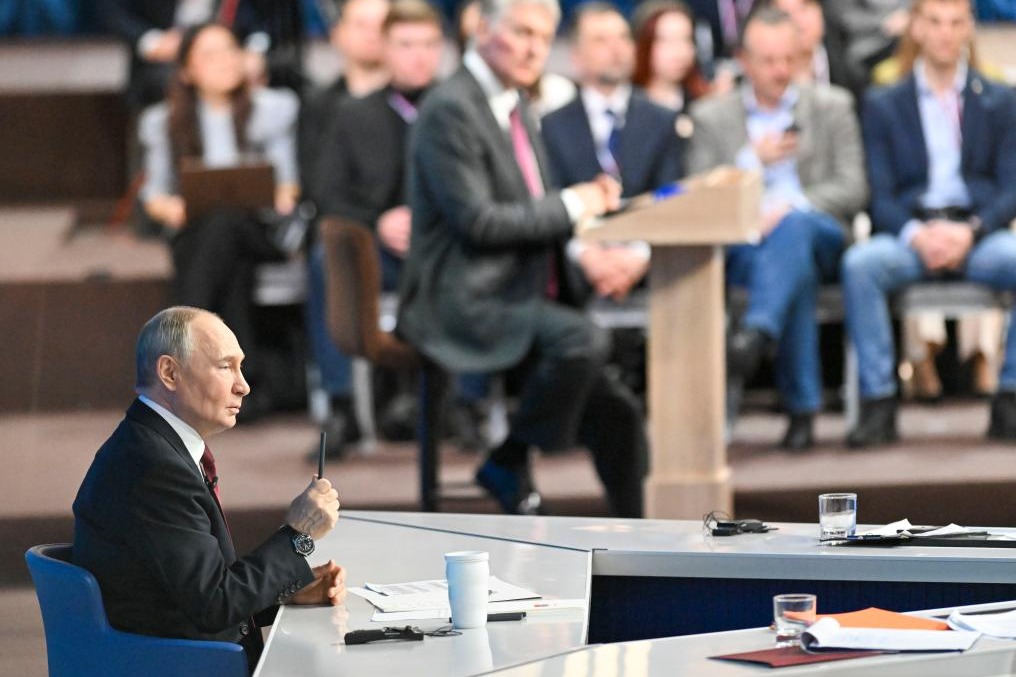
On Thursday, Chew appeared before the House Energy and Commerce Committee for over five hours, and lawmakers from both parties bluntly questioned him about national security and other concerns involving the app, which has 150 million US users, nearly half the US population.
Despite Chew's assertions that US users' data was protected by TikTok, the House panel members seemed to have reached a foregone conclusion.
Representative Cathy McMorris Rodgers, a Republican from Washington state, told Chew: "Your platform should be banned."
The consensus by many politicians in Washington is that the Chinese government has access to user data, an allegation that TikTok has strenuously denied.
Chew told the panel: "I think a lot of risks that are pointed out are hypothetical and theoretical risks. I have not seen any evidence."
"It was really clear to me and to a lot of other people that Congress really, as a whole, does not understand how the internet works and also really just doesn't understand what TikTok is," Gabrielle Cerberville, 31, a content creator from Kalamazoo, Michigan, said of the hearing, USA Today reported.
But on Sunday, US lawmakers seemed determined to follow through with a TikTok ban regardless of measures taken by TikTok parent ByteDance in Beijing.
US House of Representatives Speaker Kevin McCarthy, a Republican from California, said that lawmakers will move forward with legislation to address purported national security worries about the app.
TikTok says it has spent more than $1.5 billion on data security efforts under the name "Project Texas", which has nearly 1,500 full-time employees and is contracted with Oracle to store the data of TikTok's US users.
Presumption of guilt
On Monday, the Chinese Foreign Ministry said the US side has provided no evidence or proof that TikTok threatens US national security, yet it has repeatedly suppressed and attacked the company based on the presumption of guilt.
"The US should respect the principles of market economy and fair competition, stop suppressing the companies and provide an open, fair, just and nondiscriminatory environment for foreign companies in the US," Foreign Ministry spokeswoman Mao Ning told a daily briefing.
In 2020, then-US president Donald Trump lost a series of court rulings when he sought to ban TikTok and another China-based app, WeChat.
In August 2020, Trump issued two executive orders, one banning TikTok and another demanding that Byte-Dance sell its US business to US firms.
But Trump's attempt to block TikTok with an executive order derived its power from the International Emergency Economic Powers Act, or IEEPA. That act exempts the import or export of "informational materials" and "personal communication "through the Berman Amendment, which sought to protect speech.
"Banning the app — or any like it — would likely still be challenged under the First Amendment. It's important to keep in mind the Berman Amendment under the IEEPA is a proxy for the First Amendment. Even if it's sidestepped, greater legal questions remain," said John Costello, who oversaw the creation of the office at the US Commerce Department to examine certain foreign technology over national security threats.
In 1988, US Congress passed the measures authored by Representative Howard Berman, a California Democrat, with the goal of protecting the rights of US citizens to receive information, regardless of the country of origin of such materials.
"The First Amendment protects Americans' right to access social media platforms of their choice," said Jameel Jaffer, the executive director of the Knight First Amendment Institute at Columbia University.
US Representative Alexandria Ocasio-Cortez, a Democrat representing part of New York City, on Saturday posted her first video on TikTok, in which she supported the platform.
"This is not only my first TikTok, but it is a TikTok about TikTok," she said in her introduction.
"I think it's important to discuss how unprecedented of a move this would be. The United States has never before banned a social media company from existence, from operating in our borders," she said.
TikTok also has received support on social media.
Journalist Harrison H. Smith tweeted: "The 'TikTok' ban isn't really about TikTok, it's a way for the US Govt to get unrestricted access and control over every single internet communication platform."
Agencies contributed to this story.