Monkey guardian set to branch out









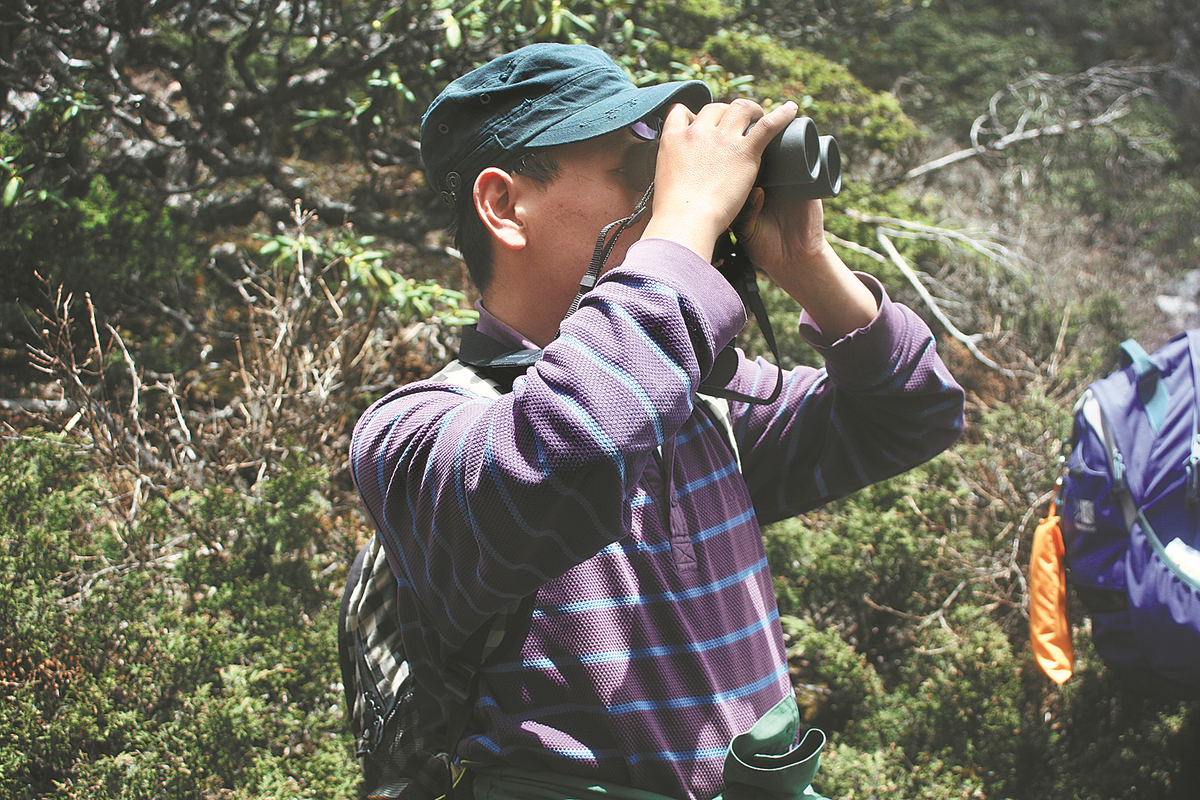
In 2013, when he quit his job in the northern port city of Tianjin, Wei Xingzhi simply wanted to travel and see the world. He didn't imagine that he would stay in one place for almost 10 years mainly for one thing — to help protect Yunnan snub-nosed monkeys.
Before he became a volunteer for the species' protection in Yunnan's Yulong county, the 36-year-old knew nothing about the animal.
Born and raised in an area with a wide expanse of flat land in Henan province, Wei had limited opportunities to visit mountains. After majoring in mechanical automation and business administration at university, he worked as an executive in charge of five electrical appliance chain stores for a company in Tianjin.
As a travel enthusiast, he spent a lot of time trekking around during his college days. For example, he toured many parts of the Bohai Sea coastline by bicycle.
In 2013, Wei was traveling in Yulong when he discovered that a local NGO named the Yulong Wildlife Conservation Association was recruiting volunteers to protect the Yunnan snub-nosed monkey.
"As a Henan native, I had only seen the animal on television back then, and had never come into contact with it. Out of curiosity, I wanted to have a go," he recalled. However, recalling his early days prompts many bittersweet memories.
Animal encounters
He described the primate as an animal that moves extremely quickly. "They can move 2 to 3 kilometers in what seems like the blink of an eye," he said.
The monkeys spend most of their time in the trees, and even though you may be standing directly below as they rest in dense forests with trees up to 40 to 50 meters high, you can hardly see them unless the large black-and-white primates move, he said. Once they do, however, it's extremely difficult to track them. They can climb a hill in just a few minutes, but a human would take about an hour to reach the same height. Tracking the monkeys in their habitats, which feature rugged terrain at an altitude of 3,000 to 4,000 meters, means that he easily gets out of breath and has to rest frequently.
His long experience of tracking the primate means he has developed the skill of descending hills in just a few minutes: he simply sits on the slippery slope and slides down. To avoid sliding dangerously fast, however, he always has to find something to grab.
However, he is not always lucky enough to grab the right things. One time, he grabbed a prickly plant, and on another occasion, he touched a plant with barely visible thorns. The formic acid they contained made it feel as though he had been stung by a swarm of bees, he said.
The most challenging periods for Wei are the rainy season — which lasts from June to September — and winter, which leaves snow that sometimes doesn't thaw until May on the shaded sides of the mountains.
With no roads, Wei often has to tramp through bitterly cold water. In some places, he uses fallen trees to cross creeks and rivers. However, they are often covered by fungi that produce slippery secretions.
"It's very easy to slip over," he said, adding that it's not unusual for him to fall over dozens of times a day. Luckily, he has yet to have a serious injury.
One thing he has to do frequently during the rainy season is dry his trekking shoes by the fire, which can make them shrink or even burn a little. Some years, he has worn out five pairs of trekking shoes.
Years of tramping in such conditions mean that his knees hurt badly, which can be extremely painful. Moreover, it is often so cold during winter that he only feels warm after cuddling up in five sleeping bags, he said.
Financial problems
The past decade has seen Wei racking his brain to cope with financial difficulties. Initially, he only received a monthly subsidy of about 2,000 yuan ($290) for his voluntary efforts. Though the amount has now risen to 3,000 yuan, it's still far less than his salary in Tianjin.
The grassroots NGO is funded by donations. The first year he volunteered for the organization, it experienced a total loss of funding, but thankfully, the situation only lasted a few months. The problem happened just as the program for the Yunnan snub-nosed monkeys started, which meant many plans were disrupted.
"We spent a year training villagers to work as rangers and patrol the primate's habitat. In the second year, however, we ran out of money. We had no option but to disband the patrols," he said.
"When we tried to reach the villagers again after we managed to raise the necessary funds, some had left home to become migrant workers. This meant the NGO barely made any progress in helping the monkeys."
Thankfully, the rangers had recorded a lot of information about the primates they had discovered, including the locations and altitudes of the areas in which they roamed, major features of the environmental conditions and local tree species.
All the information was handed to Wei. In addition to offering it to wildlife protection agencies, he provides some to the media if he thinks it will generate valuable publicity.
When a teacher from Beijing led a group of students to experience the association's conservation work, an idea occurred to Wei to start a nature education business that could help fund the NGO's operations.
However, his investigation of the sector was affected by the COVID-19 epidemic. Luckily, the delay helped him greatly improve the course design and gain a lot of knowledge about the natural world education sector.
He is very optimistic about the business this year. "The country is gradually recovering from the COVID-19 epidemic," he said. "So, I think we will have a much more favorable situation this year because many institutions have recently asked me for information about our summer courses."




- Anti-corruption efforts focus more on work conduct issues
- Deeper reflections on 'cave-dwelling conversation'
- Fudan University sets AI education guidelines
- Haier ranks first in global sales for 17th consecutive year
- Norway's seafood exports hit record in 2025, China emerges as top three market
- Crucial tower of Shenzhen-Jiangmen Railway completed, marking significant milestone