WB official's China insight: growth, resilience, greenness










She is an environmental engineer with more than 20 years of development experience and has worked in China, the Philippines, Turkiye, Malawi and other countries. She has a deep insight into China's development over the past 30 years. She is the World Bank official who was in charge of the Wenchuan Earthquake Recovery Project (2009-14) after the Wenchuan earthquake in 2008, and recorded her post-quake observations in an embroidered diary and, later in the same year, served as a volunteer for the Beijing Summer Olympic Games.
Meet Mara Warwick, now the World Bank country director for China. A few days ago, in an exclusive interview with China Daily, Warwick shared her experience of and insight into China.
She first visited China in 1993. To reach Guangzhou, her first destination on the Chinese mainland, she boarded a train from Hong Kong which took more than three hours to complete the journey — today, the same distance can be covered in 45 minutes thanks to high-speed trains.
The first sight that caught her attention on the mainland "was a large plaza in front of the railway station". It was full of "people, migrant workers who had come from rural areas to Guangzhou, thousands of people. I had never seen so many people in one place."
Warwick is from Australia, a country of about 7.6 million square kilometers, which had a population of less than 20 million at that time. "It was less than two years after Deng Xiaoping's Southern Tour," Warwick said. Since then, the migration of rural people to cities accelerated, along with China's "industrialization process".
Since the launching of reform and opening-up, China's GDP has increased by about 40 times, per capita income of China has increased almost 30 times during that period, and more than 800 million people have been lifted out of absolute poverty, Warwick said. This is a "great achievement of economic development", accounting for three quarters of the world's poverty reduction. Incidentally, the migrant workers, together with all other workers, became an important part of China's industrial development.
She said that even in the early 1990s, when she and her friends visited China, they attracted the gaze of passers-by on the streets because they looked like "foreign giants".
Thanks to reform and opening-up, the living standards of ordinary people in the country have generally improved. One of the manifestations of the economic development is that the younger generation is getting increasingly healthier and taller. "They're healthier than they were 30 years ago because of better nutrition."
In the 1990s when she visited Shandong province, she saw local residents storing lots of Chinese cabbage, the only vegetable they could get during the cold winter months. "But things have changed a lot; people today have more varieties of food even in winter," she said. China's development has benefited millions of ordinary people, both in cities and rural areas, and helped greatly improve people's living conditions. Especially, cities have become more livable, she said.
Warwick joined the World Bank in 2003. Three years later, she came to China again as an urban environmental expert.
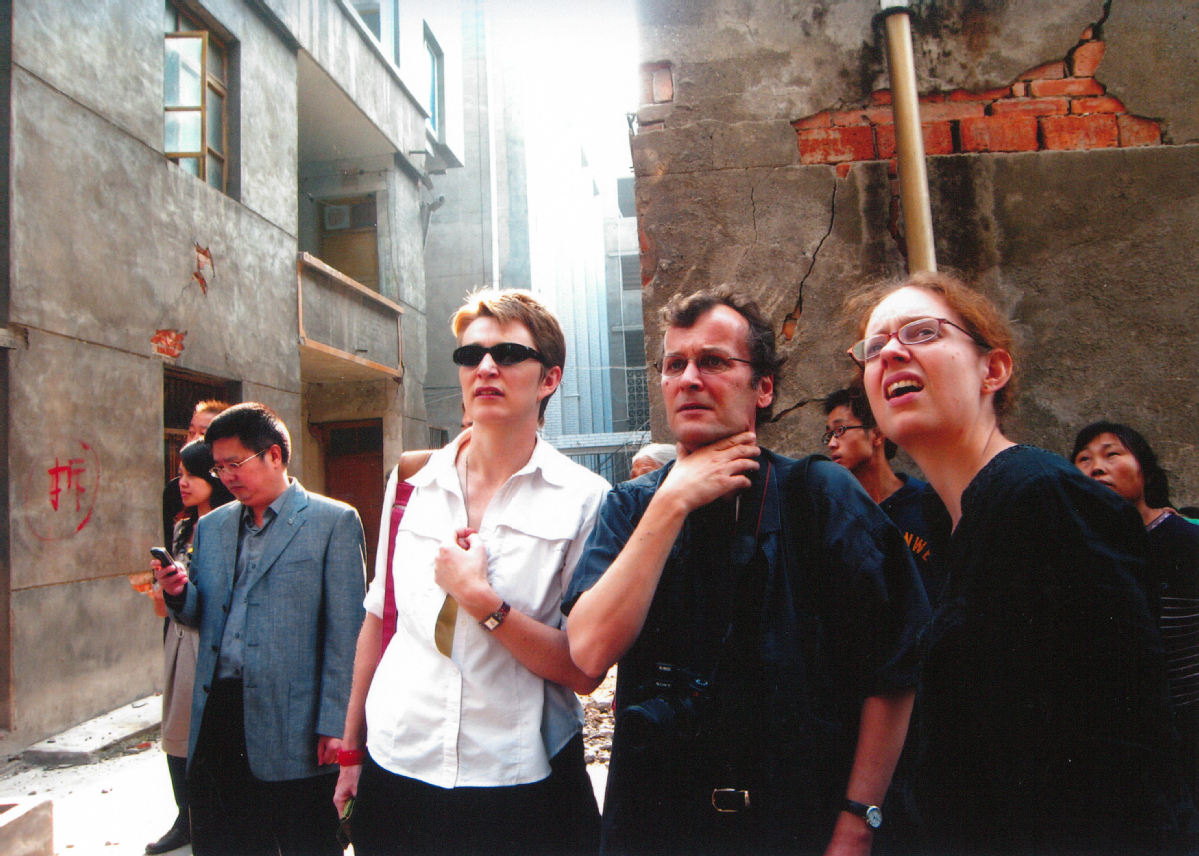
The devastating magnitude 8 earthquake that hit Sichuan province on May 12, 2008, with its epicenter in Wenchuan county, claimed more than 69,000 lives. The quake and aftershocks severely affected people's lives in Wenchuan, Beichuan and other parts of Sichuan.
In more than three years after the Wenchuan earthquake, the disaster-stricken counties in Sichuan alone spent 1.7 trillion yuan ($246 billion) on restoration, reconstruction and development. The World Bank provided a loan of $710 million under the Wenchuan Earthquake Recovery and Reconstruction Loan Program to support the Chinese government's post-quake recovery and reconstruction plan.
The World Bank's loan was $510 million for Sichuan and $200 million for Gansu province, and focused on the restoration and reconstruction of roads, bridges, water supply pipelines, sewage and garbage disposal, as well as medical and health facilities. The Gansu subproject also included education facilities.
Warwick said the World Bank project was a small part of China's post-disaster reconstruction plan, and the World Bank team mainly cooperated with provincial and local governments. One month after the disaster, she and her team visited Leigu town in Beichuan which was covered in rubble. Many people from Beichuan and nearby places lived temporarily in the tents set up in Leigu, she said, adding that the Chinese government's rescue plan was efficient.
What Warwick still cannot forget is her experience with a young local finance department officer who accompanied her on her walks and kept talking about recovery and reconstruction in Wenchuan and other places. What really moved Warwick, who also had a seven-year old daughter at the time, is the young finance officer telling her that she had lost her daughter in the quake.
"Even amid such a personal tragedy, she was working tirelessly for her community. She was one of those people who helped the local government to move forward with the recovery" and reconstruction plan, she said. The joint efforts of grassroots workers like the young finance officer and others enabled the local government to promote post-quake recovery and reconstruction.
Warwick loves embroidery, and embroidered all the things that moved her after the quake, including the girl who lost a leg in the natural disaster but danced at the opening ceremony of the Paralympic Games in Beijing that year. "This reflects the resilience of the Chinese people."
Warwick said the World Bank not only helps China learn from international experience and successful practices in disaster management and response, but also shares China's successful post-disaster recovery and reconstruction experience with other countries. The most important thing is to spread the knowledge of how to reduce the effects of, and be prepared to deal with natural disasters.
Since 2009, China has observed May 12 as the National Disaster Prevention and Reduction Day. "In 15 years, China has made great strides in disaster prevention and preparedness," Warwick said, adding that it's important for the government to reduce disaster risks, but it also important to take measures to prevent people from falling back into poverty following natural disasters.
Perhaps inspired by the volunteers during the Wenchuan earthquake, Warwick herself became a volunteer for the Beijing 2008 Summer Olympics. Under the scorching sun, together with young people, she guided people near the National Stadium (Bird's Nest) to their destination and answered their questions.
"I think volunteers are very important in that kind of international event. Our role was really to provide a bridge between the international spectators and athletes, and the local authorities and the organizers of the Olympics," she said.
Such international exchanges are also conducive to enhancing mutual understanding. She recalled that even when the Chinese team was not participating in any event at the Bird's Nest, she could still hear spectators cheering athletes, which made her feel the enthusiasm of the Chinese audience.
Compared with the 2008 Summer Olympics, the Beijing 2022 Winter Olympics highlighted the concept of "green" development, reflecting the transformation of China's development.
The World Bank's projects in China is in line with the trend to emphasize green development.
Although China has developed at a rapid pace over the past 40 years, in some places development has come at the expense of the environment, Warwick said. But the current trend of green development in China that emphasizes the harmonious coexistence between humans and nature, and the preservation of biodiversity, has made China's development more eco-friendly. And the climate goals of peaking carbon emissions before 2030 and achieving carbon neutrality before 2060 reflect China's commitment and contribution to fighting climate change.
The World Bank's projects in China now focus more on helping local people cope with climate change and reduce pollution. For example, there are projects to reduce plastic waste in Shaanxi and Hubei provinces, Chongqing municipality, and the port city of Ningbo in Zhejiang province.
Besides climate change and environmental protection, "I hope the World Bank will be able to continue to play this facilitation role and continue to not only learn from China, but also support China as it experiments with the new policies and new reforms and tries to achieve these goals," Warwick said.
The author is a writer with China Daily.
If you have a specific expertise, or would like to share your thought about our stories, then send us your writings at opinion@chinadaily.com.cn, and comment@chinadaily.com.cn.