Fragile ecosystem, species at center of protection efforts
Global warming and habitat reduction are among the issues posing challenges for the survival of animals and plants. Li Hongyang reports.










Editor's Note: As protection of the planet's flora, fauna and resources becomes increasingly important, China Daily is publishing a series of stories to illustrate the country's commitment to safeguarding the natural world.
Climate change is accelerating habitat loss and fragmentation, changing some animals' features, reducing the populations of various species and, ultimately, damaging global biodiversity, according to experts at the National Climate Center.
Global warming puts certain types of turtles and crocodiles at risk of extinction, while the once colorful underwater world is fading as a result of climate change, the center said. Therefore, nature reserves and scientific institutions are trying to boost animal populations to mitigate the problem.
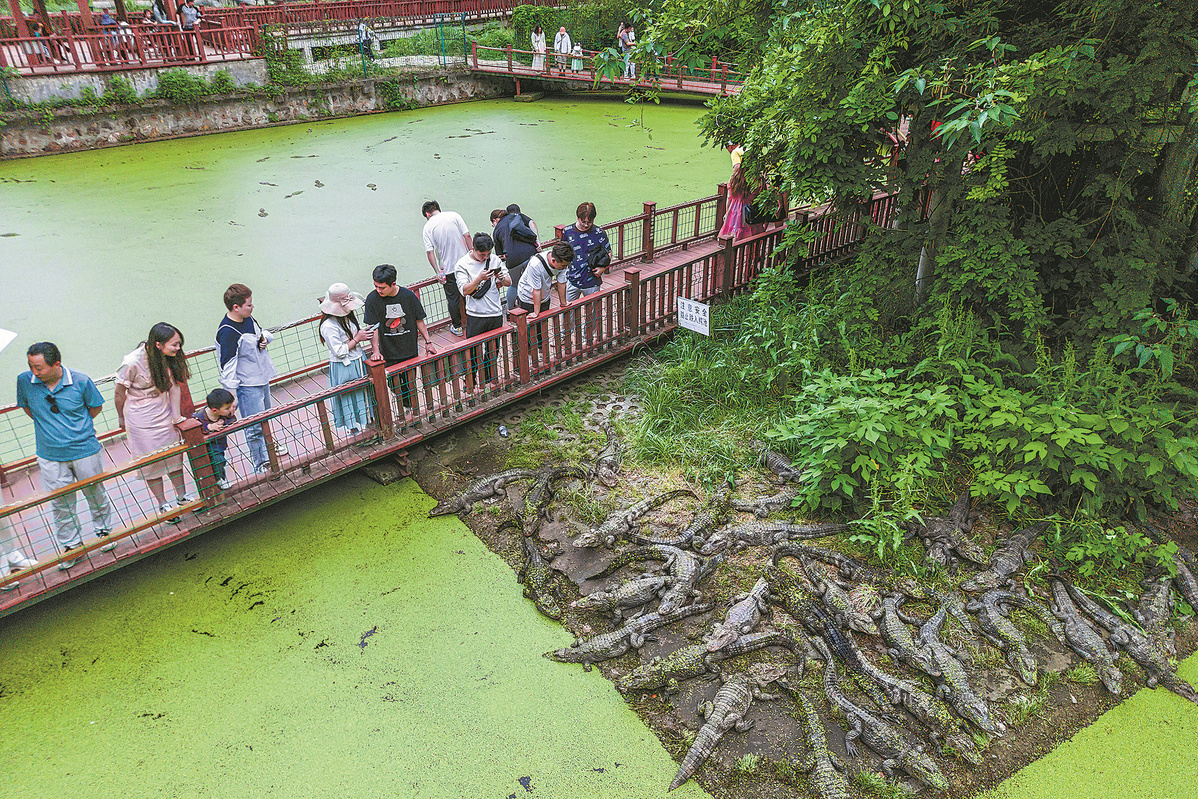
The Chinese alligator, aka the Yangtze alligator, is facing threats from global warming. With rising temperatures leading to droughts, food shortages and reproductive disorders, survival has become even more challenging for the limited number of individuals in the wild.
As a coldblooded creature, the Chinese alligator relies heavily on its ability to regulate its body temperature to maintain physiological functions, according to experts at the Anhui Yangtze Alligator National Nature Reserve in Xuancheng, Anhui province.
However, with global warming causing temperatures to soar, extreme weather events — including prolonged hot spells and droughts — threaten the alligator's habitat, food supply and, possibly, survival, they said.
"Persistent droughts mean alligators are suffering food shortages because aquatic plants and animals form a crucial part of their food chain," said Zhou Yongkang, an assistant researcher at the reserve.
Moreover, when temperatures exceed the level the alligators can tolerate, they adopt survival strategies such as reducing their food intake and retreating into their burrows, he added.
Studies show that once temperatures reach an average of 15.5 C in spring, the alligators emerge from hibernation and enter their active phase. However, when temperatures fall below 22 C during autumn and winter, they stop eating and start hibernating, Zhou said.
Body temperature for comfortable hibernation should be between 10 C and 13 C, because higher or lower temperatures are not conducive to the activity, Zhou said.
Reproductive problems
The animal's reproductive life is also being affected by high temperatures. "Warmer winters are having an effect on the species' breeding habits. Higher temperatures outside the burrows can cause the alligators to wake prematurely, disrupting deep hibernation. This can affect their reproductive cycle and reduce their ability to lay eggs," Zhou said.
In the wild, extreme heat waves can pose a significant threat to the incubation of the eggs because they are often laid in environments with high vegetation cover or abundant nesting materials that only grow well at optimum temperatures, he said.
In addition, the gender ratio of the offspring is determined by the temperature of the surrounding environment. Studies have found that at around 30 C most of the hatchlings are female, while at about 33 C the majority are male, Zhou said.
Understanding the animal's life cycle is vital for conservation efforts to protect the iconic species.
Chinese alligators were once widely distributed across the basins of the Yangtze and Yellow rivers, but they have retreated to Anhui and the surrounding area as a result of climate change and human activities.
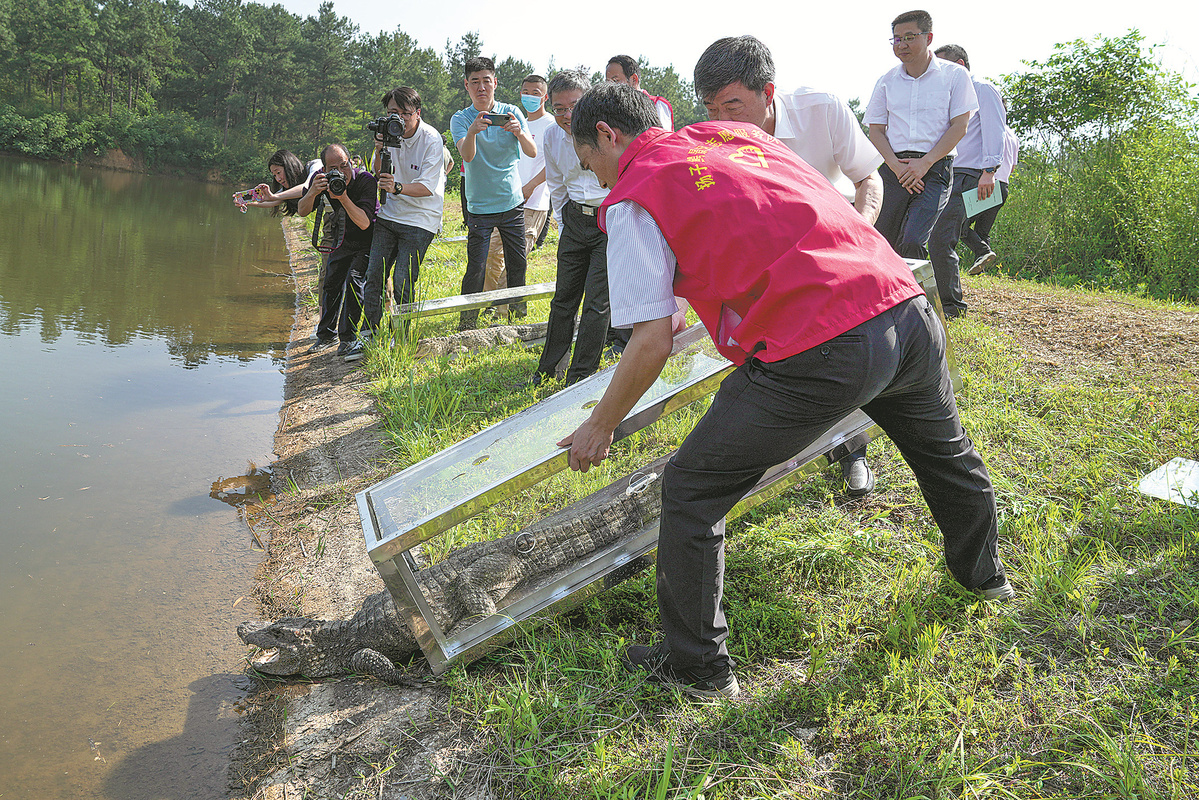
In 2017, the animal was listed as critically endangered by the International Union for Conservation of Nature. In the past decade, the reserve has released 18 sets of captive-bred Chinese alligators into the wild. So far, the animals have been assessed by several authorities as having adapted well to the natural environment, and they now number more than 1,000 in Anhui, it said.
As part of efforts to protect the alligator, the reserve has implemented a range of measures to counteract the negative effects of climate change on the animal's breeding patterns and survival.
Locally, it has focused on habitat restoration by shaping the terrain, planting aquatic vegetation, releasing fish and other aquatic animals as sources of food, and expanding the suitable habitat. More than 500 hectares of habitat have been restored since the initiative began in 2002, the reserve said.
To improve egg-hatching rates and the survival rates of young alligators, the reserve has closely monitored nesting sites, added nesting materials and built shelters to protect them against extreme weather conditions, Zhou said.
It has also helped alligators avoid the effects of the weather in Anhui and other parts of the region by cooperating with institutions across the country on captive breeding and relocation programs. Over 5,000 alligators have been bred and relocated to various sites nationwide.
These measures have increased the genetic diversity of the species and secured viable populations beyond the reserve's borders, according to Zhou.
Reefs bleaching
Farther afield, under the sea, coral reefs are especially vulnerable to climate change, according to the World Meteorological Organization. The reefs are projected to lose between 70 and 90 percent of their coverage area if temperatures rise by 1.5 C, and over 99 percent if the rise is 2 C, the organization said.
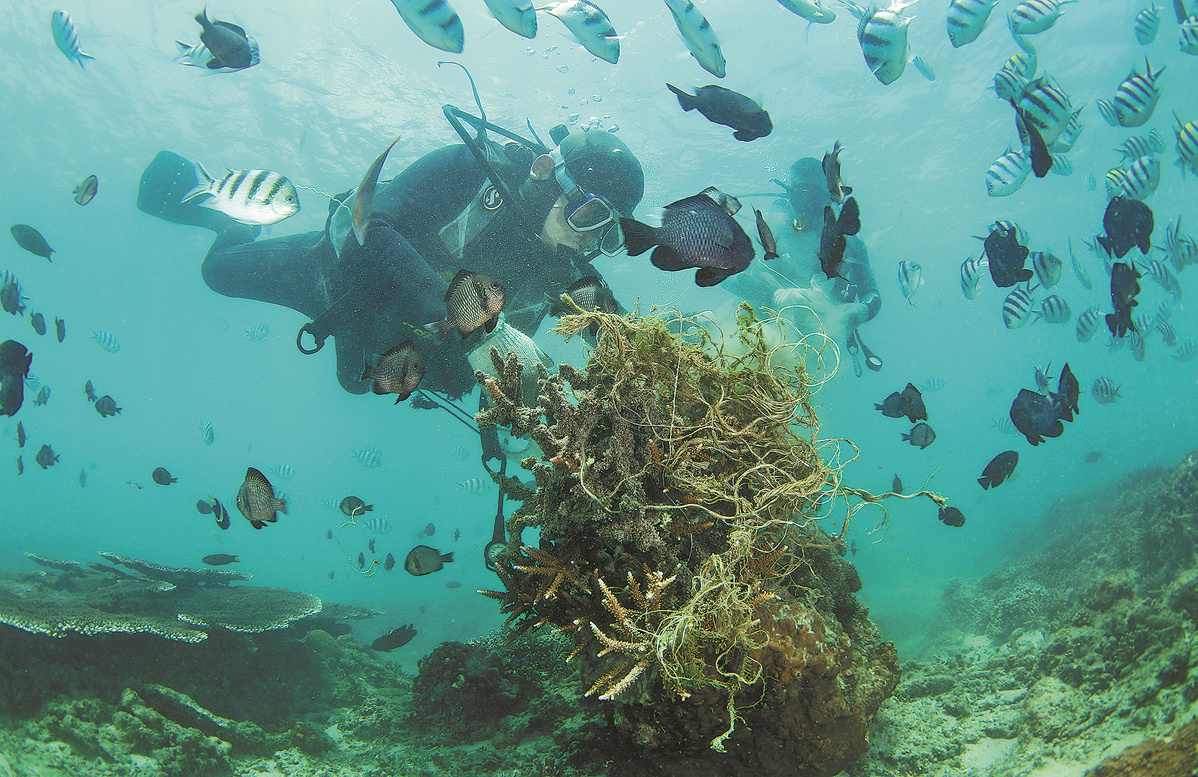
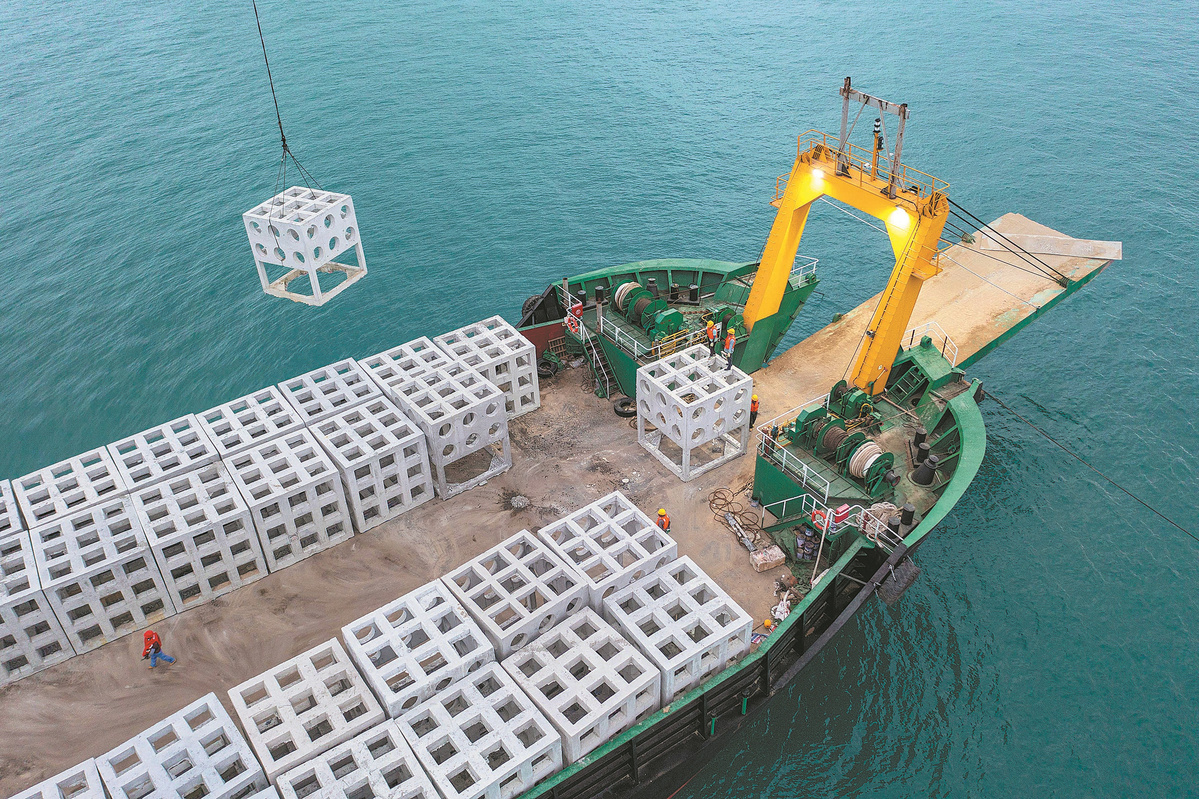
Coral expert Huang Wen leads a research team from the School of Marine Sciences at Guangxi University in Nanning, capital of the Guangxi Zhuang autonomous region. The team, which builds, monitors and surveys reefs around Weizhou Island in the Beibu Gulf, aims to safeguard the corals from climate change, which is leading to their degradation worldwide.
Huang said he was dismayed when he saw that more than half the corals were bleaching in the water close to the island, and the underwater temperature of 33 C was too high for the corals to survive.
Because corals are sensitive to temperature changes, they become entirely white as they release symbiotic algae from their tissues due to environmental stresses caused by differing levels of light, temperature or nutrients.
Huang's work includes restoring natural reefs by introducing artificially bred young corals onto wrecks.
Coral reefs create habitats for various marine organisms, much like tropical rainforests do for their inhabitants on land.
Huang said that if global warming persists, Weizhou Island will become a coral refuge as a result of its cooler location at the northern limit of the world's tropical coral reef area.
In the coming years, his team aims to cultivate species of coral that will be more resilient to higher temperatures. As climate change is likely to bring intense weather events — including typhoons and extremely high temperatures — it is vital to avoid risks by developing corals that can better adapt to new environments, he said.
More measures
China is taking steps to tackle two of the world's most pressing environmental challenges: climate change and the loss of biodiversity.
Last month, the Ministry of Ecology and Environment announced that it is working with several other government departments to manage both issues. So far, they have formulated a wide range of plans, strategies and policies.
For example, the National Strategy for Climate Change Adaptation 2035, released last year by the ministry and its partners, highlighted the risks climate change poses to biodiversity in China.
The strategy outlined the damage caused by droughts, floods and extreme weather events in the country, including shrinking coverage of wetland, widespread ecological degradation and, eventually, reduced biodiversity.
To counter those challenges, the strategy is aimed at protecting and restoring important nature reserves and strengthening monitoring of climate change to improve resilience to the increasingly adverse climate conditions.