


A poem of Qianlong's choosing
One particular painting seems to encapsulate the efforts of ancient rulers to gain a political and cultural mandate, Zhao Xu reports.










Sense of pride
In pre-modern China, peasants constituted the overwhelming majority of the emperor's subjects. And agriculture, their livelihood, was the bedrock upon which the country stood. That's when the Qianlong poem stopped being a personal contemplation and started to be a thinly-veiled political statement — a portrait of a man whose thoughts had never wandered too far away from those most needing his attention.
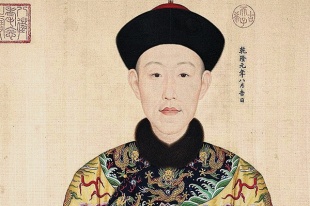
However, if one listens to Wu Han from the National Library of China, Qianlong's enthusiasm for the poem-themed paintings may also be tied to a sense of pride that he was able to draw from marked parallels between the history of the founders of the Zhou Dynasty and that of his own.
"In the twelfth moon we hew out ice; in the first moon we store it deep," the poem's last stanza begins. Sixty-seven years before Qianlong was born, the triumphant Qing soldiers rode into Beijing, leaving behind their ancestral home in today's northeastern China, where fishing during long, harsh winters was only possible after one hewed out the ice on the frozen river.
Four times throughout his 60-year reign, the emperor visited Shengjing (modern-day Shenyang city in northeastern China), the one-time Qing capital before its rulers claimed themselves the emperors of China from Beijing's Forbidden City.
"The Odes of Bin, as its title clearly indicates, are folk poem-songs collected from the Bin area. Covering part of today's Shaanxi province, it was the ancestral home for the tribal Zhou people, who spread out from there to eventually overwhelm the once-invincible armies of the Shang Dynasty (c.16th century-11th century BC)," says Wu.
"For someone so conscious of his own legacy, the comparison was obvious. The poem reminded the emperor of the remarkable journey of his ancestors, one that he intended to honor by fulfilling the role of a diligent and benevolent ruler."
In fact, the concept of the right to rule based on the benignity of the rulers was first spelled out during the Zhou Dynasty, founded as much on moral grounds as on the debris of war. This ideological position explained why the Zhou Dynasty was much emulated, even by its distant successors, and why the rulers of Zhou had designated officials whose role was to collect and document folk ballads from around the empire.
Deemed to be the best gauge of the true sentiments of commoners and their living conditions, the ballads used to be sung by those who were most likely to be illiterate — thus the Book of Songs. While the music was no longer extant, the lyrics, thanks in part to royal efforts, survived and caught the attention of Confucius (551-479 BC), who agonized over what he saw as a plain disregard for ethics by his contemporaries and sought to remedy that, partly through championing the study of noble texts.
Although modern scholars remain divided over whether Confucius whittled an original collection of over 3,000 pieces down to the 305 we now know, it's commonly agreed that the philosopher, who once told his only son that "if you don't read the Book of Songs, then you really have nothing (meaningful) to say", was personally involved in the collection's editing and promulgation. (It's worth noting that the poetic value of the existing works of Shi Jing, which enabled them to be called poem-songs, and the stylistic consistency among them, had led renowned German American Sinologist Hans Frankel to believe that the works had "passed through the hands of men of letters".)