Washington should never cross Beijing's redline









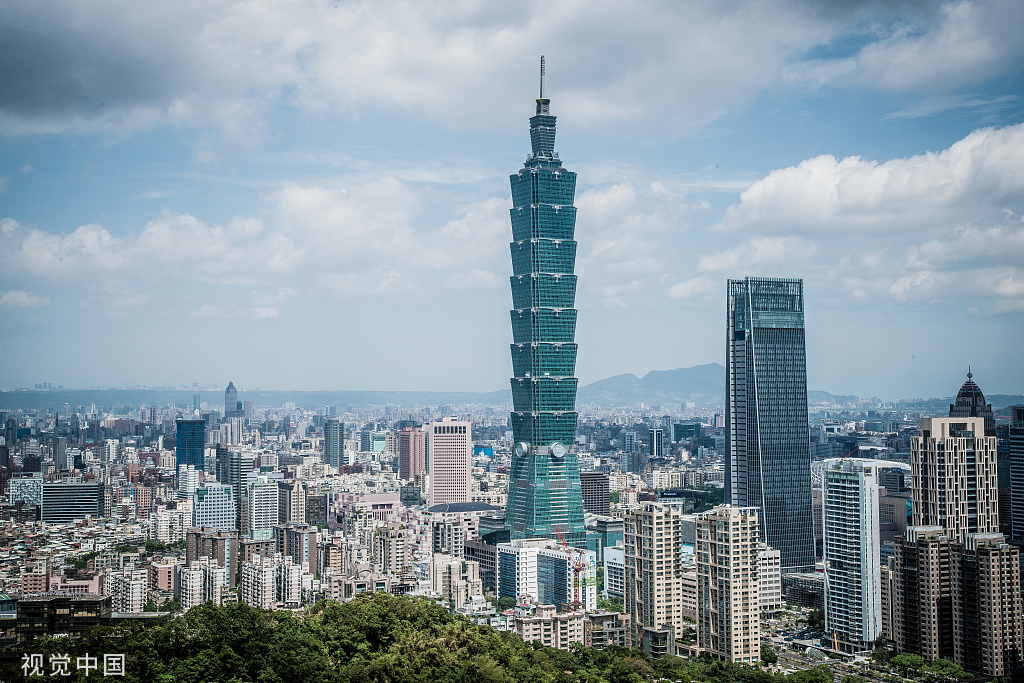
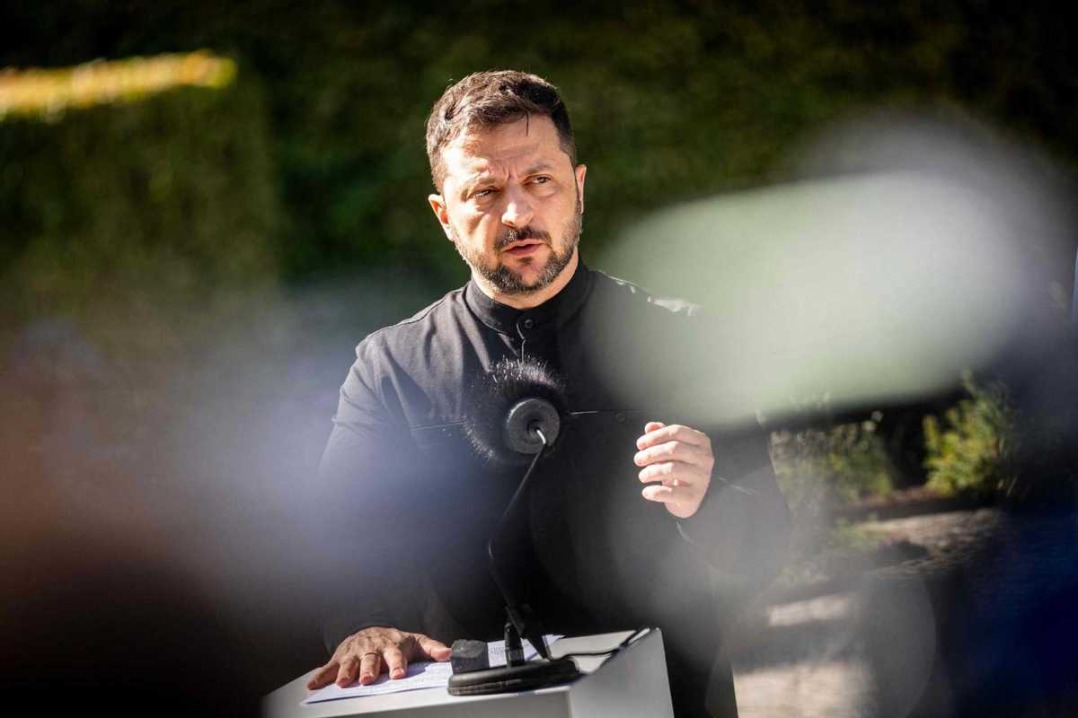
The Russia-Ukraine conflict, which began more than 15 months ago, has caused immense suffering to the people of Ukraine while hurting the Russian economy. The US, after pushing Ukraine into the conflict, eventually refrained from direct military confrontation with Russia. The US' questionable role in the conflict and its evil design to compare the Ukraine crisis with the Taiwan question have raised "doubts" among Taiwan residents that the island may face a fate similar to Ukraine.
However, the nature of cross-Taiwan Strait relations and the Taiwan question are fundamentally different from Russia-Ukraine relations and the Ukraine crisis. To begin with, Russia and Ukraine are two sovereign nations, while cross-Strait relations are those between different regions of the same sovereign country, China.
The Ukraine crisis is about one country's actions endangering the security of another country, whereas the Taiwan question involves the collusion of external forces with the aim of splitting Taiwan from the motherland, thereby undermining the country's sovereignty and territorial integrity and national security.
Beijing has consistently opposed "Taiwan independence" and external forces' interference in the country's internal affairs, which is exactly what the Taiwan question is. There are certain principles that should be abided by all countries that have diplomatic relations with Beijing. They should acknowledge the one-China principle that there is only one China and Taiwan is an integral part of China, and never allow separatists on the island to seek "independence".
More important, Beijing will not sit idly by while separatist forces in Taiwan collude with foreign anti-Beijing forces in a bid to separate the island from the motherland.
In fact, Beijing has already enacted the Anti-Secession Law. According to the law, if the "Taiwan independence" secessionist forces act under any name or by any means to cause the fact of Taiwan's secession from China, or if major incidents entailing Taiwan's secession from China should occur, or the possibilities for a peaceful reunification should be completely exhausted, the state shall employ non-peaceful means and other necessary measures to protect China's sovereignty and territorial integrity.
Besides, the Chinese mainland has the capability and determination to prevent the island's separatist forces from seeking "independence". Beijing may not yet be on par with Washington in overall military strength, but the latter no longer holds the advantage in scenarios such as a cross-Strait conflict.
In fact, if the mainland were to resort to the use of force to suppress separatist forces on the island and achieve national reunification, even a US-led international intervention cannot prevent it. This is the fundamental reason why the US maintains strategic ambiguity on the Taiwan question and refuses to make clear its stance on the "defending-Taiwan-with-force" issue.
Given the significant tangible benefits it derives from Sino-US relations, Washington needs to weigh the potential consequences of openly expressing support for the "Taiwan independence" forces, because it could potentially force Beijing to sever diplomatic ties with it. Also, the fact that the mainland is capable of causing serious harm to the US has prompted American leaders to consider the immense cost that a cross-Strait or Sino-US conflict would entail.
No wonder the US, on the one hand, uses various strategies, including playing the "Taiwan card", to provoke Beijing, while, on the other hand, it seeks dialogue with senior Chinese officials and promises the "five noes" (that is, it does not seek a new Cold War, does not seek to change China's system, doe not seek to confront China through strengthened alliances, does not support "Taiwan independence", and does not seek conflict with China).
The US, it appears, is not willing to sever diplomatic ties with China, in order to support the island's separatists to seek "independence" nor is it willing to engage in a mutually destructive military conflict with China.
If that is so, the US should stop saying one thing and doing the exact opposite. It should also stop sending wrong signals to the separatist forces in Taiwan. The "Taiwan independence" forces are well aware that any attempt to seek their separatist goal will inevitably lead to a cross-Strait conflict, which the majority of Taiwan residents do not want. That's why the island's separatist forces rely on US-led Western support to achieve their evil goal.
The US is playing the "Taiwan card" to encircle the mainland, giving the "Taiwan independence" forces that have longed for US support some hope. In order to obtain US support, the "Taiwan independence" forces and the ruling Democratic Progressive Party authorities are not only willing to become pawns in the US' geopolitical game, but also support the establishment of US-led alliances in the region as part of their efforts to cause a breakdown in Sino-US relations, thus forcing the US to intervene militarily to "defend" Taiwan.
This does not align with the interests of the US. Nor will China allow this to happen.
The author is a professor at the Taiwan Research Center, Xiamen University. The views don't necessarily represent those of China Daily.
If you have a specific expertise and would like to contribute to China Daily, please contact us at opinion@chinadaily.com.cn, and comment@chinadaily.com.cn.