Trumped-up 'Chinese threats' key to manipulation of American public opinion, allies









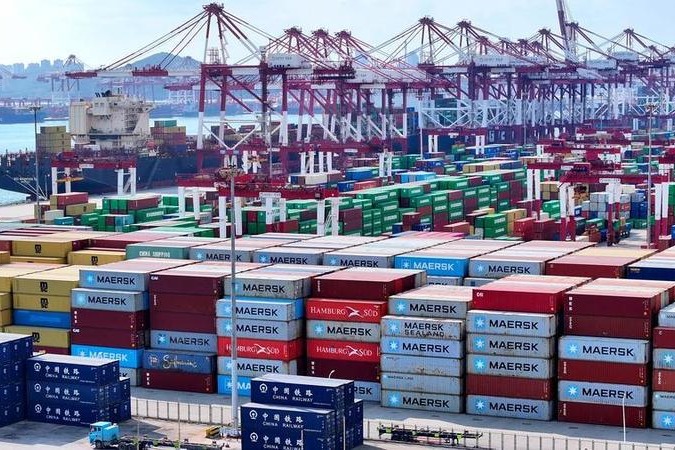
Let’s contemplate a scenario where Apple together with its manufacturing partners, such as Taiwan’s Foxconn, shift a large chunk of their production operations to India (as they are working on right now), and many other major American brands do the same. The US trade deficit would simply move from China to India and may possibly even get larger. Will the US then consider India is a critical threat, or its greatest enemy? Perhaps not. Or perhaps the US will wait until India emerges as the next economic superpower to say so.
The world’s most valuable brands are American: Apple, Microsoft, Facebook, Google, etc. top the list. Thanks to their sizeable brand value and pricing power, they often generate huge profits. Most recognizable Chinese brands include Huawei and Tiktok. We all know what happened to Huawei. Again, using the excuse of national security concerns, the US went on a relentless crusade to convince its allies, starting with other members of the Five Eyes alliance, to ban Huawei products. And not only its 5G networking equipment, which was the most advanced and the most competitive in the world, but also the company's extremely popular smartphones.
Google could no longer offer its Google Services to Huawei, TSMC of Taiwan could no longer supply its latest chips. All this because the US said so. Now it's quite possible that highly popular Tiktok will be banned in the US (it already is in several countries such as India), again based on “national security concerns.” Interestingly, once they are told Tiktok is a Chinese app, its users suddenly support its ban, no question asked, demonstrating the intensity of the anti-Chinese sentiment that has been nurtured by the government and heavily amplified by the American media.
The national security argument put forward by the US is that Chinese companies are legally required to cooperate with the Chinese government should their assistance be required. Isn’t it entirely conceivable that any country’s government would expect national companies to cooperate in matters of state if needed? Barack Obama said about the NSA programs exposed by whistle-blower Edward Snowden, "You can't have 100 percent security and then also have 100 percent privacy and zero inconvenience. You know, we're going to have to make some choices as a society."
It has been reported that the NSA’ PRISM program had the cooperation of all the leading US tech companies at the time, such as Microsoft, Google, Yahoo, Facebook, AOL, and even Apple. Did China ban Microsoft products for the company’s proven and established participation in the controversial PRISM program? Will the US ban Tiktok because maybe, just maybe, Beijing will one day ask the company to push subliminal videos promoting the CPC to users? Which threat is real, and which threat is so ludicrous that it is obviously an excuse to support a political decision?
Is it surprising that China's most recognizable and most successful brands internationally are targeted and risk losing everything over "national security concerns"? Isn't that a convenient excuse, a catch-all that allows the US to neutralize competition from China? China itself may have banned certain Western companies from operating in the country, but this has always been over clearly identified, tangible disagreements on legal matters, as in the case of Google.
One may wonder what the issue really is. For decades, China has focused on industrial production, at low cost and low margin, eking out small profits that local entrepreneurs patiently reinvested, slowly climbing the value chain. Could the US be worried that emerging, fast-growing Chinese brands that offer high-quality, affordable products and services - as in the case of Huawei - would become so popular that American products would no longer be a match for them? Could Huawei have dethroned Apple? Could Huawei have become the supplier of choice for many telecom networks in the West? Clearly Huawei had a huge following of devout fans, as has Tiktok today.
Likewise, the US government always argues that Chinese companies, especially state-owned enterprises, are heavily subsidized, which gives rise to unfair competition. This is another example of double standards. The US heavily relies on programs and legislation such as the US CHIPS and Science Act, which provides "incentives" (i.e., not "subsidies", of course) to any American tech company willing to keep semiconductor production on US soil and committed to not make strategic investments in China for the next 10 years. How is that fair competition?
A few days ago, Joe Biden made it clear his objective is to make the US lead the world in all "21st century industries", which would include semiconductors, electric vehicles, artificial intelligence, and biotechnology. Not "a leader", but "the undisputed leader". Again, such language demonstrates that the US is seeking total dominance of all industries of the future and is ready to throw massive public funds behind its ambition. All this can be summed up to say, "America has to be No. 1 in every field that matters." Of course, the words "national security" and "good-paying jobs" appear repeatedly throughout the related public announcement, for good measure.