
Shanxi resolute in bid to rescue Yellow River
Updated: 2023-06-25
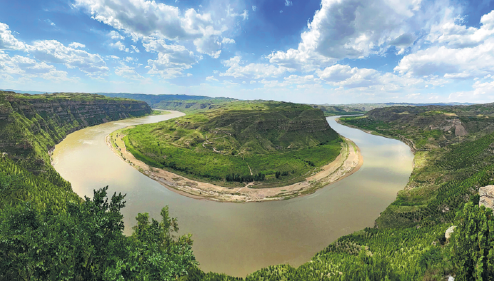
The Yellow River in Shanxi is becoming cleaner thanks to local efforts in environmental protection in recent years. [Photo by Li Zhaomin for China Daily]
Drainage region remains key focus of province to foster sustainable growth practices and conserve environment for future generations
Shanxi will continue to play an exemplary role to ensure ecological protection and high-quality development in the drainage region of the Yellow River, according to Lan Fo'an, secretary of the provincial committee of the Communist Party of China.
The senior official spoke at the inauguration of an ecological repair project for the Huihe River on June 8.The Huihe is a major branch of the Fenhe River, which is the largest tributary of the Yellow River in North China's Shanxi province.
The ecological protection and high-quality development of the Yellow River is a national strategy proposed by the central authorities in 2019, which highlights a balance between environmental protection and economic growth.
The 5,464-kilometer Yellow River, originating from Qinghai-Tibet Plateau and emptying into Bohai Bay, is the second-longest river in China. It is regarded as the mother river of the nation because it has nurtured Chinese civilization for millennia.
Despite nurturing the people, economy and civilization of its drainage region, the Yellow River is facing severe challenges. There have been millennia of ecological deterioration and growing industrial pollution over the past century.
The central authorities' call for the ecological protection and high-quality development of the Yellow River aims to ease environmental pressure and make growth sustainable, according to Lan.
He said Shanxi province holds a strategic position in the development of this national strategy.
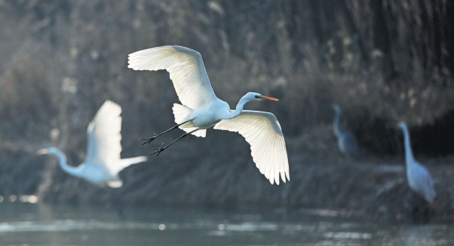
Egrets swoop through the air at one of the Yellow River wetlands in Shanxi province. [Photo by Li Zhaomin for China Daily]
The Shanxi section of the Yellow River is 965 km in length. More than 73.1 percent of the land in Shanxi, covering 114,600 square kilometers across 11 cities, belongs to the river's drainage basin. The river's drainage area in Shanxi is also home to 73.4 percent of the province's population and makes up the majority of provincial GDP.
Shanxi is located in Loess Plateau in the middle reaches of the Yellow River. As the plateau features a fragile ecological environment, soil erosion has been a challenge to the Yellow River for thousands of years.
In the early 1950s, the area of soil erosion in Shanxi was 108,000 sq km, of which 67,600 sq km was in the Yellow River drainage basin. Annual sediment induced by soil erosion in the Yellow River was 366 million metric tons during that period.
Under the guidance of the central authorities' Yellow River improvement strategy, Shanxi began a campaign in 2017 to become an experimental zone for the ecological protection and high-quality development of the Yellow River basin.
Since then, Shanxi's provincial authorities have put the strategy high on their agenda. Remarkable progress has been made in improving the region's environment over the past few years.
Based on these achievements, Lan said he is optimistic about the environmental improvement of the Yellow River and its branches in Shanxi.
He said the province's near-term goal is to ensure that rivers in Shanxi can "supply clean water to the Yellow River".
When referring to supplying clean water, the provincial Party chief said that all the sections of the Yellow River and its branches in Shanxi should have their surface water quality better than the Class III category by 2025.
Surface water quality in China is divided into five classes, with Class V being the worst and Class I being the best. Water with the Class III quality can be used for aquaculture and irrigation.
In 2022, 82.8 percent of water bodies in the Shanxi section of the Yellow River and its tributaries in the province were tested as having water quality of Class III or better, according to data collected across 58 monitoring stations. The rate represented an increase of 16.7 percentage points compared with 2021.
To ensure the 2025 water quality target, Lan called on local officials, businesses and residents to continue their efforts to curb pollution.
He said the officials in Shanxi should enhance their efforts in environmental monitoring and strengthen law enforcement.
The official said Shanxi should continue to strengthen the "river chief "system for the improvement of rivers.
A river chief is usually the head of the local government, responsible for a section of the river. They can be the head of a township, county, city or provincial government. Shanxi's waterways are now taken care of by about 16,000 river chiefs at village level; more than 4,000 river chiefs at township level; about 900 river chiefs at county level; and about 80 river chiefs at city level or provincial level.
In the business community, enterprises are required to upgrade their operations and equipment so as to reduce pollution. The reuse of treated wastewater and rainwater recycling are encouraged in various industrial sites across the province.
Lan said sewage treatment facilities should be promoted across urban and rural communities, ensuring a better living environment and better water quality.
He said Shanxi should also sustain water supplies to ensure a better ecological system for rivers and lakes.
He added that this target can be met with efforts in land greening, building water diversion projects and economizing water use.
He said that land greening is crucial for both curbing soil erosion and increasing the runoff volume of rivers.
Shanxi plans to add 500 sq km of natural forests by 2025 so as to create a stronger ecological security barrier in the Yellow River basin.
The province also plans to treat 311 sq km of sandy land by the end of 2025 to prevent desertification and soil erosion.
Yang Wenjun contributed to this story.


 主站蜘蛛池模板:
久久人体视频|
激情综合网激情综合网五月|
99精品国产一区二区三|
亚洲综合久久一区二区三区|
日夜啪啪一区二区三区|
人妻夜夜爽天天天爽欧美色院|
精品久久久久久无码国产|
99在线国内在线视频22|
欧美性69式xxxx护士|
亚洲欧美综合人成在线|
亚洲av乱码一区二区三区|
亚洲精品专区永久免费区|
久久国产精品老人性|
亚洲综合国产伊人五月婷|
91麻精品国产91久久久久|
99久久免费精品色老|
亚洲国产午夜精品福利|
国产欧美一区二区三区视频在线观看
|
国产成人午夜福利精品|
精品麻豆国产色欲色欲色欲WWW|
又爽又黄又无遮掩的免费视频|
午夜免费无码福利视频麻豆|
亚洲日本精品国产第一区|
99精品国产在热久久婷婷|
亚洲国产综合一区二区精品|
亚洲第一无码专区天堂|
亚洲情综合五月天婷婷丁香|
欧美人牲交a欧美精区日韩|
亚洲中文字幕日产无码成人片|
av无码小缝喷白浆在线观看|
免费人成视频在线视频电影
|
在线观看中文字幕国产码|
久久精品伊人波多野结衣|
91精品蜜臀国产综合久久|
国产精品综合一区二区三区|
国产高清在线精品一区APP|
久久综合久中文字幕青草|
国产无遮挡免费视频免费|
717午夜伦伦电影理论片|
国产成人精品亚洲高清在线|
亚洲国产精品成人av网|
主站蜘蛛池模板:
久久人体视频|
激情综合网激情综合网五月|
99精品国产一区二区三|
亚洲综合久久一区二区三区|
日夜啪啪一区二区三区|
人妻夜夜爽天天天爽欧美色院|
精品久久久久久无码国产|
99在线国内在线视频22|
欧美性69式xxxx护士|
亚洲欧美综合人成在线|
亚洲av乱码一区二区三区|
亚洲精品专区永久免费区|
久久国产精品老人性|
亚洲综合国产伊人五月婷|
91麻精品国产91久久久久|
99久久免费精品色老|
亚洲国产午夜精品福利|
国产欧美一区二区三区视频在线观看
|
国产成人午夜福利精品|
精品麻豆国产色欲色欲色欲WWW|
又爽又黄又无遮掩的免费视频|
午夜免费无码福利视频麻豆|
亚洲日本精品国产第一区|
99精品国产在热久久婷婷|
亚洲国产综合一区二区精品|
亚洲第一无码专区天堂|
亚洲情综合五月天婷婷丁香|
欧美人牲交a欧美精区日韩|
亚洲中文字幕日产无码成人片|
av无码小缝喷白浆在线观看|
免费人成视频在线视频电影
|
在线观看中文字幕国产码|
久久精品伊人波多野结衣|
91精品蜜臀国产综合久久|
国产精品综合一区二区三区|
国产高清在线精品一区APP|
久久综合久中文字幕青草|
国产无遮挡免费视频免费|
717午夜伦伦电影理论片|
国产成人精品亚洲高清在线|
亚洲国产精品成人av网|