



Gen Z playing key role in protecting Qinghai-Tibet Plateau









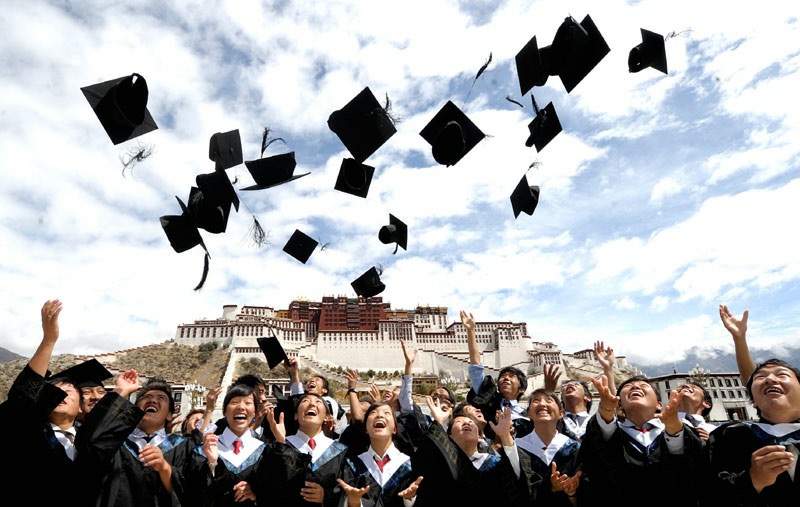
The rise of Generation Z in China has coincided with some important changes in the country's economy and society. Generation Z is defined as individuals born between 1996 and 2012. Therefore, this generation has kept pace with the internet's widespread use.
Generation Z is a generation that has grown up with a wide range of modern technologies that earlier generations did not have access to, such as easy and extensive internet access, the widespread usage of computers, and lastly, the spread of smartphones and their transformation into a necessary commodity that has become attached to the hands of every member of the Generation Z since birth, then, an important feature appeared in 2010 when all these tools (smartphones) became easily connected to the internet, and then adopting payment techniques over the phone transformed them from a luxury to an essential component of living. Furthermore, this generation grew up alongside the massive and ongoing growth of e-commerce platforms, which changed the way people shop and consume.
China's Generation Z grew up during the fastest sustained expansion of a major economy in history. From the early 1990s until around 2012, China maintained high growth rates that were unmatched in the global economy. This was reflected in the country's economic reality, and the GDP per capita, which continued to rise during those years until it recently reached nearly $12,000, increasing the well-being of the Chinese people, particularly Generation Z, and their ability to consume and access high-quality goods. Furthermore, continuous economic growth has aided in the development of infrastructure, particularly in the field of transportation, as most of China's major cities are linked to one another via transportation networks, particularly railways and high-speed trains.
The last 10 years have seen the Chinese economy transform into an innovation-driven economy, with Chinese-style modernization playing a significant role in the country's economic development. The GDP rose from $8.5 trillion in 2012 to about $17.7 trillion in 2021, to become China again at the top of the world economy, as China's GDP represents 18.5 percent of the global economy. During that time, new sectors arose, such as technological sectors, artificial intelligence, electronic commerce, and others, which now form a cornerstone of the Chinese economy, allowing Generation Z to access and enjoy previously inaccessible products.
Through development, and policies based on socialism with Chinese characteristics, China is now one of the world's leading innovators. According to the Global Innovation Index, China ranked 12th among the top 15 most innovative countries in the world in 2021 and first among middle-income countries. China is a forerunner in patent innovation and has long topped the list of countries with the most patents.
On the social level, Generation Z has several advantages. For starters, this generation grew up in the era of social and political stability, something that most preceding generations did not experience. Second, over the last 30 years, Chinese society has witnessed a significant shift in the level of transition from a rural to a civil society, as the number of urban residents in China increased to more than 65 percent of the Chinese population, allowing the children of this generation to access better civil services. Furthermore, these children were subject to the one-child policy, which strengthened their social position in the family and increased their well-being. China has also seen a significant increase in educational and health levels.
On the environmental front, it is well known that economic growth is often associated with an increase in pollution. This is exactly what China witnessed from the start of the reform and opening-up policy until the late 2010s. However, government policies have prioritized environmental issues. Pollution levels have indeed decreased significantly over the last eight years. This is critical for Generation Z, as it is well known that this generation is more concerned with environmental preservation, owing to their high educational and living standards.
China's development model has always been based on investing in the characteristics and strengths of the country's various regions. And when we speak of the Qinghai-Tibet Plateau, we are referring to a naturally unique area, not only in China but also globally, because this plateau is located in the heart of the earth's "Third Pole." Thus, it is regarded as a major tourist attraction. On the other hand, because of its uniqueness and significance, environmental protection becomes a top priority. Therefore, investing in these characteristics and supporting tourism projects is critical, especially because domestic tourism in China is very active. Adding to that, the promotion of any tourist attraction heavily relies on digital media, which facilitates the process of promoting tourist areas in the plateau. Tourism is also one of the most important green development sectors. It is compatible with the characteristics and requirements of the region in terms of sustainable development and environmental preservation.
On the other hand, e-commerce has the potential to play a significant role in achieving the long-term development of the Qinghai-Tibet Plateau. Electronic commerce is important in that region because it reduces distances and allows many producers to display their goods through new media, particularly live broadcast technology. Again, Generation Z will play a crucial role as the most popular category (the largest consumer) of e-commerce platforms (The population size of Generation Z has reached 233 million, and the consumption scale reached 4.94 trillion Yuan in 2021). And also because, many members of this generation tend to buy traditional products. According to a 2020 China Youth Daily survey, the majority of Gen-Z tend to support domestic products.
In China, Generation Z, will be the primary driver of the economy in the coming years. In addition, many studies show that Generation Z strongly supports local products and supports China's national interests. For example in 2021, due to the impacts of the "Xinjiang Cotton" incident, more Gen Z consumers chose to support Guochao and local brands.
At the sixth central symposium on Tibet-related work in August 2015,, it was decided that the central government would support a large number of major construction projects included in the 12th and 13th Five-Year Plans. The new era's guiding principles, goals, and tasks in Tibet have also been defined.
According to the plans, we must adhere to the people-centered development philosophy and the concept of innovative, coordinated, and green development...and work to promote economic and social development, improve people's well-being, and strengthen environmental protection for Tibet's development in the new era. All of these trends are consistent with Generation Z characteristics, which will contribute to this generation's integration into the development of the Qinghai-Tibet Plateau as well as environmental protection in that unique region of the world.
Adham Sayed is an assistant professor and researcher at the East Asian Research Institute of Zhejiang Gongshang University.
The opinions expressed here are those of the writer and do not necessarily represent the views of China Daily and China Daily website.
If you have a specific expertise, or would like to share your thought about our stories, then send us your writings at opinion@chinadaily.com.cn, and comment@chinadaily.com.cn.





