Distress calls
De-risking should aim to reduce risks facing humanity









De-risking should aim to reduce risks facing humanity

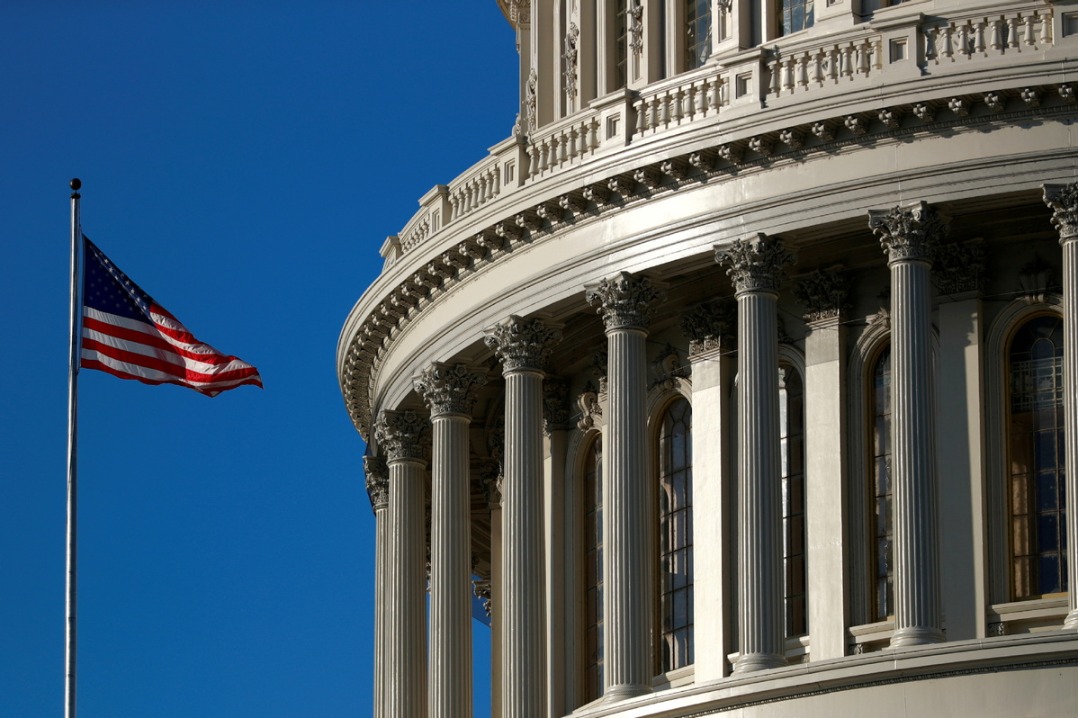
Recently, the catchword of the United States' China policy has changed from "decoupling" to "de-risking".The shift, on the one hand, has demonstrated that "decoupling" goes against the trend of the times, even the US' allies are opposed to it. But on the other hand, it is important that "de-risking" is not decoupling by another name.
With the world facing multiple challenges posed by the COVID-19 pandemic, rising anti-globalization sentiment, climate change and the spillover effects from the Ukraine crisis, international relations are beset by uncertainties and risks. Countries should defuse risks by enhancing cooperation, for which the priority is to see risks in the right perspective and then seek ways to minimize the risks with the interests of the whole of humankind in mind, so as to achieve multi-win results.
First, the dampened confidence in global commercial activities and free trade is a major risk to the world economy. The COVID-19 pandemic bred surging populism and trade protectionism. The trade war launched by the Donald Trump administration against China dealt a heavy blow to the world free trade system built after World War II. Although the Joe Biden administration does not use the term "trade war", it has imposed export controls and sanctions under the pretext of upholding economic security, which has seriously sapped confidence in the role of the market in the global economy and commercial activities.
Even US allies, such as Europe and Japan, are worrying about the huge risks incurred by the US' over-stretching national security in economic issues. They are afraid of losing the gains they have reaped during the process of economic integration and globalization in the post-World War II era.
Both "decoupling", which entails home-shoring and friend-shoring of industry chains, and "de-risking", which involves various kinds of restriction measures, pose a huge risk to the open economic system of the world. In the post-Cold War era, it is already outdated to label a country as "friend" or "foe".The new round of technological and industrial revolution has made it extremely difficult to separate the civilian applications of a new technology from military ones.
The over-securitization of economic issues will inevitably lead to less commercial activities and investments due to concerns over sanctions, which will ultimately hurt the well-being of people of all countries.
Second, developing countries' serious lack of funds to support their green transition is an urgent issue the world needs to tackle. It is a pressing task for developing countries to pursue the green transformation of their economy in the face of challenges such as climate change, food and energy crises, which threaten their economic and social stability. However, the huge demands for financial support cannot be met by the old developmental financial system led by the World Bank.
It is against this background that the Summit for the New Global Financing Pact was held in Paris, with the aim of building a new financial system that can meet the needs for poverty reduction, climate response and environmental protection. The financial woes of developing countries can only be eased through a dynamic combination of better coordination among creditor countries, the active participation of new multilateral development banks, and commercial investments from the private sector.
The key to defusing the financial risks of developing countries is to create a sound and stable business environment for all market players. Without effective interaction among major economies and creditor countries, it is impossible to synergize the new multilateral development banks and the old ones. The weak infrastructure of developing nations and the high risks involved in investment make private lenders reluctant to invest in these countries.
This requires development banks and financial institutions to provide guarantees and risk mitigation measures, for which stable major-country relations are a premise. This is why stable China-US ties are the expectation of many countries.
Third, how to solve and settle international disputes through mediation is essential to safeguarding world peace and reducing the risks for the whole of humanity. Without stability and peace, there will be no development. The outdated Cold War mentality that features superpower confrontation is not able to bring the world peace and security in the new era.
Military threats and interventions and the competition of major powers for sphere of influence will only fuel the flames rather than resolve international disputes. In a world fraught with instability and conflicts, there will be no sustained confidence in economic cooperation, and as a result investment and trade can hardly grow. This is a huge risk for the world.
Mediation is an important way to settle international disputes. In March, the thaw in relations between two former archrivals in the Middle East — Iran and Saudi Arabia — under the mediation of China has greatly eased tensions in the region and has injected a strong dose of confidence into the socioeconomic activities of this region.
Southeast Asian countries were inflicted with great sufferings during the Vietnam War. Peace only descended on the region after global mediation efforts and other diplomatic approaches. Economic integration paved the ground for peaceful development of the region. On top of that, the region has established multilateral cooperation mechanisms with the Association of Southeast Asian Nations at the core, which reduced uncertainties and risks in the Asia-Pacific region in the post-Cold War era.
We live in a world where uncertainties and risks have become the new normal. In this sense, the term "de-risking" should mean to reduce the risks facing humanity, and inject more certainty into the world. The new era calls for a peaceful and prosperous world, instead of a planet plagued by divisions, fear and turbulence.
The author is an associate professor of international relations at Niigata University in Japan. The author contributed this article to China Watch, a think tank powered by China Daily.
Contact the editor at editor@chinawatch.cn.