Fu Ying elaborates on China-ASEAN progress in 20 years









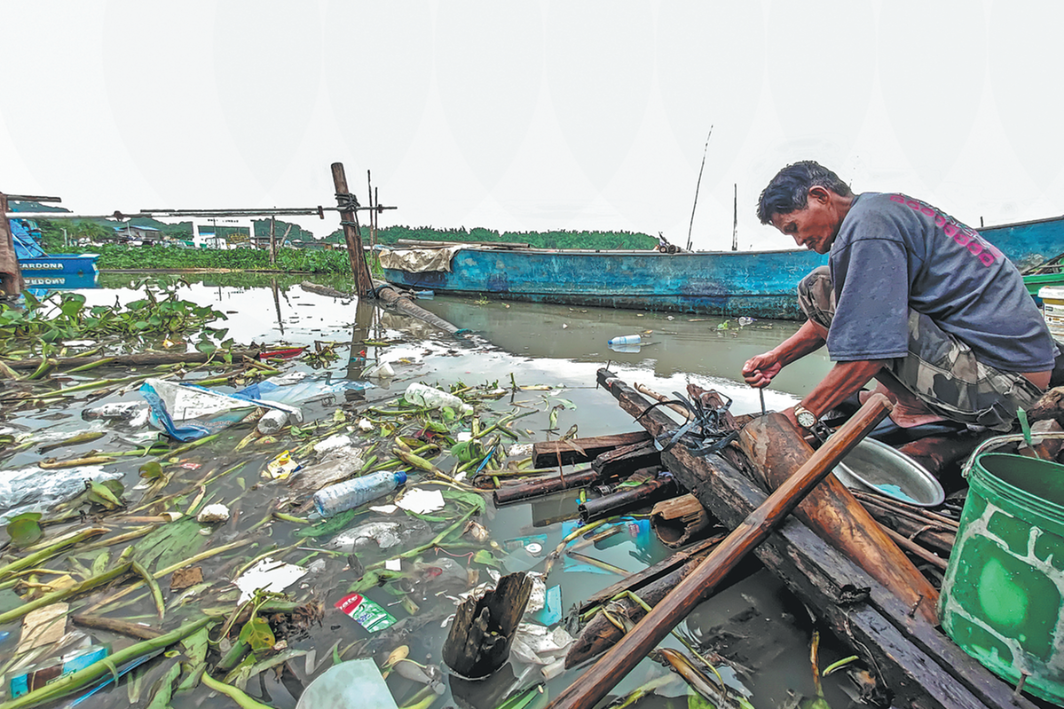
Q3: You've been working in Southeast Asia for years and have been deeply involved in exchanges over the South China Sea. How can countries involved in sea disputes here better handle the situation and make the South China Sea a sea of peace, friendship and collaboration?
Fu Ying: China's sovereignty and maritime rights and interests over the islands and reefs of the South China Sea have been established through a long historical process. The disputes over territorial sovereignty and maritime jurisdiction between China and some neighboring countries around some islands and reefs in the South China Sea began in the late 1960s and early 1970s, which are related to the geographical position of the South China Sea, the establishment of the relevant regime of the United Nations Convention on the Law of the Sea and the discovery of oil and gas resources.
China has long upheld peaceful negotiations to resolve differences, primarily to maintain the general stability of the China-ASEAN relationship and to protect a peaceful and cooperative security environment in its neighborhood.
Through negotiations with the parties directly involved in the disputes and in political consultations with ASEAN countries, China has ensured that disputes in the South China Sea have not been exacerbated. In 2002 the country and ASEAN members signed the Declaration on the Conduct of Parties in the South China Sea, which is committed to managing differences in the South China Sea, promoting maritime cooperation, strengthening good neighborliness and mutual trust, and jointly maintaining peace and stability in the region.
However, since 2009, as the US has pushed its so-called Asia-Pacific rebalancing strategy, the South China Sea has once again been embroiled in conflict. In fact, after World War II the US extended its support and recognition for China's sovereignty over islands of the South China Sea. Nonetheless, as the international situation changed, US policy concerning the South China Sea gradually altered, regressing into "maintaining neutrality", or even "choosing sides", flagrantly intervening in disputes relating to the South China Sea.
In 2014 China and ASEAN countries proposed to adopt a "dual-track approach". That is, on the one hand, China and the parties directly concerned would resolve maritime disputes through amicable consultation; on the other, China would work with ASEAN countries to maintain peace and stability in the South China Sea. The countries involved in the South China Sea disputes have established various mechanisms for bilateral dialogue and consultation, including those between China and Vietnam, the Philippines and other countries. These mechanisms have helped the countries concerned to resolve their differences, enhance mutual trust and promote collaboration.
At the same time China has accelerated the implementation of the Declaration on the Conduct of Parties in the South China Sea and the negotiation of the Code of Conduct in the South China Sea with ASEAN countries. Last year marked the 20th anniversary of the declaration, in which leaders of China and ASEAN countries released a joint statement, recognizing the benefits of having the South China Sea as a sea of peace, friendship, and cooperation. China also organized a high-level commemorative seminar, which I attended together with counterparts of ASEAN countries to discuss strategies for maintaining stability and governance in the South China Sea.
As for maritime collaboration, various projects have been organized relating to marine environmental protection, scientific research, search and rescue, law enforcement, navigational safety and military mutual trust, and a hotline platform for senior diplomats has been established. Important instruments such as the Code for Unplanned Encounters at Sea in the South China Sea and the Declaration for Coastal and Marine Environmental Protection in the South China Sea were agreed on. China has also engaged in joint maritime development with countries directly concerned in the South China Sea.
Peace and stability in the South China Sea is a matter of development for regional countries and a common concern for the international community. China and ASEAN countries, as parties directly concerned in properly handling the issue and managing differences in the South China Sea, should adhere to the spirit of the Declaration on the Conduct of Parties in the South China Sea, respect well recognized international law and the ASEAN way of consensus building and accommodating each other's comfort level, and effectively manage differences and disputes based on regional peace and stability and mutually beneficial cooperation. All parties should stay vigilant and resist anything that jeopardizes collaboration, peace and stability in this region and protect the freedom and safety of navigation. They must work together to truly build the South China Sea into a sea of peace, friendship and cooperation.

Q4: With the full implementation of the Regional Comprehensive Economic Partnership, where do you think the next growth areas of collaboration between the two sides? The blue economy, green economy, digital economy infrastructure and so on? Will they promote the interdependence of the two sides and international multipolarization?
Fu Ying: The RCEP, initiated by ASEAN in 2012, was officially signed on November 15, 2020 and came into force on January 1 last year, with 10 ASEAN countries and China, Japan, South Korea, Australia and New Zealand as members. As the RCEP agreement took effect for the Philippines on June 2 this year, the world's largest free trade zone entered the phase of full implementation.
The RCEP brings tangible benefits to businesses and people in the region through means including tariff preferences, customs clearance simplification, trade and investment facilitation, and everyone shares new opportunities for collaboration and development presented that the agreement presents. Last year China's bilateral trade with 13 other RCEP member countries where the RCEP agreement has come into force reached $1.85 trillion, up 7.5 percent year-on-year, accounting for nearly 30 percent of the value of China's total imports and exports. Rates of growth in China's imports and exports to the eight RCEP member countries exceeded double digits, and rates of growth of its imports and exports to some ASEAN countries, namely Indonesia, Singapore, Myanmar, Cambodia and Laos, exceeded 20 percent.
The RCEP not only provides a broader platform for regional development, but also brings new areas of growth such as the blue economy, green economy and digital economy infrastructure, expanding new space for upgraded collaboration and paving new ways for high-quality collaboration between China and ASEAN. Taking the digital economy as an example, the RCEP Cross-Border e-Commerce Development Report published in November said that after the RCEP agreement was signed in the fourth quarter of 2021 the business-to-business index of cross-border e-commerce for small and medium-sized companies in ASEAN countries rose rapidly, bucking the trend during the COVID-19 pandemic.
The implementation of the RCEP and the new round of China-ASEAN FTA upgrading negotiations will mutually reinforce each other. In the future a multi-level overlapping regional cooperation structure based on bilateral cooperation between China and ASEAN, complemented by various regional trade agreements, will further develop, which will enrich and further integrate the industrial and supply chains in the region, stimulate the potential of regional countries to complement each other's advantages and promote a wider, higher and deeper level of openness and cooperation.
Though unilateralism and trade protectionism are on the rise, full implementation of the RCEP indicates that China and ASEAN countries are jointly sending positive signals to support multilateralism and free trade, and are moving against anti-globalization, counter-globalization and confrontation based on values and ideological demarcation.