Thinking beyond new births for a sustainable future









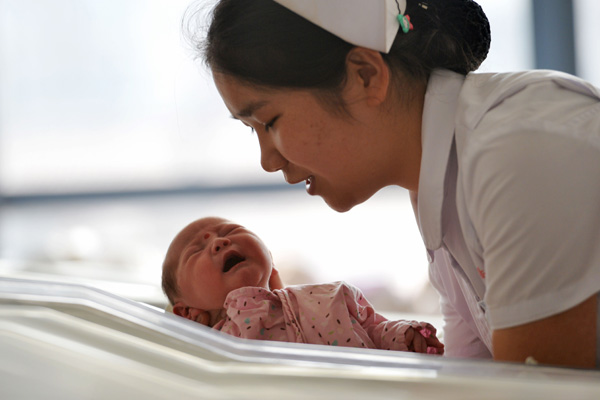
China is a country with a low fertility rate, in fact, a very low fertility rate. Since China has one of the lowest fertility rates in the world, the issue has attracted global attention over the past year, which has fed into two huge news stories: China's population is declining, and India has "overtaken" China in terms of total population (according to the United Nations).
This demographic change has been welcomed by hawks around the world that look for chinks in the armor of China's economic and geopolitical development. Within the country, the "fertility rate issue" has raised considerable concern. Apart from contributing to the population decline nationally, the low fertility rate could also cause population decline in the region which would be a major demographic concern. The low fertility rate is also a primary driver of population aging, which again is a major cause for concern.
The instinctive response to these "demographic problems" is to seek "demographic solutions". There are only three dynamic processes in demography: births, deaths and movement of people. We definitely do not want to increase mortality (deaths). And in a country as vast as China, it is hard to imagine how a more liberal immigration policy would make a material difference to the overall population age structure (migration).
This means we are left with only one option: to try to raise the fertility rate. In fact, commentators have suggested many more measures to increase the number of births per year in an effort to slow down population decline and counterbalance the fast rising aging population. To encourage couples to have more children, some local governments have introduced "baby bonuses", while some academics have proposed that the number of school years be shortened in order to reduce the overall cost of children's education.
The problem is that the fertility rate seems to show no sign of reversing. This feature is shared by many other countries with low total fertility rates. Yet policies such as introduction of "bonuses" and "cash transfers" to encourage couples to have more children do not address some of the core challenges to raising a family across the region, including in China.
Of course, money is important. As expectations rise, so do costs. Giving birth in an expensive private clinic could cost more than 100,000 yuan ($13,826). Housing, especially in large cities, is often prohibitively expensive. According to a 2019 Shanghai Academy of Social Sciences report, middle-income households in the city spend more than 800,000 yuan per child from birth to the age of 15, including 510,000 yuan on education alone, with lower-income families spending over 70 percent of their earnings on children.
But money isn't everything. The work culture of long hours and fragile contracts discriminate against parents, especially against new parents, and caring for children is still mainly the responsibility of women, whose career development can often be imperiled by childbearing. These risks increase at a time when good graduate level jobs appear to be declining in numbers.
This is not to say that there is no need to help raise the fertility rate and adjust the family planning policy in a bid to maintain a healthy level of population. People still want to have children, but they need more holistic support to raise a family. In this regard, the 14th Five-Year Plan (2021-25) has introduced good measures to support couples through maternal care, childcare, kindergarten and so on.
But the focus needs to be much broader, which means asking bigger questions and looking at the issue of demographic change in a more holistic way. Again, much good work has been done in China, including the eradication of absolute poverty by the end of 2020. Yet alleviating relative poverty, improving the healthcare system, implementing social work systems, devising effective programs for elderly people and investing in gerontech will yield more benefits, which can help better manage demographic changes.
But there are also difficult, more politically challenging issues which need to be addressed.
What is the point of increasing new births at a time youth unemployment is high? What can be done to ensure the youth make substantial economic and social contributions to national development? What reforms are needed to improve productivity? And how can the "floating population" be properly integrated into host cities to ensure they have as much opportunity as those with hukou (household registration)? In other words, how can the country do better with fewer people?
From the demand side's perspective, we should ask how long will China have such a low pensionable age (by global standards). How can the pension age be raised without increasing relative poverty and increasing inequality?
There is no "golden model" to solve these population-related problems which China can follow. This is good news, however. China is a unique country facing common demographic challenges. Compared with many European countries, China's systems and institutions that are under stress from demographic changes are relatively young. Coupled with the greater capacity for longer-term planning in China, this should make China, at least in theory, streamline reforms and put the systems and institutions on a more sustainable path.
Learning from the experiences of other economies — especially about what works and what does not — will be key to China's response to the demographic challenges. Ultimately, though, China will have to chart its own course in response. Yet policies which are fair, equitable, inclusive and holistic will have the best chance of success.
The author is a professor of humanities and social science at Khalifa University, Abu Dhabi, the United Arab Emirates.
The views don't necessarily represent those of China Daily.