Senate targets China on US farmland purchases









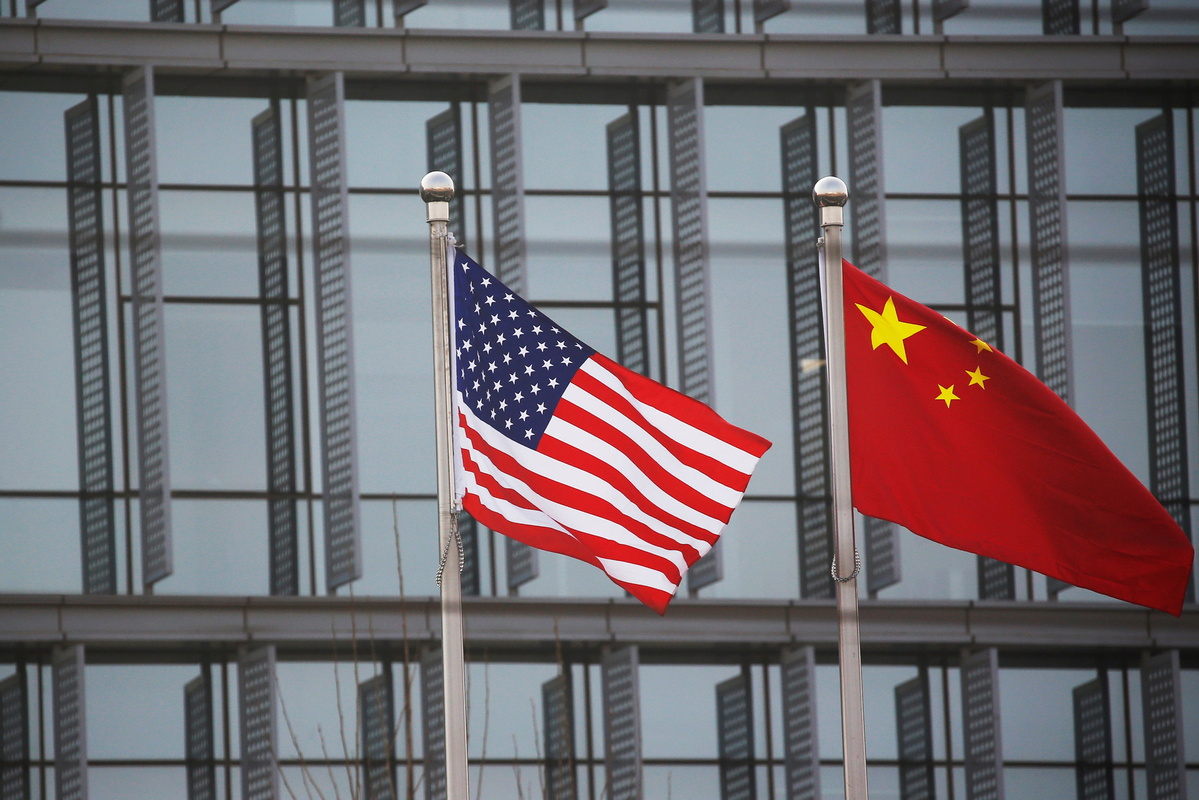
In the past couple of months, lawmakers — mostly Republicans but some Democrats as well — in more than two dozen US states have passed or considered legislation restricting Chinese purchases of US farmland, citing concerns about food security and the need to protect nearby military bases and other sensitive installations.
The moves sparked concerns among some experts on US-Chinese relations, including those who see echoes of past discriminatory laws in the United States like the Chinese Exclusion Act.
Last week, the US Senate joined those states. It voted 97-6 for a measure to block businesses based in or working as agents of China — as well as Russia, Iran and North Korea — from purchasing a controlling interest in US farmland or other agribusiness over national security concerns.
The proposed measure — passed as an amendment to the annual defense budget bill — would require the president to review farmland transactions from those four countries and block any deals that would give a foreign entity from any of the countries "control" of US farmland and waive those that don't.
The measure would also give the Committee on Foreign Investment in the United States — known as CFIUS — the power to evaluate land deals, using data from the Department of Agriculture, and block those deals if it sees fit.
The Senate also went one step further in targeting China.
It approved a second measure — by 91 to 6 — that would require Americans to notify the Treasury Department within 14 days of making any investments in the national security industries of China and those three countries, including artificial intelligence, semiconductors and hypersonic production.
The US currently restricts exports of certain advanced technologies to China, but it doesn't prohibit partnerships that help fund the development of those technologies within China.
Both measures come as the Biden administration has for many months been working on an executive order forcing venture capital and private equity firms making investments in China to share more information with the government, as well as prohibit investments outright in a few key sectors that could be crucial to military prowess, like quantum computing and artificial intelligence.
The Republican majority in the House of Representatives also has sought to make China a central focus, creating a select committee on "Strategic Competition Between the United States and the Chinese Communist Party".
The two measures were included as an amendment to the Senate's National Defense Authorization Act, the must-pass bill that determines defense spending and policy. To become law, it would still need to pass the House, which narrowly signed off on its own version of the annual defense bill earlier this month after intense debates.
The measure banning Chinese from purchasing US farmland was co-sponsored by a bipartisan group of eight Republicans and two Democrats, with the "no" votes coming from five Democrats and two Republicans.
"This is a critical step toward making sure we aren't handing over valuable American assets to foreign entities who want to replace us as the world's leading military and economic power," Senator Jon Tester, Democrat of Montana and co-author of the farmland measure, said on the Senate floor.
"As a third-generation farmer, I know that food security is national security," Tester said. "Allowing our foreign adversaries like China to invest in American ag land and agribusinesses threatens American businesses and puts our food security and national security at risk."
But a 2021 analysis by the bipartisan Center for Strategic and International Studies (CSIS) found that foreign purchases of US agricultural land aren't a major threat to US food security,
According to the Department of Agriculture (USDA), foreign ownership of US land has almost doubled in the past decade. The most recent USDA report with data through the end of 2021 found Canadian investors owned 31 percent or 12.8 million acres, and China has less than 1 percent of foreign-owned land at just over 380,000 acres total.
A large portion of China's ownership came from a single purchase in 2013, when the Chinese company WH Group bought Smithfield Foods, the largest pork producer in the US.
States have previously sought to limit foreign investment, said Micah Brown, a staff attorney at the National Agriculture Law Center. What's new, Brown said, is that some lawmakers are taking aim at specific countries and their governments.
"2023 is really swinging for the fences here, with a majority of states having some kind of proposal, at least one proposal," Brown told CNN.
Last year, in a House Appropriations Committee hearing, New York Democratic Representative Grace Meng criticized an attempt to pass an amendment to ban companies owned wholly or in part by the Chinese government from purchasing US farmland. She said singling out China would "perpetuate already rising anti-Asian hate".
Nancy Qian, a professor of economics at Northwestern University's Kellogg School, told CNN: "I think there's a good reason to want to keep control of strategic interests in one's own country but these bills about farmland, these bills about just property in general, to me, it's transparent that they're rooted in racism and xenophobia again because we've seen this before. It really isn't the first time."
Yan Bennett, the assistant director of the Paul and Marcia Wythes Center on Contemporary China at Princeton University, noted that US farmland is appealing for China because the country has food security issues and doesn't have enough arable land for cultivation.
"When national security is threatened, yes, we need to take action," Bennett told CNN. "But not every land purchase by a foreign government or a foreign national is a national security threat, so we need to make sure that we distinguish those purchases from those that are actual threats."
Robert Daly, director of the Kissinger Institute on China and the United States at the Wilson Center, told CNN that an atmosphere of racism and anti-China sentiment threatens other US interests as well, such as possibly deterring Chinese students from wanting to come to the US and obtain advanced degrees.