



Study links air pollution to dementia risk









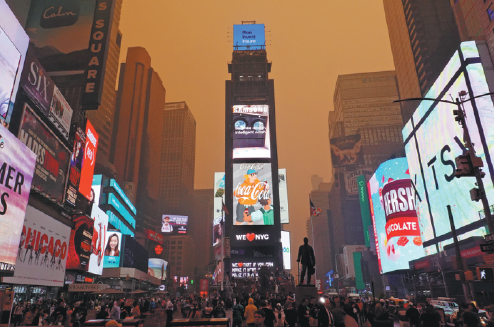
A nearly 20-year study in the US has found that fine particulate matter (PM2.5) air pollution may increase dementia risk in older adults.
The analysis found that fine particles from agriculture and fires are most strongly associated with increased risk of developing dementia. Fine particles from traffic and coal combustion for energy production were also risk factors.
The study estimated that nearly 188,000 new cases of dementia were attributable to total PM2.5 exposure in the US every year.
Published in Jama Internal Medicine on Monday, the study collected data from 27,857 participants that are nationally representative between Jan 1, 1998, to Dec 31, 2016. The participants were older than 50, without dementia at the beginning of the study.
A 2022 United Nations study found that almost the entire global population — 99 percent — is breathing air that exceeds air-quality limits set by the World Health Organization (WHO). The WHO said that particulate matter, especially PM2.5, is capable of penetrating deep into the lungs and entering the bloodstream, causing cardiovascular, cerebrovascular and respiratory illnesses.
The analysis of data showed that 4,105 or 15 percent of the participants developed dementia in the follow-up, and higher concentrations of total PM2.5 were associated with greater rates of incident dementia.
PM2.5 are fine, inhalable particles with diameters that are generally 2.5 micrometers and smaller. In comparison, the average human hair is about 70 micrometers in diameter, according to the Environmental Protection Agency.
The monitored PM2.5 comes from various sources including agriculture, traffic, energy production, and other industry sectors.
According to the study, ammonia, a component widely used in pesticides, accounts for the formation of 30 percent of PM2.5 in the US. The common application of neurotoxic pesticides in agriculture could plausibly explain observed associations between PM2.5 from agriculture and dementia, said the study.
“At first, when agriculture and wildfires were the two that popped out, Boya and I were both surprised,” Sara Dubowsky Adar, associate chair of epidemiology at the University of Michigan School of Public Health, who worked on the study with a team including Boya Zhang, a research fellow in the department, told CNN.
“In hindsight, it really makes a lot of sense, mostly because of the fact that we’re looking at impacts on the brain, and agriculture we know is using a lot of pesticides,” she said.
The study found that wildfires have become an increasing source for air pollution in the US. Wildfires release components that are likely to be highly toxic because they incinerate natural and synthetic materials in an uncontrolled manner.
While individual wildfires may be short-lived, they have become more frequent and destructive in the past decades, the study said. The long-range smoke from wildfires frequently impacts the same downwind locations, resulting in wildfire smoke becoming a more long-term presence.
Many US cities now experience more than 30 days affected by smoke each year. Overall, wildfires have been estimated to contribute up to 25 percent of total PM2.5 across the US and up to 50 percent in some Western regions where wildfires are more frequently observed.
The study said that because rural participants may breathe more PM2.5 emitted from agriculture and wildfires, which may partially explain why there is persistently higher dementia rates in rural and suburban areas in urban cities across age and sex groups.
The study found higher concentrations of PM2.5 in the Midwest and lower concentrations in the West. Fine particulate matter from wildfires and windblown dust was mainly concentrated in the West and Southwest.
Poor and minority people are more exposed to the risk, according to the study. The study said that concentrations of PM2.5 were higher for those who were older, were non-Hispanic black, had less formal education, and had less wealth, except for PM2.5 from wildfires and windblown dust.










